🔧 HOW-TO

How to Get Rid of Boxelder Bugs — September Is the Only Window

Boxelder bugs aggregate in fall and invade in winter. There is one effective treatment window: early September, before aggregation begins. Missing this window means managing them indoors all winter.

📐 FIELD GUIDE ILLUSTRATION
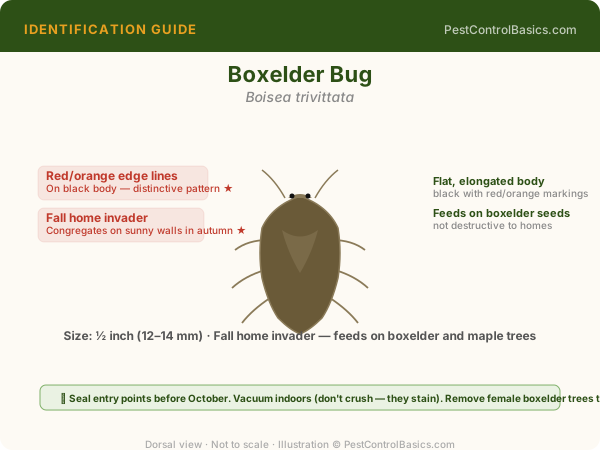
Boxelder Bug (Boisea trivittata) identification illustration with labeled anatomical features — PestControlBasics.com

Original illustration by PestControlBasics.com. Use anatomical labels above to confirm your identification.

📋 Steps

1
Time your treatment to September 1-15
Boxelder bugs begin aggregating on south-facing walls in mid-September in most of the US. Treatment applied before aggregation begins is 10x more effective than treating after thousands have assembled. Set a calendar reminder for September 1 every year.
2
Apply bifenthrin to south and west-facing walls
Apply bifenthrin 7.9% (0.5 fl oz per gallon) to all south-facing and west-facing exterior walls, focusing on the area from the ground up to 15 feet. These are the primary aggregation surfaces. Lambda-cyhalothrin (Demand CS) is an effective alternative with better heat stability.
3
Seal all entry points before aggregation
Caulk all gaps around window frames, door frames, utility penetrations, and any opening in the foundation. Boxelder bugs squeeze through surprisingly small gaps. Install fresh door sweeps on all exterior doors.
4
Vacuum indoor individuals — don't spray
Indoor boxelder bugs that have already entered should be vacuumed, not sprayed. Spraying dead bugs leaves staining. Indoor spray also kills natural enemies without preventing the influx from outside. Remove the vacuum bag immediately outdoors.
5
For extreme pressure, repeat spray in 2 weeks
In years with very high boxelder bug populations, a second perimeter spray 14 days after the first provides additional protection as new individuals arrive from the surrounding area.

💡 Tips

  • The boxelder bug problem is almost entirely preventable with a single September spray — the frustrating mid-winter indoor infestations are preventable failures, not inevitable
  • Removing female boxelder trees from the immediate property significantly reduces local populations — the red seeds are the primary food source
  • Boxelder bugs don't bite, breed indoors, or damage structures — they're a nuisance pest only, which makes prevention-focused management the right approach
  • Stink bug, MALB, and elm seed bug prevention all use the same September timing — a single perimeter application targets all three simultaneously
⚖️ Educational use only. Always follow product labels. Disclaimer →

💰 Cost to Fix This Problem

ApproachTypical CostBest For
DIY materials only$25–$75Mild or early-stage infestations
Professional service (one-time)$150–$400Active infestations or when DIY has already failed
Ongoing service contract$400–$800/yrPrevention and long-term peace of mind

Costs vary by region, property size, and severity. Get at least two quotes before hiring.

✅ How to Know It's Working

Pest control success is measured in weeks, not days. Here's what to look for:

💡 Monitoring tip: Place sticky traps in corners and along walls before you start treatment. Counting catches weekly gives you objective data on whether the population is declining.

👷 When to Call a Professional

DIY is appropriate for small, contained infestations caught early. Call a licensed professional when:

⚠️ Rule of thumb: If you've spent more on DIY materials than a professional visit would cost, it's time to call.

❓ Frequently Asked Questions

Why are boxelder bugs on the side of my house?
They gather on sun-warmed exterior walls in fall, seeking cracks to enter for overwintering. They are attracted to warmth on south and west-facing surfaces. Their presence indicates a female boxelder, maple, or ash tree is nearby.
Are boxelder bugs harmful?
They do not bite, sting, cause structural damage, or reproduce indoors. The primary concerns are droppings that stain light-colored fabrics and a mildly unpleasant odor and stain when crushed.
Should I remove the boxelder tree?
Removing the host tree dramatically reduces the local population over 1-2 years. However, boxelder bugs can fly over a mile from neighboring properties. Sealing the house and applying perimeter treatment in September is usually sufficient.
What is the best treatment for boxelder bugs?
Apply residual bifenthrin to exterior walls, window frames, and foundation perimeter in mid-to-late September. Seal all cracks with caulk. For bugs already inside, vacuum them. Indoor insecticide is unnecessary since they are not reproducing.
📚 Sources: EPA Safe Pest Control · NPMA Pest Guide
Published: Jan 1, 2025 · Updated: Apr 7, 2026