📐 FIELD GUIDE ILLUSTRATION
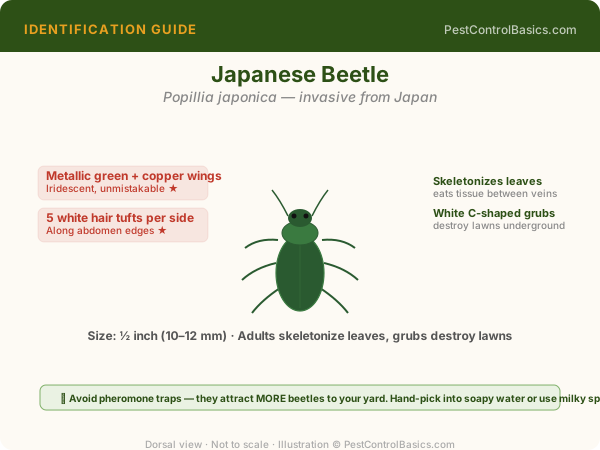
Original illustration by PestControlBasics.com. Use anatomical labels above to confirm your identification.
📋 Steps
1
Understand the two-stage target
Japanese beetles cause damage as both adults (foliage feeding, July-August) and as grubs (root feeding, August-October). Adult control reduces plant damage this season. Grub control next June-July reduces adult populations 2 seasons later. Both treatments have different timing and application methods.
2
Hand-pick adults in the morning
Adults are sluggish in the morning cool. Knock them into a bucket of soapy water. This sounds primitive but is effective for small infestations on individual plants. The alarmed adult releases aggregation pheromones when disturbed — remove them from the area rather than crushing them in place.
3
Apply pyrethrin or spinosad spray for adult control
Pyrethrin (PyGanic) or spinosad spray on affected plants kills adults on contact. Apply in the evening to minimize bee exposure. These are OMRI organic options. For synthetic pyrethroid use: bifenthrin or lambda-cyhalothrin sprayed on plant foliage provides 2-3 weeks of residual protection per application.
4
Do NOT use Japanese beetle bag traps
Lure-based bag traps attract more beetles to your yard than they catch. Studies consistently show traps increase plant damage at the collection site. Don't use them.
5
Apply grub preventive in June-July
Chlorantraniliprole (Acelepryn) applied in May-June and watered in provides season-long grub prevention. Imidacloprid applied June-July and watered in is a cost-effective alternative. These preventive treatments are far more effective than curative treatments applied after grubs are large.
💡 Tips
- The worst of the adult feeding season is typically 4-6 weeks — adult Japanese beetles are not present all summer, only July through mid-August in most areas
- Covering highly valued plants with row cover fabric before adult emergence prevents access entirely — the most effective protection for small ornamental gardens
- Milky spore disease (Paenibacillus popilliae) is labeled for Japanese beetle grubs but requires years to build in soil and has variable efficacy in cool or dry soils
- Vigilance pays: the first adult beetles to arrive release aggregation pheromones that attract more — prompt removal of the first arrivals reduces peak populations
⚖️ Educational use only. Disclaimer →