American Cockroach &
Brown Recluse Spider

Two very different pests that require very different strategies than their more famous relatives. The American roach is not a German roach. The brown recluse is not as dangerous as myth suggests — but it's real, and it's present in far more homes than people realize.

📐 FIELD GUIDE ILLUSTRATION
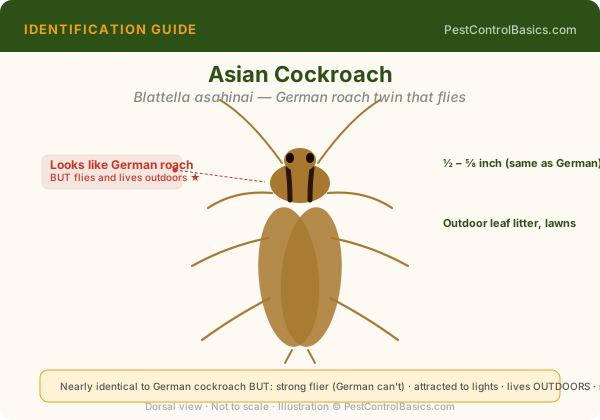
Asian Cockroach (Blattella asahinai) identification illustration with labeled anatomical features — PestControlBasics.com

Original illustration by PestControlBasics.com. Use anatomical labels above to confirm your identification.
📐 FIELD GUIDE ILLUSTRATION
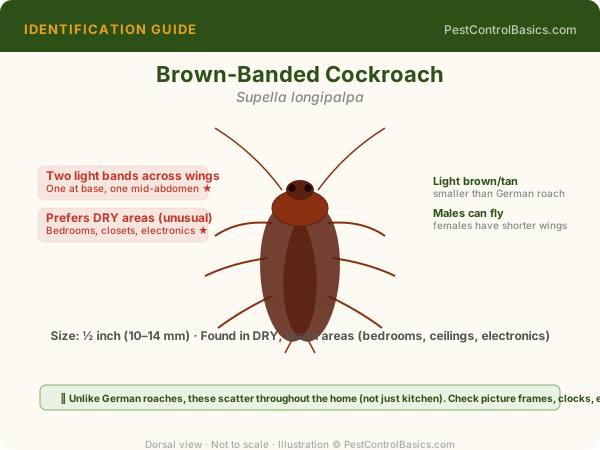
Brown Banded Cockroach (Supella longipalpa) identification illustration with labeled anatomical features — PestControlBasics.com

Original illustration by PestControlBasics.com. Use anatomical labels above to confirm your identification.
📐 FIELD GUIDE ILLUSTRATION
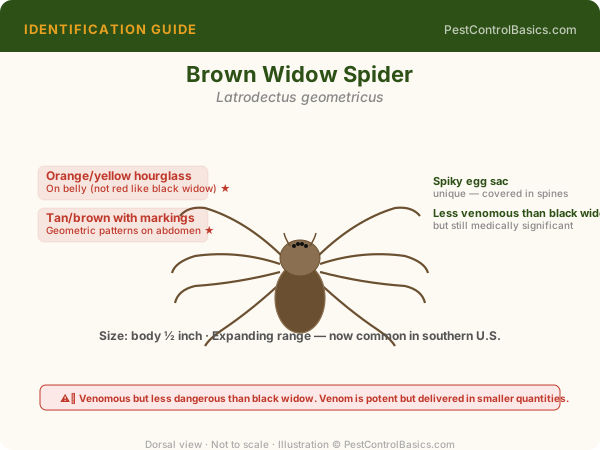
Brown Widow (Latrodectus geometricus) identification illustration with labeled anatomical features — PestControlBasics.com

Original illustration by PestControlBasics.com. Use anatomical labels above to confirm your identification.
📐 FIELD GUIDE ILLUSTRATION
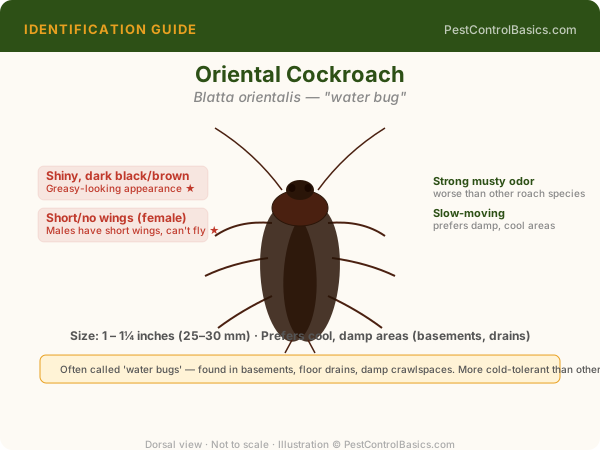
Oriental Cockroach (Blatta orientalis) identification illustration with labeled anatomical features — PestControlBasics.com

Original illustration by PestControlBasics.com. Use anatomical labels above to confirm your identification.
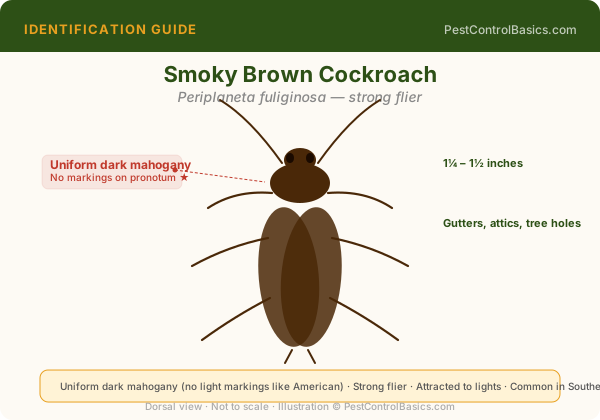
📐 FIELD GUIDE ILLUSTRATION
Smoky Brown Cockroach (Periplaneta fuliginosa) identification illustration with labeled anatomical features — PestControlBasics.com

Original illustration by PestControlBasics.com. Use anatomical labels above to confirm your identification.
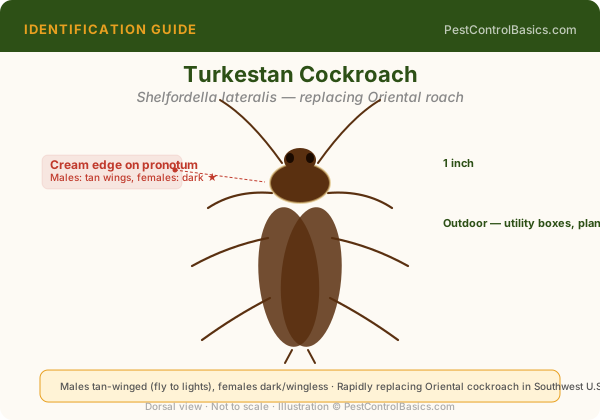
📐 FIELD GUIDE ILLUSTRATION
Turkestan Cockroach (Shelfordella lateralis) identification illustration with labeled anatomical features — PestControlBasics.com

Original illustration by PestControlBasics.com. Use anatomical labels above to confirm your identification.

🔍 Identification Photo

Use this photo to confirm your identification. Click to enlarge. Correct ID is the essential first step to effective treatment.

American cockroach (Periplaneta americana) — reddish-brown, 1.5–2 inches; yellowish figure-8 on head; the largest common

American cockroach (Periplaneta americana) — reddish-brown, 1.5–2 inches; yellowish figure-8 on head; the largest common US cockroach

📷 Wikipedia / Wikimedia Commons / CC BY-SA

⚠️ Photo loaded live from Wikipedia/Wikimedia Commons (CC BY-SA). Appearance varies by region, age, and sex. When uncertain, contact a licensed pest professional.

🫳
Outdoor IntruderVery Different from German RoachLargest U.S. Roach
American Cockroach
Periplaneta americana — the "Palmetto Bug"
The one you find in the bathroom at 2am. Despite the nickname, it's originally from Africa. It doesn't infest the way German roaches do — it's primarily an outdoor/sewer species that wanders inside. The treatment strategy is completely different.

American vs. German Cockroach — Critical Differences

✗ German Cockroach — Indoor Pest
5/8 inch — tan with two stripes
Cannot survive outdoors
Reproduces inside walls
Population: hundreds inside
Treatment: gel bait only
Very hard to eliminate
✓ American Cockroach — Outdoor Intruder
1.5–2 inches — reddish-brown
Lives outdoors and in sewers
Wanders in seeking food/moisture
Population: small wanderers
Treatment: perimeter + exclusion
Manageable — rarely reproduces inside

This distinction matters enormously for treatment. Seeing a German cockroach means you have an established interior infestation requiring aggressive gel bait treatment. Seeing an American cockroach — especially one that scurried in from outside or emerged from a drain — is much less alarming. It's a wanderer, not a resident.

💡 The Drain Connection

American cockroaches commonly enter through floor drains, sewer connections, and gaps around pipe penetrations in the floor. If you're seeing them in bathrooms or basements, check drain seals and the gap around any pipe that goes through the floor. They follow moisture plumes from sewers upward into structures.

Control Strategy

Exclusion first: Seal all floor drain gaps, gaps around pipe penetrations, and floor-level utility entry points. Install floor drain covers. This is 80% of the solution for most American cockroach problems.

Perimeter spray: Apply bifenthrin along the foundation perimeter, around crawlspace vents, and near any drainage areas. This kills wandering adults before they find entry points.

Bait stations: Place cockroach bait stations in garages, crawlspaces, and basements where American roaches harbor. Advion gel bait works on American roaches as well as German roaches.

Moisture reduction: Fix any standing water near the foundation, repair dripping outdoor faucets, and ensure gutters divert water away. American roaches follow moisture gradients.

✓ The Good News

American cockroach infestations rarely reach the scale of German cockroach infestations because they cannot reproduce as rapidly indoors. Consistent perimeter treatment and exclusion work effectively. You are unlikely to need professional help unless the problem is severe or involves major sewer infrastructure issues.

American Cockroach
Size1.5–2 inches
ColorReddish-brown
Wings?Yes — can fly (rarely)
OriginAfrica via shipping, 1600s
LivesSewers, outdoors, crawlspaces
Reproduces inside?Rarely — mostly wanderers
Primary treatmentPerimeter + exclusion
🕸
Necrotic VenomViolin Marking IDCimeXa + Glue Boards
Brown Recluse Spider
Loxosceles reclusa
Genuinely venomous — but far less likely to bite than people fear, and bites far less dangerous than media coverage suggests. The real challenge: Missouri alone has an estimated 60 million brown recluses. Knowing how to identify and control them matters.

Identification — The Violin and Six Eyes

Brown recluse spiders have two key identification features. First, the violin marking on the cephalothorax (head region) — a dark violin-shape pointing toward the abdomen. This is reliable but requires close inspection. Second, and more definitive: brown recluses have six eyes arranged in pairs rather than eight eyes in two rows like most spiders. Under magnification this is unmistakable.

Overall appearance: 1/4 to 3/4 inch body, long thin legs, light to medium brown coloring, no banding or markings on legs. Their movement is distinctive — slow and deliberate rather than fast-darting like wolf spiders.

⚠ The Bite Reality

Most brown recluse bites occur when spiders are accidentally trapped against skin (rolling over on one in bed, dressing in stored clothing). The spider bites defensively only. About 10% of bites cause necrotic wounds requiring medical attention; the remainder resolve with minor localized symptoms. Seek medical care for any bite that doesn't improve within 24 hours or develops expanding discoloration.

Distribution — Are They in Your State?

Brown recluses have a specific U.S. range: the Midwest and South — Missouri, Kansas, Arkansas, Oklahoma, Texas, Louisiana, Mississippi, Alabama, Tennessee, Kentucky, Georgia, and parts of Nebraska and Iowa. They are NOT established in most of the Eastern Seaboard, Pacific Coast, or northern states. Many supposed brown recluse identifications outside this range are other spider species. If you're in a non-endemic state, consult an entomologist before assuming brown recluse.

Control — Desiccants, Glue Boards & Habitat

CimeXa dust: Apply in all wall voids, under insulation, in crawlspaces, and along baseboards in storage areas. Brown recluses traveling through CimeXa-treated areas die from cuticle dehydration. Because spiders don't groom like insects, boric acid is far less effective — desiccants are the right chemistry.

Glue board trapping: Brown recluse glue boards placed flat in corners, along walls, under appliances, and in storage areas capture significant numbers and — crucially — reveal how many spiders are actually present. One study found homes with hundreds of brown recluses unknowingly coexisting with the family. Monitoring gives you real data.

Reduce harborage: Brown recluses love undisturbed spaces with cardboard, clutter, and stored items. Clear clutter from closets, use plastic storage bins instead of cardboard boxes, and eliminate undisturbed dark spaces. Shake out clothing stored in closets before wearing — especially in endemic areas.

💡 The Cardboard Factor

Brown recluses are strongly attracted to corrugated cardboard — it mimics the bark crevices they evolved to inhabit outdoors. Eliminating cardboard boxes in closets, garages, and basements dramatically reduces brown recluse harborage. Replace with plastic totes.

Brown Recluse Spider
Size1/4–3/4 inch body
Eyes6 — in 3 pairs (key ID)
MarkingViolin on cephalothorax
RangeMidwest + South only
HabitatDark, undisturbed, cardboard
Bites if...Trapped against skin
Best controlCimeXa + glue boards
Sprays work?Poorly — desiccants better
📚 Sources: EPA Cockroach Control · CDC Cockroach Allergens
Published: Jan 1, 2025 · Updated: Apr 7, 2026
American Cockroach &Brown Recluse Spider

Frequently Asked Questions

How do I know if I have American Cockroach &Brown Recluse Spider?

Signs of American Cockroach &Brown Recluse Spider include physical sightings, droppings or frass, damage to food or materials, and unusual odors. Inspect hidden areas like wall voids, behind appliances, and in storage spaces. A flashlight inspection after dark is often most revealing.

Are American Cockroach &Brown Recluse Spider dangerous to humans or pets?

American Cockroach &Brown Recluse Spider can pose health risks including bites, allergic reactions, food contamination, and disease transmission. Children, elderly, and pets are especially vulnerable. Consult a pest management professional when an infestation is confirmed.

Can I eliminate American Cockroach &Brown Recluse Spider myself?

Light infestations may be manageable with DIY baits, traps, and targeted treatments. Established infestations typically require professional intervention. Misapplied products often scatter pests and worsen the problem long-term.

How long does American Cockroach &Brown Recluse Spider treatment take?

Timelines vary by infestation size and method. Baits may take 1–4 weeks to work through a colony. Chemical treatments often require 2–3 applications spaced 2–4 weeks apart. Monitor for 30–60 days after treatment to confirm elimination.

What attracts American Cockroach &Brown Recluse Spider to my home?

American Cockroach &Brown Recluse Spider are typically drawn by food sources, standing moisture, warmth, and shelter. Sealing entry points, reducing clutter, fixing leaks, and storing food in airtight containers are the most effective long-term prevention measures.

Related Resources

📚 Full Pest Library🧪 DIY vs. Pro Quiz💰 Cost Guide🌿 IPM Guide🔍 Find a Pro
🧪 Recommended Treatment Products
Cockroach Bait Guide Boric Acid Gentrol IGR Indoxacarb (Advion) Fipronil
Full product guides with mixing rates and safety info. → Browse All 130 Pesticide Guides
🔮
Reviewed by Derek GiordanoContent on PestControlBasics.com is developed with input from certified pest management professionals and cross-referenced against EPA, CDC, and university extension guidance. Last reviewed: April 2026.

🗺️ US Distribution — American Cockroach & Brown Recluse Spider

image/svg+xml
Common Occasional Not Present
States Present
16
Occasional
10
Primary Region
South-Central & Midwest
📊 Source: University extension services, USDA, CDC vector data, and published entomological surveys.