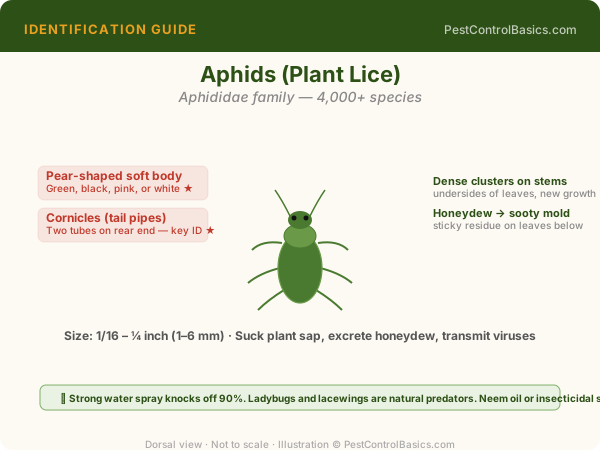
Original illustration by PestControlBasics.com. Use the labeled features above to confirm your identification.
🔍 Identification
Individual insects: 1-2mm; reddish-purple; obscured by thick white waxy wool covering colonies. Colonies: dense white cottony masses on branches, bark, roots, and sometimes aerial portions — look for masses especially on pruning wounds, branch crotches, and areas with bark damage. On roots: white masses on root system detected when plants are transplanted or show decline.
🧬 Biology & Behavior
Woolly apple aphid (E. lanigerum) infests apple and crabapple. Woolly alder aphid (E. americanum) infests alder primarily but also apple. The waxy wool is a defensive structure that repels water and blocks contact insecticides — spraying soapy water directly hits the wax, not the insect. Systemic insecticides (imidacloprid soil drench) are far more effective than contact sprays. Natural enemy: the parasitoid wasp Aphelinus mali significantly suppresses populations.
⚠️ Damage & Health Risk
Root gall formation on apple (the underground generation creates root galls that reduce tree vigor); bark lesions and dieback in heavy infestations; reduction in fruit production in heavily infested trees.
🔧 DIY Treatment
Imidacloprid soil drench (Dominion 2L, Bayer Tree & Shrub) — absorbed by roots and transported to all plant tissues including the wax-protected aphids. Dormant oil in early spring before wool forms. Direct contact with isopropyl alcohol on a cotton swab kills small colonies. Pruning out infested shoots in mild infestations.
👷 When to Call a Pro
Certified arborist injection with imidacloprid for valuable specimen trees with severe root gall infestations.