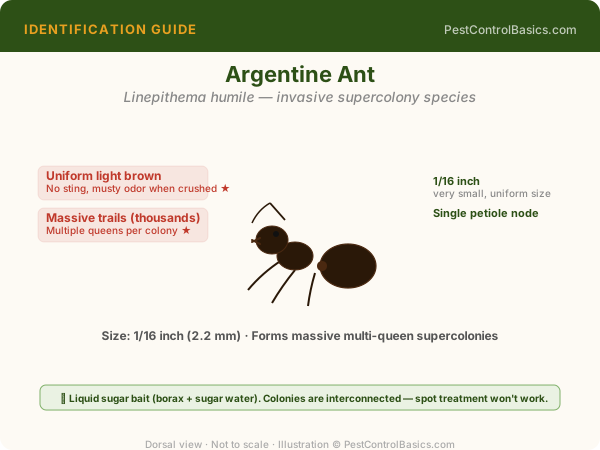
Original illustration by PestControlBasics.com. Use anatomical labels above to confirm your identification.
🔍 Identification
Adults: 2.2-2.8mm; light to dark brown; uniform color (no pattern); one-node waist; no distinct odor when crushed (unlike odorous house ants). Multiple queens per colony (polygyne). Found in trails of thousands along edges, walls, and tree branches. Dominant ant pest in California and Gulf Coast states.
🧬 Biology & Behavior
Argentine ant supercolonies operate as a single unit across vast distances — workers from different nests in the same supercolony cooperate rather than fight. This allows rapid repopulation of treated areas from adjacent untreated colonies. Multiple queens mean the colony can survive even aggressive treatment.
⚠️ Damage & Health Risk
Highly persistent indoor foraging trails; displacement of native beneficial ants and other insects; protection of honeydew-producing pests (aphids, mealybugs) from predators — causing secondary plant pest outbreaks; very difficult to eliminate permanently.
🔧 DIY Treatment
Ant bait (Terro, Advion) provides temporary knockdown but the colony rebounds from untreated adjacent areas. Most effective approach: consistent monthly perimeter bait application combined with vegetation management (eliminate ant superhighways — tree branches touching structure). Avoid repellent sprays which cause trail fragmentation and spread.
👷 When to Call a Pro
Argentine ants are widely considered to require ongoing professional IPM programs for satisfactory management in heavily infested California coastal areas.