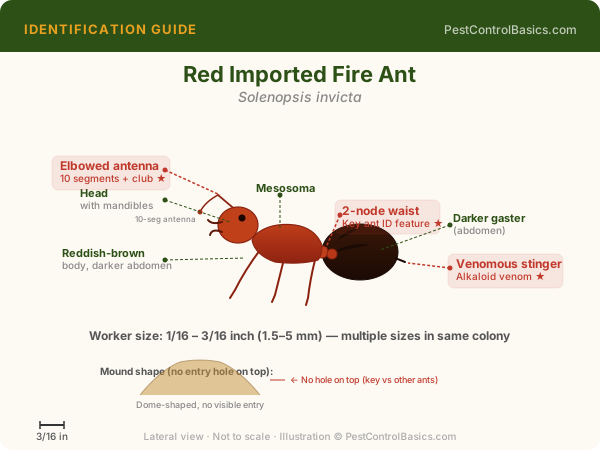
Original illustration by PestControlBasics.com. Use anatomical labels above to confirm your identification. For photo references, see the identification section below.
🔍 Identification
Imported red fire ant workers are 2-6mm; reddish-brown; multiple worker sizes (polymorphic). Nests: dome-shaped mounds with no visible entry hole at the top (they enter through underground tunnels). Sting: multiple simultaneous stings that form distinctive white fluid-filled pustules. Aggressive defenders — workers respond within seconds to mound disturbance.
🧬 Biology & Behavior
RIFA colonies contain a single or multiple queens (single-queen colonies are more aggressive and territorial; multiple-queen colonies tolerate other colonies and spread more widely). Workers forage up to 100 feet from the mound. One acre of southern pasture can contain 20-100+ active mounds in heavily infested areas.
⚠️ Damage & Health Risk
Painful stings causing distinctive pustules; allergic reactions (anaphylaxis in sensitized individuals — potentially fatal); agricultural crop damage; electrical equipment damage (RIFA are attracted to electrical equipment and can cause shorts); wildlife impacts on ground-nesting birds and small animals.
🔧 DIY Treatment
The Two-Step Method (Texas A&M Extension):
Step 1: Broadcast fire ant bait over the entire yard (not just mounds). Use slow-acting bait containing spinosad (Fertilome Come and Get It) or hydramethylnon (Amdro). Workers carry bait to all mounds. Wait 1-2 weeks.
Step 2: Treat surviving mounds individually with a fast-acting contact insecticide — fipronil drench, bifenthrin drench, or boiling water (inexpensive, no chemicals, kills mound in 1 application about 60% of the time).
👷 When to Call a Pro
For multiple acres or commercial properties, professional broadcast treatments by licensed PCO using professional-grade baits and contact insecticides provide more thorough control.