🛏️ Bed Bug Thermal Death Science

Cimex lectularius · Cimex: Thermal Biology

Understanding the time-temperature relationship for bed bug death explains why home heat treatments fail and what temperature a professional treatment must achieve in every part of the structure.

Bed BugHeat TreatmentTemperatureScience122FProfessional
🛏️
Risk Level
Treatment Science
🔬
PestControlBasics Editorial Team
Reviewed by Derek Giordano · Updated 2026
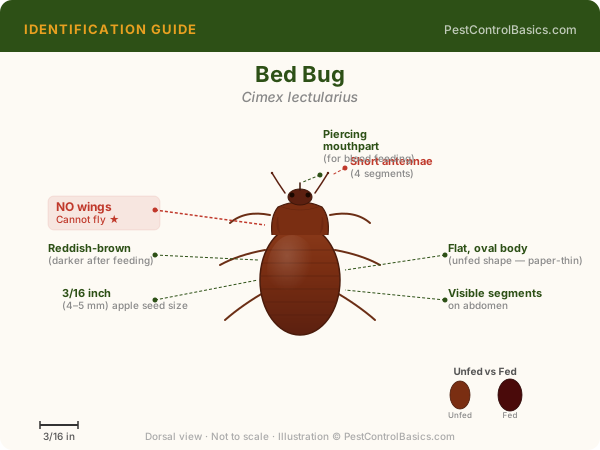
Bed Bug Heat Resistance identification guide illustration

Illustrated identification guide — PestControlBasics.com

🔍 Identification

Thermal death points: Instant death above 122°F (50°C). 90-minute exposure at 113°F (45°C) achieves 90%+ mortality. 7 days at 0°F (-18°C) kills all life stages including eggs. The key variable: heat must reach these temperatures IN THE HIDING LOCATIONS — not just in the air of the room. Bed bugs in a wall void, inside a mattress seam, or under floor insulation can be several degrees cooler than the air temperature in the room. Professional equipment achieves uniform heating through all locations simultaneously.

🧬 Biology & Behavior

Eggs are the most heat-resistant stage: they require either higher temperature or longer exposure time than adults and nymphs. This is why 'a hot car in summer' is not an effective treatment — interior car temperatures cycle and don't maintain lethal temperature uniformly for long enough periods. Dryers at high heat work precisely because they tumble items to ensure uniform exposure.

⚠️ Damage & Health Risk

All life stages including the heat-resistant egg stage in all hiding locations.

🔧 DIY Treatment

Professional heat treatment for whole-room or whole-structure; dryer at highest heat setting for 30 minutes for clothing and bedding; commercial PackTite heat chamber for individual items.

👷 When to Call a Pro

Licensed PCO heat treatment with calibrated equipment and multi-point temperature monitoring is the only approach that reliably achieves uniform lethal temperature throughout the treated space.

❓ FAQ

Why doesn't leaving my car in the summer sun kill bed bugs?
Car temperatures in summer can reach 140°F+ in direct sun — hot enough to kill bed bugs. But the temperature fluctuates (drops when clouds pass), the temperature is uneven throughout the car, and bed bugs in hidden locations (under seat fabric, in car frame voids) may never reach lethal temperature. Extended, consistent temperature is required. Professional car heat treatments use controlled equipment for this reason.
Is cold effective against bed bugs?
Yes — 0°F (-18°C) for 7 days kills all life stages including eggs. This can be used for items that can safely be frozen. The challenge: most home freezers cycle and may not consistently maintain 0°F. Commercial freezers and extended exposure times are needed for reliable cold treatment.

📚 More on This Topic

Related guides and profiles:

🔗 Bed Bugs🔗 Bed Bug Protocol for Apartment Buildings🔗 Bed Bug Life Cycle: 5 Nymph Stages Explained🔗 Does Raid Kill Bed Bugs?
🧪 Recommended Treatment Products
Bed Bug Treatment Guide CimeXa Dust CrossFire Diatomaceous Earth
Full product guides with mixing rates and safety info. → Browse All 130 Pesticide Guides
📚 Sources: EPA Bed Bug Guide · CDC Bed Bug FAQ
Published: Jan 1, 2025 · Updated: Apr 7, 2026

🗺️ US Distribution — Bed Bug Temperature Requirements

image/svg+xml
Common Occasional Not Present
States Present
30
Occasional
14
Primary Region
Nationwide (urban centers)
📊 Source: University extension services, USDA, CDC vector data, and published entomological surveys.