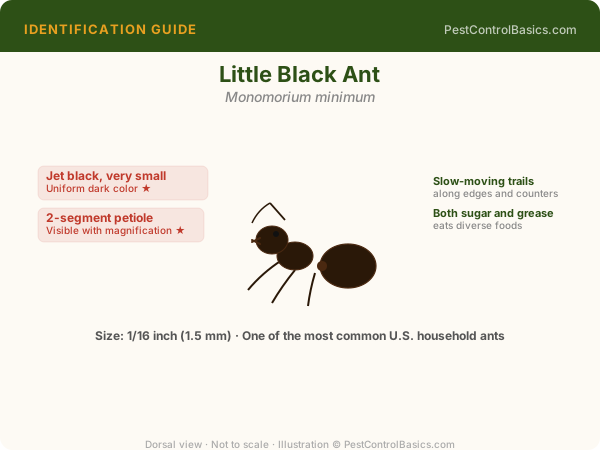
Original illustration by PestControlBasics.com. Use anatomical labels above to confirm your identification.
🔍 Identification
Adults: 1-5mm; black, stocky, with humped thorax; short legs; clear wings. Females bite and feed on blood. Distinguished from other flies by their stocky humpbacked silhouette. Found in swarms near fast-moving rivers and streams in April-June across northern states.
🧬 Biology & Behavior
Larvae develop in fast-moving oxygenated water — rivers, streams, and spillways. Pupate attached to rocks underwater. Adults emerge in spring synchronously in enormous numbers. Females require blood meals for egg development. They're crepuscular — most active around dawn and dusk in overcast conditions.
⚠️ Damage & Health Risk
Painful bites that commonly cause significant local swelling, redness, and allergic reactions ('black fly fever' — headache, fever, swollen lymph nodes in sensitive individuals). Can be fatal to livestock when bites are extremely numerous. Vectors of onchocerciasis in Africa/Latin America but not in North America.
🔧 DIY Treatment
DEET (25-50%) provides best repellent protection. Head nets for outdoor work in severe black fly country. Wear light-colored, tight-weave clothing covering skin. Avoid dawn/dusk outdoor activity in peak season. Move away from stream banks — populations drop significantly 100+ feet from water.
👷 When to Call a Pro
Larviciding with Bti in major river systems is done by state agencies during severe years. Individual homeowners have limited control options beyond personal protection.