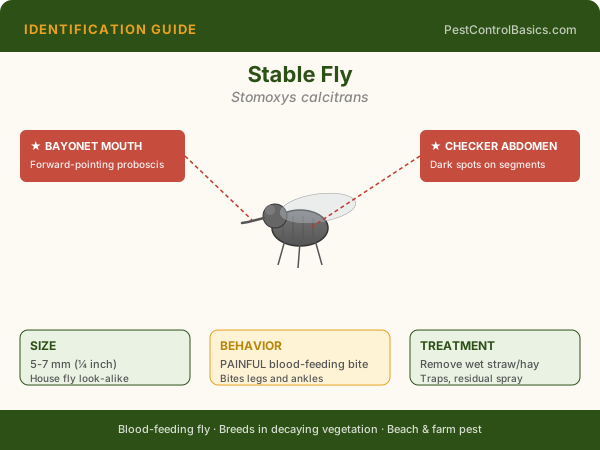
Illustrated identification guide — PestControlBasics.com
🔍 Identification
6-8mm; identical to house fly except for a forward-pointing, rigid, bayonet-like proboscis visible when the fly is at rest — house flies have a fleshy, sponging proboscis that can't be seen extending forward. Both sexes bite (unlike mosquitoes where only females bite). Found near livestock, beaches, and any decaying vegetation.
🧬 Biology & Behavior
Both adults bite for blood meals — unusual among muscid flies. Breeding sites: decaying vegetation mixed with animal waste, seaweed on beaches, compost, and livestock bedding. Beach communities with washed-up seaweed experience seasonal outbreaks. Responsible for significant livestock productivity losses through repeated biting stress.
⚠️ Damage & Health Risk
Painful bites (particularly lower legs); livestock production losses; nuisance in beach communities during seaweed wrack events; transmission of some livestock pathogens.
🔧 DIY Treatment
For beach settings: remove seaweed wrack before it decomposes (primary breeding site). For livestock: permethrin-treated ear tags, back rubbers, or pour-on products. Sticky ribbon traps. Insecticide application to breeding areas. DEET provides some protection.
👷 When to Call a Pro
Beach community management programs addressing seaweed removal are the most effective large-scale prevention.