HomePest LibraryHouse Fly
Disease Vector — Sanitation First
🪰

House Fly

Musca domestica

The house fly contaminated the last surface it landed on before landing on your food. It vomits digestive fluid to dissolve food, absorbs the liquid, and deposits bacteria from the last garbage can, manure pile, or animal carcass it visited. Understanding their disease transmission is the motivation to take them seriously.

Disease transmissionEvery landing deposits pathogens
Breed inGarbage, manure, decaying organic matter
Lifespan10–25 days adult
Eggs to adult8–10 days in warm conditions
Primary controlSanitation + exclusion — then bait or traps
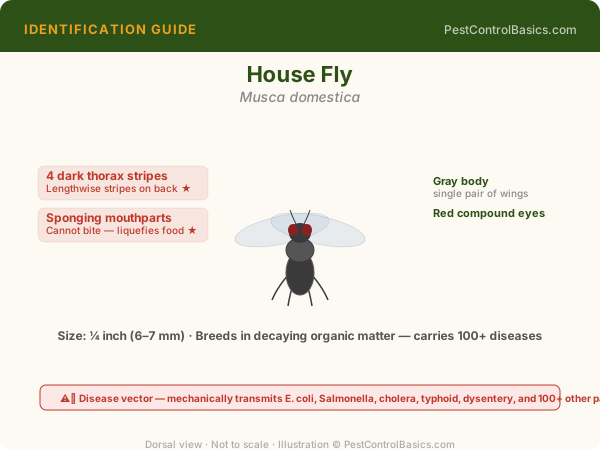
📐 FIELD GUIDE ILLUSTRATION
House Fly (Musca domestica) identification illustration with labeled anatomical features — PestControlBasics.com

Original illustration by PestControlBasics.com. Use anatomical labels above to confirm your identification.
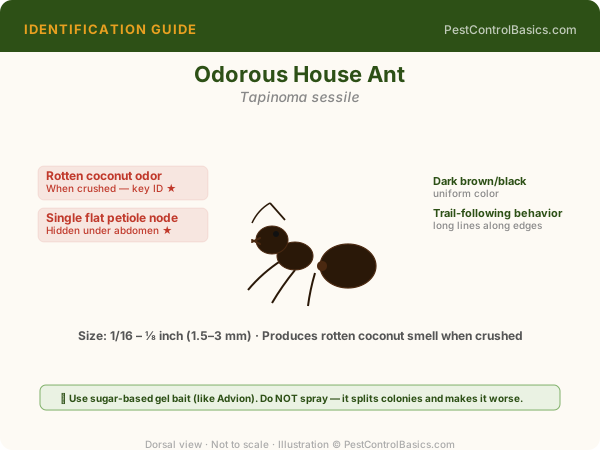
📐 FIELD GUIDE ILLUSTRATION
Odorous House Ant (Tapinoma sessile) identification illustration with labeled anatomical features — PestControlBasics.com

Original illustration by PestControlBasics.com. Use anatomical labels above to confirm your identification.

🔍 Identification Photo

Use this photo to confirm your identification. Click to enlarge. Correct ID is the essential first step to effective treatment.

House fly (Musca domestica) — FOUR dark stripes on gray thorax; red compound eyes; sponge mouthparts (cannot bite); each

House fly (Musca domestica) — FOUR dark stripes on gray thorax; red compound eyes; sponge mouthparts (cannot bite); each landing deposits bacteria

📷 Wikipedia / Wikimedia Commons / CC BY-SA

⚠️ Photo loaded live from Wikipedia/Wikimedia Commons (CC BY-SA). Appearance varies by region, age, and sex. When uncertain, contact a licensed pest professional.

Disease Transmission

What house flies actually do when they land

A house fly cannot eat solid food — it liquefies food first by vomiting digestive fluid onto it, then absorbing the liquid. Every time a fly lands on food you're about to eat, it deposits bacteria from every surface it has recently visited.

House flies have been documented carrying over 100 pathogens including Salmonella, E. coli, typhoid, cholera, and several eye diseases. They transmit these mechanically — by carrying organisms on their body surface, in their gut, and in the vomit droplets they deposit while feeding.

A single fly can lay 500–900 eggs in its lifetime, in batches of 75–150 deposited directly on suitable organic matter. Egg-to-adult development takes as little as 6–8 days in warm conditions. A sanitation problem that creates breeding sites can produce overwhelming fly populations very quickly in summer.

Control

Source elimination + Spinosad bait

Sanitation is primary: House flies need breeding sites — garbage, manure, food waste, and compost. Sealed garbage cans with tight lids, frequent garbage pickup, and clean compost management eliminate the breeding sites that support large populations. Without breeding sites, fly populations remain at low levels from wild influx.

Exclusion: Window and door screens in good repair prevent indoor entry. Check all screen frames for gaps — even 1/4 inch gaps allow flies through. Door sweeps on exterior doors.

Spinosad fly bait: Captivate Fly Bait or QuikStrike Fly Bait contain spinosad — an organic-certified insecticide that's mixed into an attractant that flies consume. Placed in areas out of reach of children and pets (on fly bait stations, under tables, in utility areas), spinosad bait provides dramatic population reduction. This is the most effective chemical control available.

UV light traps: Commercial UV fly traps (not the backyard bug zappers that mostly kill beneficial insects) capture and kill large numbers of house flies when placed inside buildings. Position away from windows and doors — near the breeding area, not the entry point.

Quick Reference
Size1/4 inch
ColorGray with 4 dark stripes on thorax
EyesLarge compound, reddish
Larvae (maggots)White, legless — found in breeding site
Disease vectorsSalmonella, E. coli, typhoid, cholera
Breeding siteGarbage, manure, compost, animal waste
Lifecycle8–10 days to adult in warm weather
Best baitSpinosad fly bait (Captivate, QuikStrike)
Related Guides
🦟 Mosquito Guide →🌿 Spinosad — Organic Control →🪲 Spinosad Guide →
Not sure? AI Bug ID →Find a Pro →
House Fly
House Fly
🧪 Recommended Treatment Products
Pyrethrin Aerosol Bti (Drain/Fungus Gnats) IPM Guide
Full product guides with mixing rates and safety info. → Browse All 130 Pesticide Guides

Frequently Asked Questions

How do I know if I have House Fly?

Signs of House Fly include physical sightings, droppings or frass, damage to food or materials, and unusual odors. Inspect hidden areas like wall voids, behind appliances, and in storage spaces. A flashlight inspection after dark is often most revealing.

Are House Fly dangerous to humans or pets?

House Fly can pose health risks including bites, allergic reactions, food contamination, and disease transmission. Children, elderly, and pets are especially vulnerable. Consult a pest management professional when an infestation is confirmed.

Can I eliminate House Fly myself?

Light infestations may be manageable with DIY baits, traps, and targeted treatments. Established infestations typically require professional intervention. Misapplied products often scatter pests and worsen the problem long-term.

How long does House Fly treatment take?

Timelines vary by infestation size and method. Baits may take 1–4 weeks to work through a colony. Chemical treatments often require 2–3 applications spaced 2–4 weeks apart. Monitor for 30–60 days after treatment to confirm elimination.

What attracts House Fly to my home?

House Fly are typically drawn by food sources, standing moisture, warmth, and shelter. Sealing entry points, reducing clutter, fixing leaks, and storing food in airtight containers are the most effective long-term prevention measures.

Related Resources

📚 Full Pest Library🧪 DIY vs. Pro Quiz💰 Cost Guide🌿 IPM Guide🔍 Find a Pro
🔗 Related Pests
Crane Fly Drain Fly Fruit Fly Blow Fly Horse Fly Cluster Fly
Compare similar pests to confirm your identification. → Use our ID Flowchart
🔮
Reviewed by Derek GiordanoContent on PestControlBasics.com is developed with input from certified pest management professionals and cross-referenced against EPA, CDC, and university extension guidance. Last reviewed: April 2026.
📚 Sources: EPA Termite Guide · NPMA Termite Info
Published: Jan 1, 2025 · Updated: Apr 7, 2026

🗺️ US Distribution — House Fly

image/svg+xml
Common Occasional Not Present
States Present
51
Occasional
0
Primary Region
All 50 states (indoor pest)
📊 Source: University extension services, USDA, CDC vector data, and published entomological surveys.