🕷️ Blacklegged Tick Life Cycle

Ixodes scapularis · Acari: Ixodidae

Deer tick nymphs are poppy-seed sized, nearly impossible to see, and responsible for most Lyme disease transmission. Understanding the 2-year life cycle explains why treatment must target the nymph-active months.

Deer TickLyme DiseaseLife CycleNymphIxodesMay Treatment
🕷️
Risk Level
Lyme Vector Biology
📐 FIELD GUIDE ILLUSTRATION
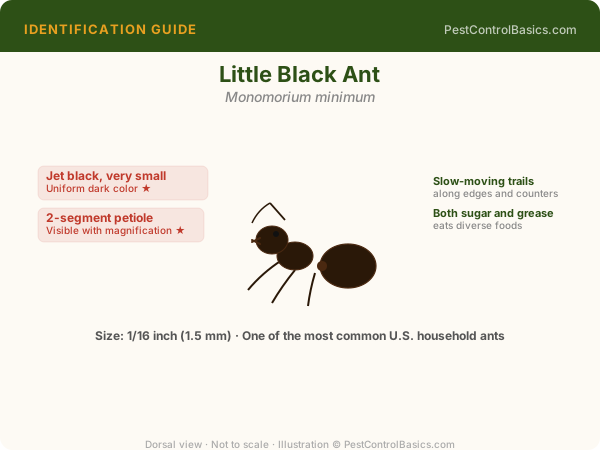
Little Black Ant (Monomorium minimum) identification illustration with labeled anatomical features — PestControlBasics.com

Original illustration by PestControlBasics.com. Use anatomical labels above to confirm your identification.

🔬
PestControlBasics Editorial Team
Reviewed by Derek Giordano · Updated 2026

🔍 Identification

4 life stages over 2 years: Egg (spring) → Larva (August-September, feeds on mice, not humans — not yet infected) → Nymph (May-August, feeds on mice/deer/humans — PRIMARY LYME RISK — 1-2mm, poppy seed size, nearly invisible) → Adult (October-May, feeds on deer/humans — larger but most active in cooler months when people are less outdoors). Nymphs cause 90%+ of Lyme disease cases because of their tiny size and peak activity during outdoor season.

🧬 Biology & Behavior

The white-footed mouse is the primary Lyme reservoir — mice infect larvae, which become nymphs that transmit to humans. Deer are important for adult tick reproduction but are poor Lyme reservoirs. 'Deer ticks' could more accurately be called 'white-footed mouse ticks' for understanding Lyme epidemiology. The transmission window: infected ticks must be attached for 36+ hours to transmit Lyme — prompt tick removal is highly protective.

⚠️ Damage & Health Risk

Lyme disease transmission (most common vector-borne disease in the US — 476,000 cases annually); anaplasmosis; babesiosis; Powassan virus (rare but serious).

🔧 DIY Treatment

May-August nymph treatment: bifenthrin spray on lawn edges and woodland borders; tick tubes placed along wooded edges (targets white-footed mice). October adult treatment: bifenthrin repeat application. Permethrin on clothing for personal protection. Daily tick checks after outdoor activity.

👷 When to Call a Pro

Professional tick management programs combining May and September spray applications plus tick tube placement along woodland edges reduce tick populations by 70-90% in research trials.

❓ FAQ

When should I treat my yard for ticks?
Two critical windows: May (targeting nymphs — highest Lyme risk stage) and September (targeting adults). May treatment is the most important. Apply bifenthrin to lawn edges, ornamentals, and a 3-foot band into any wooded areas. Tick tubes placed along wooded borders in May and September target white-footed mice — the primary Lyme reservoir.
How long must a tick be attached to transmit Lyme?
The Borrelia bacteria that causes Lyme disease typically requires 36-48 hours of tick attachment to transmit effectively. This is why prompt tick removal is so important — removing ticks within 24 hours of attachment dramatically reduces Lyme transmission risk. The body check after outdoor activity is therefore one of the most effective Lyme prevention measures available.
📚 Sources: CDC Tick Prevention · CDC Lyme Disease
Published: Jan 1, 2025 · Updated: Apr 7, 2026
🧪 Recommended Treatment Products
Permethrin Clothing Repellent Comparison DEET Picaridin Metarhizium (Biological)
Full product guides with mixing rates and safety info. → Browse All 130 Pesticide Guides

🗺️ US Distribution — Deer Tick Life Cycle

image/svg+xml
Common Occasional Not Present
States Present
49
Occasional
2
Primary Region
Continental US
📊 Source: University extension services, USDA, CDC vector data, and published entomological surveys.