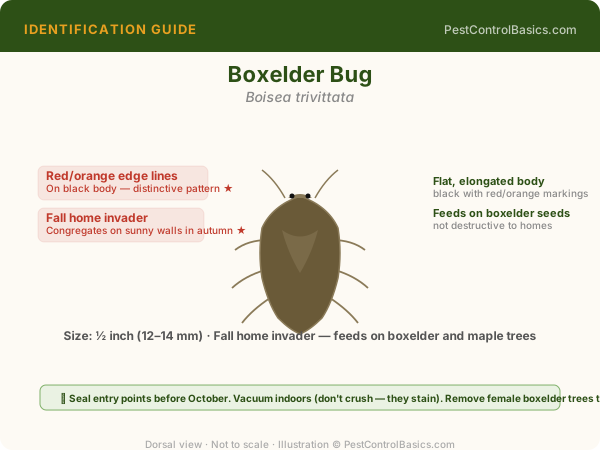
Original illustration by PestControlBasics.com. Use anatomical labels above to confirm your identification.
🔍 Identification
Annual cycle: Adults overwinter in wall voids and protected structures (October-March). Emergence in spring when temperatures warm (April-May). Migration to boxelder, maple, and ash trees — primary food source for nymphs through summer. New adult generation develops by late summer. September aggregation on south/west-facing walls as adults seek overwintering sites. Entry into structures through gaps. Repeat.
🧬 Biology & Behavior
The September aggregation phase is the management window. Before aggregation (September 1-15): bifenthrin spray on south/west walls creates a contact-kill barrier intercepting approaching adults. After aggregation: spray is still helpful but less effective as many are already in wall voids. Winter: indoor individuals are hibernating in wall voids — spray doesn't reach them and kills only those that emerge into living spaces. There is no treatment that kills hibernating boxelder bugs in walls.
⚠️ Damage & Health Risk
Nuisance aggregation on building exteriors; indoor entry in fall and re-emergence in winter and spring warmth; foul odor when crushed; staining from orange pigment.
🔧 DIY Treatment
September 1-15 bifenthrin spray on south/west walls. Vacuum indoor individuals in winter (don't spray). Seal gaps before aggregation season.
👷 When to Call a Pro
Rarely warranted beyond perimeter spray.