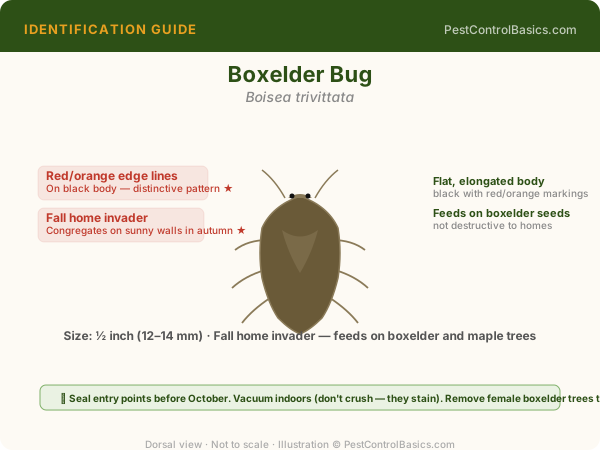
Original illustration by PestControlBasics.com. Use anatomical labels above to confirm your identification.
🔍 Identification
Boxelder tree: medium deciduous tree; compound leaves with 3-5 leaflets; found throughout the US; extremely fast-growing (a weed tree in many landscapes); male and female flowers on separate trees (dioecious). Female trees: produce winged seed clusters (samaras) in fall — the food source for boxelder bug nymphs. Male trees: produce pollen only; no seeds; no boxelder bug food source.
🧬 Biology & Behavior
Boxelder bugs can only complete development by feeding on female boxelder tree seeds. Without seed-producing female trees in the vicinity, boxelder bug populations cannot build. Removing female boxelder trees from a property while retaining male trees (or non-boxelder trees) eliminates local population growth — though adults from neighboring areas will still aggregate on warm surfaces in fall.
⚠️ Damage & Health Risk
No direct damage from the tree itself; boxelder trees are considered weedy and invasive in many landscapes due to rapid aggressive growth; female trees specifically support boxelder bug populations.
🔧 DIY Treatment
Remove female boxelder trees and replace with non-boxelder species. Male boxelder trees can be retained. This eliminates the local pest breeding source. September perimeter spray handles remaining adult pressure from neighboring trees.
👷 When to Call a Pro
Not applicable for tree removal — consult a certified arborist for safe tree removal.