🐛 Boxelder Tree and Its Pest

Acer negundo · Host Plant Biology

The boxelder bug only breeds on boxelder tree seeds. Removing or replacing female boxelder trees on a property eliminates the local breeding source — but neighboring trees will still produce aggregations.

BoxelderTree BiologyPest SourceFemale TreeDioeciousFall Invader
🐛
Risk Level
Pest Source
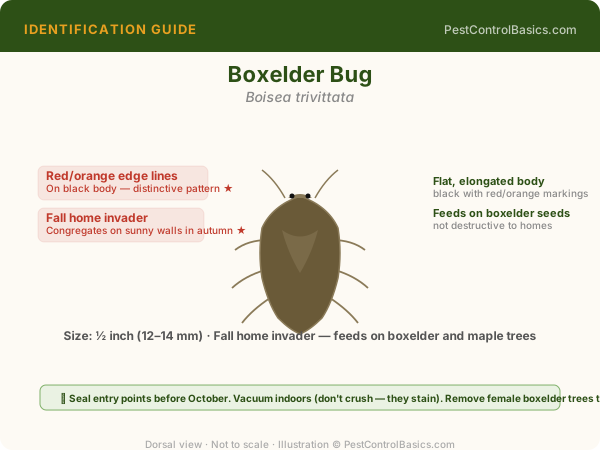
📐 FIELD GUIDE ILLUSTRATION
Boxelder Bug (Boisea trivittata) identification illustration with labeled anatomical features — PestControlBasics.com

Original illustration by PestControlBasics.com. Use anatomical labels above to confirm your identification.

🔬
PestControlBasics Editorial Team
Reviewed by Derek Giordano · Updated 2026

🔍 Identification

Boxelder tree: medium deciduous tree; compound leaves with 3-5 leaflets; found throughout the US; extremely fast-growing (a weed tree in many landscapes); male and female flowers on separate trees (dioecious). Female trees: produce winged seed clusters (samaras) in fall — the food source for boxelder bug nymphs. Male trees: produce pollen only; no seeds; no boxelder bug food source.

🧬 Biology & Behavior

Boxelder bugs can only complete development by feeding on female boxelder tree seeds. Without seed-producing female trees in the vicinity, boxelder bug populations cannot build. Removing female boxelder trees from a property while retaining male trees (or non-boxelder trees) eliminates local population growth — though adults from neighboring areas will still aggregate on warm surfaces in fall.

⚠️ Damage & Health Risk

No direct damage from the tree itself; boxelder trees are considered weedy and invasive in many landscapes due to rapid aggressive growth; female trees specifically support boxelder bug populations.

🔧 DIY Treatment

Remove female boxelder trees and replace with non-boxelder species. Male boxelder trees can be retained. This eliminates the local pest breeding source. September perimeter spray handles remaining adult pressure from neighboring trees.

👷 When to Call a Pro

Not applicable for tree removal — consult a certified arborist for safe tree removal.

❓ FAQ

How do I know if my boxelder tree is male or female?
Female boxelder trees produce clusters of winged seeds (samaras) in late summer and fall — these are the distinctive hanging clusters that look like bunches of keys. Male trees produce only pollen and have no seed clusters. Observing the tree in August-October when seed clusters are most visible is the easiest time to determine sex.
If I remove the boxelder tree, will boxelder bugs go away?
Local population will decline significantly since the breeding source is removed. However, adult boxelder bugs from neighboring trees will still aggregate on south-facing structures in September — they travel from a wide area seeking overwintering sites. Removing the tree reduces population pressure but doesn't eliminate the fall aggregation entirely.

📚 More on This Topic

Related guides and profiles:

🔗 🐛 Boxelder Bug — Complete Fall Invasion Guide🔗 How to Get Rid of Boxelder Bugs — September Is the Only Window🔗 🐛 Boxelder Bug
📚 Sources: EPA Safe Pest Control · NPMA Pest Guide
Published: Jan 1, 2025 · Updated: Apr 7, 2026

🗺️ US Distribution — Boxelder Tree

image/svg+xml
Common Occasional Not Present
States Present
49
Occasional
2
Primary Region
Continental US
📊 Source: University extension services, USDA, CDC vector data, and published entomological surveys.