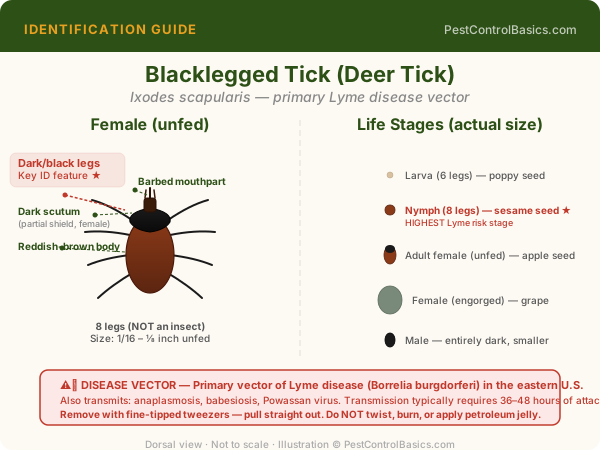
Illustrated identification guide — PestControlBasics.com
🔍 Identification
Why 36-48 hours? Borrelia burgdorferi (the Lyme bacterium) is in the tick's midgut at the time of attachment. As the tick feeds, the bacteria begin migrating toward the salivary glands — this migration requires time (approximately 24-36 hours at minimum). Before migration is complete, even if the tick bites, minimal spirochetes are in the salivary glands to transmit. After 36-48 hours of feeding, the migration is complete and transmission becomes likely.
🧬 Biology & Behavior
Critical caveats: This is a population-level generalization, not an absolute — some transmission before 24 hours has been documented. Powassan virus (also tick-transmitted) can transmit within minutes of attachment. Nymph ticks (the primary Lyme transmission stage at 1-2mm) are nearly impossible to feel during feeding, making the time-of-attachment unknown for most discovered ticks. This is why check frequency matters more than any spray program for personal Lyme prevention.
⚠️ Damage & Health Risk
Lyme disease (476,000 cases/year in US); anaplasmosis; babesiosis; Powassan virus (rare but dangerous).
🔧 DIY Treatment
Daily full-body tick checks — the most impactful intervention. Permethrin-treated clothing — kills ticks before attachment. DEET/picaridin on skin. May and September perimeter spray for yard management. Tick tubes for white-footed mouse population targeting.
👷 When to Call a Pro
Professional tick management combining spring spray with tick tube placement provides 70-90% reduction in tick populations in research trials.