πŸ•·οΈ Deer Tick Lyme Transmission

Ixodes scapularis Β· Acari: Ixodidae

The 36-48 hour Lyme transmission window makes daily tick checks extraordinarily effective at preventing Lyme disease. Here's the biology behind the rule.

Lyme DiseaseTransmission36 HoursDeer TickPrevention ScienceBorrelia
πŸ•·οΈ
Risk Level
Disease Transmission Science
πŸ”¬
PestControlBasics Editorial Team
Reviewed by Derek Giordano Β· Updated 2026
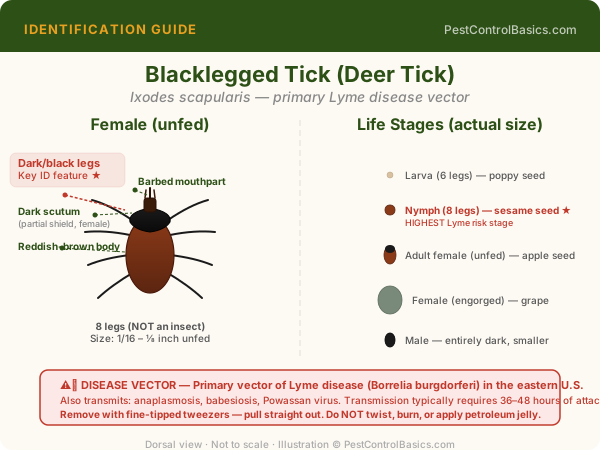
Deer Tick Lyme Transmission identification guide illustration

Illustrated identification guide β€” PestControlBasics.com

πŸ” Identification

Why 36-48 hours? Borrelia burgdorferi (the Lyme bacterium) is in the tick's midgut at the time of attachment. As the tick feeds, the bacteria begin migrating toward the salivary glands β€” this migration requires time (approximately 24-36 hours at minimum). Before migration is complete, even if the tick bites, minimal spirochetes are in the salivary glands to transmit. After 36-48 hours of feeding, the migration is complete and transmission becomes likely.

🧬 Biology & Behavior

Critical caveats: This is a population-level generalization, not an absolute β€” some transmission before 24 hours has been documented. Powassan virus (also tick-transmitted) can transmit within minutes of attachment. Nymph ticks (the primary Lyme transmission stage at 1-2mm) are nearly impossible to feel during feeding, making the time-of-attachment unknown for most discovered ticks. This is why check frequency matters more than any spray program for personal Lyme prevention.

⚠️ Damage & Health Risk

Lyme disease (476,000 cases/year in US); anaplasmosis; babesiosis; Powassan virus (rare but dangerous).

πŸ”§ DIY Treatment

Daily full-body tick checks β€” the most impactful intervention. Permethrin-treated clothing β€” kills ticks before attachment. DEET/picaridin on skin. May and September perimeter spray for yard management. Tick tubes for white-footed mouse population targeting.

πŸ‘· When to Call a Pro

Professional tick management combining spring spray with tick tube placement provides 70-90% reduction in tick populations in research trials.

❓ FAQ

If I find a tick that's been on for less than 36 hours, do I need antibiotics?
Based on current CDC guidelines, prophylactic doxycycline may be considered for deer tick bites in high-endemic areas if the tick was attached for 36+ hours. For ticks removed before 36 hours in an endemic area, the risk is low but physician consultation is still reasonable if concerned. Powassan virus can transmit in minutes, but it's rare β€” most early-removed ticks carry zero risk.
How do I know how long a tick has been attached?
Engorgement is the primary clue: an unfed nymph is about 1-2mm. A fully engorged nymph is 3-4mm and appears darker. Partial engorgement suggests 12-24 hours of feeding. Full engorgement suggests 36-72 hours. If you can't tell the engorgement state, assume conservative management and consult a physician in endemic areas.
πŸ“š Sources: CDC Tick Prevention Β· CDC Lyme Disease
Published: Jan 1, 2025 Β· Updated: Apr 7, 2026

πŸ—ΊοΈ US Distribution β€” Deer Tick and Lyme Disease

image/svg+xml
Common Occasional Not Present
States Present
49
Occasional
2
Primary Region
Continental US
πŸ“Š Source: University extension services, USDA, CDC vector data, and published entomological surveys.