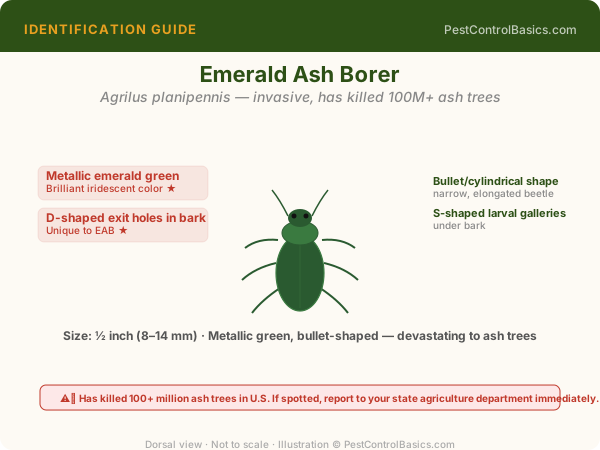
Original illustration by PestControlBasics.com. Use the labeled features above to confirm your identification.
🔍 Identification
Adults: 10-13mm; metallic emerald green; elongated; found on ash bark June-August. Evidence: D-shaped exit holes (8-10mm) in bark; serpentine galleries under bark; heavy woodpecker activity (hammering for larvae is often the first visible sign); top-down dieback; epicormic sprouting at base. Confirmed hosts: all North American ash species (Fraxinus) plus white fringetree (Chionanthus).
🧬 Biology & Behavior
2026 established range: 36+ states from Maine to Colorado and south to Louisiana. Still expanding westward into unconfested ash forests in the Great Plains. States like Kansas and Nebraska have limited time windows before full establishment. The USDA biological control program (four parasitoid wasps from Asia) is showing some early promise in research plots but population-level impact remains limited.
⚠️ Damage & Health Risk
Death of virtually all untreated ash trees within 3-5 years of EAB arrival; loss of canopy in urban areas (ash was among the most planted urban trees); ecological cascade effects as ash disappears from forest understory; loss of ash timber resource.
🔧 DIY Treatment
Emamectin benzoate (TREE-äge) trunk injection every 2 years — the most effective treatment, protecting high-value ash trees long-term. Imidacloprid soil drench (Bayer Tree & Shrub) annually — less effective but homeowner-applicable. Dinotefuran bark spray — applied to lower bark, absorbed systemically. Begin treatment before EAB is confirmed in your county — treating after infestation is less effective.
👷 When to Call a Pro
Certified arborist injection with emamectin benzoate (TREE-äge) is the gold standard for high-value specimen ash trees — 2-year protection per treatment.