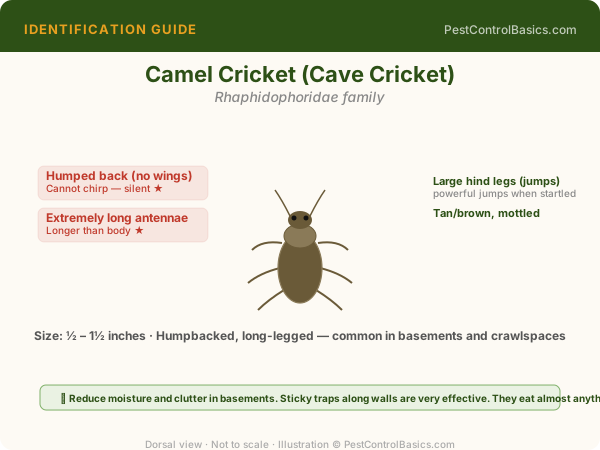
Original illustration by PestControlBasics.com. Use anatomical labels above to confirm your identification.
🔍 Identification
15-25mm; black to dark brown; cylindrical body; long hind legs; long antennae; females have long ovipositor. Males: distinct wing structures that produce chirping by rubbing together (stridulation). Temperature-dependent chirping rate — the Dolbear's Law formula allows estimating temperature from cricket chirp frequency. Found near foundation, under appliances, in wall voids.
🧬 Biology & Behavior
Primarily outdoor insects that enter in fall as temperatures drop. They're attracted to lights and warmth. Males chirp continuously — at night, a single field cricket inside a wall void produces enough noise to be heard throughout a room. Naturally die within weeks indoors (cannot breed without outdoor conditions). Multiple species across the US.
⚠️ Damage & Health Risk
Noise nuisance (can be maddening when inside a wall); minor fabric damage (wool, silk); rarely a significant infestation.
🔧 DIY Treatment
September perimeter bifenthrin spray before fall migration. Sticky traps along baseboards to locate and capture indoor individuals. Reduce exterior lighting. For the single chirping cricket: locate by sound (stops when you move, resumes when still — triangulate from multiple positions) and capture.
👷 When to Call a Pro
Rarely warranted — exterior spray and sticky trap monitoring is sufficient.