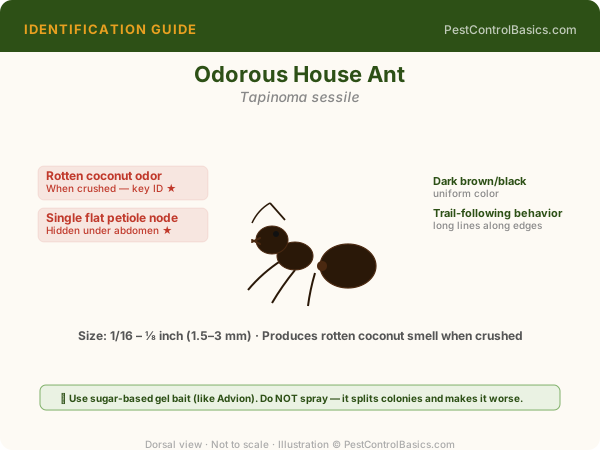
Original illustration by PestControlBasics.com. Use anatomical labels above to confirm your identification.
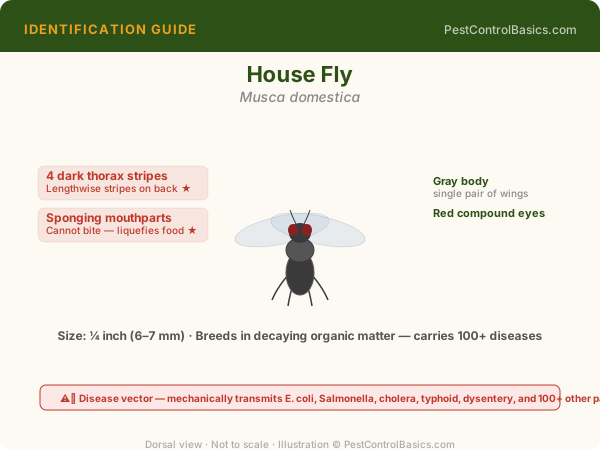
Original illustration by PestControlBasics.com. Use anatomical labels above to confirm your identification.
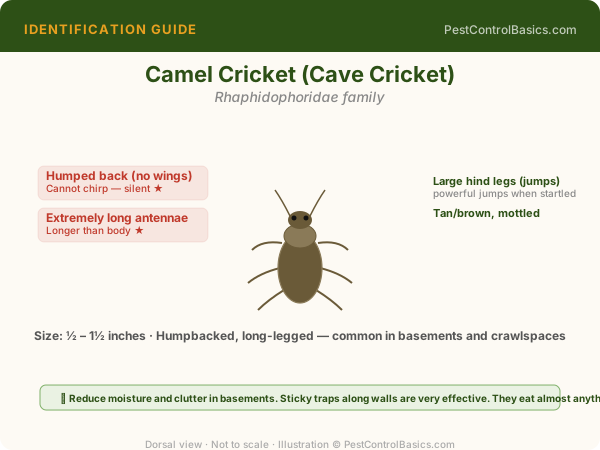
Original illustration by PestControlBasics.com. Use anatomical labels above to confirm your identification.
🔍 Identification
Adults: 16-22mm; light yellowish-brown; 3 tail appendages (two cerci + one central ovipositor on females); long antennae. Chirping: males only, by stridulation (wing-rubbing). Chirp rate is temperature-dependent — the 'Dolbear's Law' approximation: count chirps in 14 seconds + 40 = temperature in Fahrenheit.
🧬 Biology & Behavior
House crickets breed readily indoors in warm conditions. They're attracted to warmth and moisture, gathering near furnaces, water heaters, and fireplaces. They're omnivores that eat fabric, paper, and food scraps. They can complete their entire lifecycle indoors year-round if conditions are favorable.
⚠️ Damage & Health Risk
Incessant chirping (primarily males at night — one chirping cricket sounds louder than expected); fabric damage (silk, wool, nylon); contamination of food; psychological disturbance from noise.
🔧 DIY Treatment
Find the cricket(s): use a flashlight at night and follow the chirping. Crickets go silent when approached but resume quickly. Check behind appliances, inside fireplaces, under cardboard boxes. Apply gel bait (Niban Granular Bait) in harborage areas. Sticky traps catch crickets overnight. Apply bifenthrin spray perimeter to exterior to prevent re-entry.
👷 When to Call a Pro
For large-scale infestations (hundreds of crickets entering from outside), professional perimeter treatment in August-September prevents the worst fall invasions.