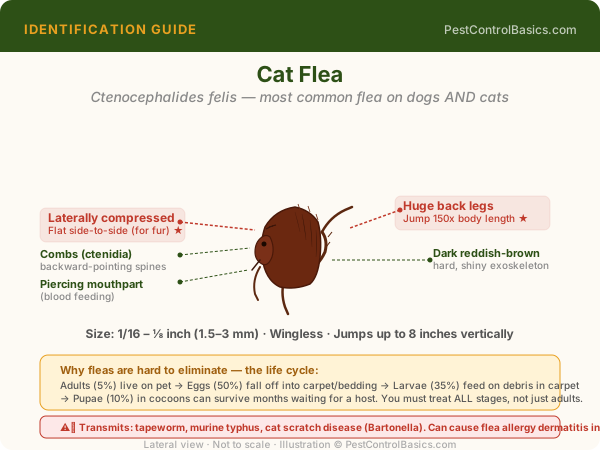
Illustrated identification guide — PestControlBasics.com
🔍 Identification
The pupal cocoon: sticky silk cocoon with debris attached; adheres to carpet fibers, base boards, and floor cracks; creates an impermeable physical and chemical barrier; no insecticide currently registered or available can penetrate the cocoon. The pupa inside can remain in dormancy for up to 140+ days, waiting for host signals before emerging as an adult. This is not a treatment failure — it is the biological reality of flea control that determines treatment protocols.
🧬 Biology & Behavior
Pupal emergence is triggered by: vibration (footsteps), CO2, warmth, and infrared light. This is why vacuuming frequently during treatment (creating vibration and CO2) is as important as chemical treatment — it stimulates pupal emergence into the treated environment where emerging adults contact the product and die before laying eggs. Without regular vacuuming, pupae can remain dormant for months, creating persistent waves of emergence.
⚠️ Damage & Health Risk
Ongoing flea emergence for weeks after apparently successful treatment; continued biting from emerging adults; frustration and apparent treatment failure.
🔧 DIY Treatment
Vacuum daily (stimulates pupal emergence). Maintain IGR (pyriproxyfen or methoprene) in the environment — emerging adults contact IGR and cannot reproduce. Adulticide repeat application at 7-day intervals kills emerging adults before they lay eggs. Maintain for 21 days minimum.
👷 When to Call a Pro
Professional treatment with appropriate adulticide + IGR combination plus post-treatment monitoring protocol.