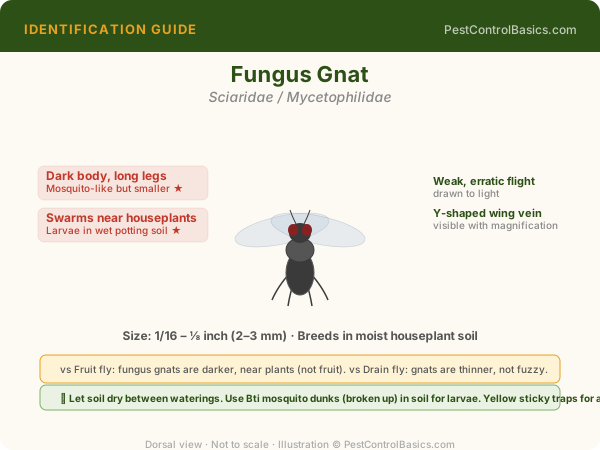
Original illustration by PestControlBasics.com. Use anatomical labels above to confirm your identification.
🔍 Identification
Adults: 2-4mm; dark, slender, long-legged flies that look like tiny mosquitoes but don't bite. Distinctive Y-shaped wing vein pattern (requires 10x magnification). Weak fliers that run on soil surface. Larvae: white, slender maggots up to 5mm with a shiny black head capsule — found in the top inch of moist potting soil.
🧬 Biology & Behavior
The lifecycle: adults lay eggs in moist soil → larvae hatch and feed on fungal hyphae, decaying organic matter, and — critically — actively growing plant roots → pupation in soil → adult emergence. The entire cycle completes in 3-4 weeks in warm conditions. Adults live only 7-10 days but lay 100-300 eggs each.
⚠️ Damage & Health Risk
Larvae feeding on roots causes: yellowing, wilting, and stunting of plants; damping off of seedlings (major problem for seed starting); increased vulnerability to root rot; adult gnats are primarily aesthetic nuisance.
🔧 DIY Treatment
Bti soil drench (Mosquito Bits): Soak Mosquito Bits in water, strain, use the water to irrigate plants. Bti kills larvae within 24-48 hours. Apply every 2 weeks for 6-8 weeks. This is the most effective single treatment.
Let soil dry out: Allow top 2 inches to completely dry between waterings. Larvae die in dry soil.
Sticky traps: Yellow sticky cards placed horizontally on soil surface catch adults and reduce egg-laying.
Beneficial nematodes: Steinernema feltiae applied as soil drench kills larvae biologically.
👷 When to Call a Pro
Rarely needed. Bti + cultural controls (letting soil dry) resolve virtually all fungus gnat infestations within 6-8 weeks.