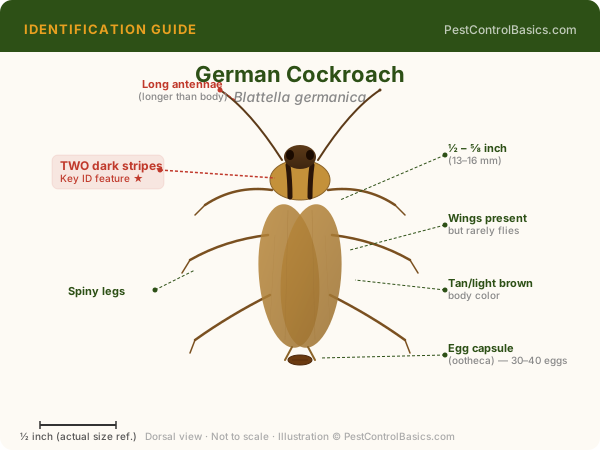
Original illustration by PestControlBasics.com. Use anatomical labels above to confirm your identification. For photo references, see the identification section below.
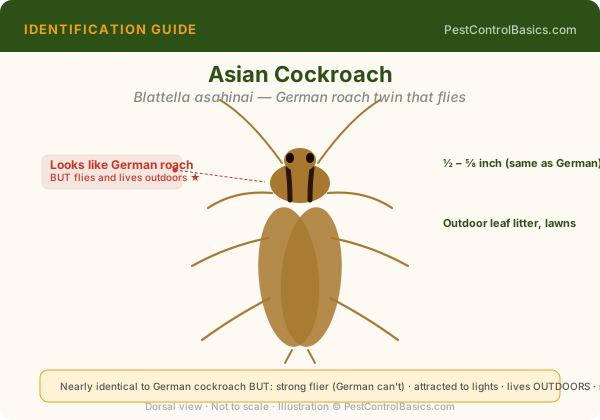
Original illustration by PestControlBasics.com. Use anatomical labels above to confirm your identification.
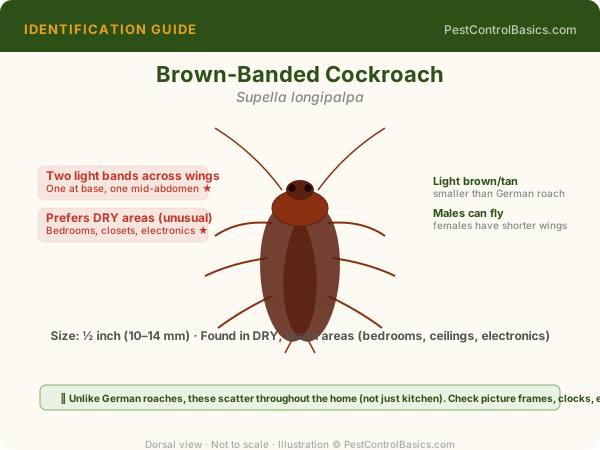
Original illustration by PestControlBasics.com. Use anatomical labels above to confirm your identification.
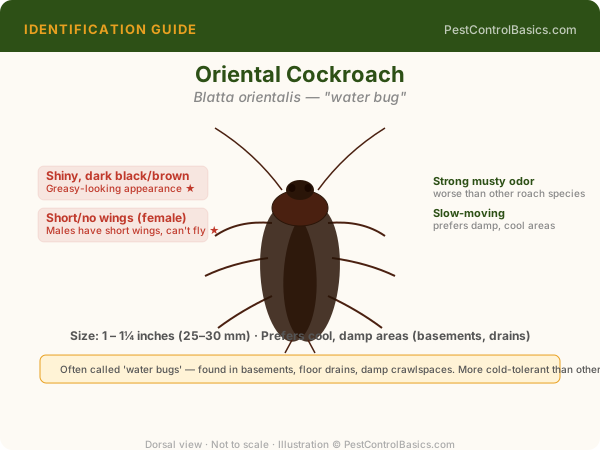
Original illustration by PestControlBasics.com. Use anatomical labels above to confirm your identification.
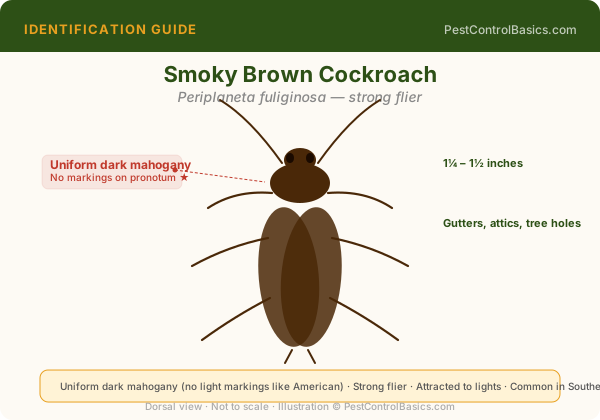
Original illustration by PestControlBasics.com. Use anatomical labels above to confirm your identification.
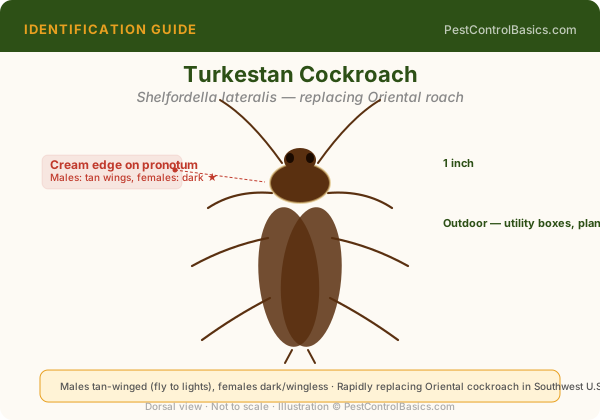
Original illustration by PestControlBasics.com. Use anatomical labels above to confirm your identification.
🔍 Identification Photo
Use this photo to confirm your identification. Click to enlarge.
German cockroach (Blattella germanica) — tan, ½ inch; TWO dark parallel stripes behind the head are the definitive field ID mark
📷 Wikipedia / Wikimedia Commons / CC BY-SA⚠️ Photo loaded live from Wikipedia/Wikimedia Commons (CC BY-SA).
⚠️ Photos loaded from Wikipedia/Wikimedia Commons. Appearance varies by region, age, and sex.
Despite the name, it didn't come from Germany
The German Cockroach is misnamed — entomologists believe it originated in Southeast Asia, likely the Indian subcontinent. European traders called it "German" because it arrived in their countries via German trade routes in the 18th century. The name stuck, even though Germany had nothing to do with its origin.
Today it is the most common cockroach species inside structures worldwide. Unlike outdoor roaches that occasionally wander in, the German cockroach is an obligate indoor species — it cannot survive cold temperatures and has evolved to live exclusively in human structures. It travels not by flying or crawling in from outside, but by hitchhiking — in grocery bags, cardboard boxes, used appliances, furniture, and luggage.
The #1 source of new infestations is used cardboard boxes, secondhand appliances (especially microwaves and toasters), and grocery bags from infested stores. A single pregnant female with her egg capsule is enough to start a full infestation within 2–3 months. Always inspect secondhand appliances thoroughly before bringing them inside.
German vs. other cockroaches — it matters
Treatment varies by species. American cockroaches (the big ones) are outdoor roaches that occasionally wander in — very different problem, very different solution. Here's how to confirm you're dealing with a German cockroach.
German cockroach allergens are a leading cause of childhood asthma — especially in urban environments. Their shed skins, feces, and saliva contaminate food surfaces and trigger allergic reactions. They mechanically spread Salmonella, E. coli, and dozens of other pathogens by walking across food preparation areas. This is not a "nuisance" pest — it's a genuine public health threat.
Why spray barriers make infestations worse
This is the single most important thing on this page. Most people grab a can of raid or a spray barrier product and treat their kitchen. This is exactly the wrong move — and here's why.
Roaches Detect and Avoid Repellents
German cockroaches are extraordinarily good at detecting repellent chemicals and simply routing around them. A spray barrier along baseboards does not kill the colony — it fragments it. Roaches scatter to new harborage areas throughout the structure, spreading the infestation to rooms that weren't previously affected.
Repellents Prevent Bait from Working
If you apply a repellent spray and then attempt to use gel bait (the correct treatment) in the same area, the roaches will smell the repellent and avoid the bait entirely. You've now poisoned your own treatment plan. Repellents and baits are mutually exclusive — you must choose one.
They Develop Resistance Fast
German cockroaches have the fastest-known resistance development of any urban pest. Populations exposed to pyrethroids (the most common spray ingredient) can develop resistance within a single generation. Some urban populations are now resistant to multiple classes of insecticide simultaneously.
The best thing you can do if you have a German cockroach infestation is to put down your spray can and do nothing with chemicals until you're ready to apply gel bait correctly. A week of waiting is far better than a week of spraying that makes the problem worse and harder to treat.
| Method | Kills Roaches? | Reaches Harborage? | Eliminates Colony? | Verdict |
|---|---|---|---|---|
| Spray Barrier (Raid, etc.) | Some workers | No | No — spreads it | Avoid |
| Gel Bait (Advion, Maxforce) | Yes + colony | Yes — they carry it | Yes, 1–2 weeks | Best method |
| Boric Acid Powder | Yes | If applied correctly | Partial | Good supplement |
| IGR (Gentrol) | Sterilizes | Yes | Prevents re-growth | Use with bait |
| Ultrasonic Devices | No | No | No | Useless |
| Bombs / Foggers | Some workers | No — they hide deeper | No — spreads colony | Avoid |
Why you can't afford to wait
No pest reproduces faster in a structure than the German cockroach. Understanding the math explains why small infestations explode and why early treatment is critical.
A female German cockroach produces 4–8 egg capsules in her lifetime, each containing 30–40 eggs. She carries each capsule until just before hatching — meaning she is a mobile egg incubator that you can never catch and destroy with a spray. The only way to stop reproduction is to eliminate the females, which requires they consume bait and die before producing their next capsule.
Year-round threat — but peaks exist
Unlike outdoor pests, German cockroaches are active year-round indoors. Activity peaks in summer when heat and humidity accelerate reproduction. However, winter infestations are equally serious — the warmth of your heating system provides ideal conditions. There is no "off season" for German cockroaches.
The protocol that actually eliminates them
The correct treatment sequence is: clean → declutter → gel bait → IGR → monitor → repeat in 2 weeks. No sprays. No bombs. Here's exactly what to use and how.
Apply gel bait in pea-sized dots (NOT smears) in 10–20 locations per room — inside cabinet hinges, under appliances, behind the fridge, under the sink, along edges where roaches travel. Small dots in many places outperform large globs in few places. Replace every 2 weeks or when consumed.
DIY treatment is effective for light-to-moderate infestations when done correctly. However, if you've had a German cockroach infestation for more than 3 months, are seeing them during the day, or have multiple rooms affected — professional treatment with access to commercial-grade products and equipment will achieve faster, more complete results.
🔗 Active ingredient deep-dive: Indoxacarb (Advion) — How the Cascade Kill Works