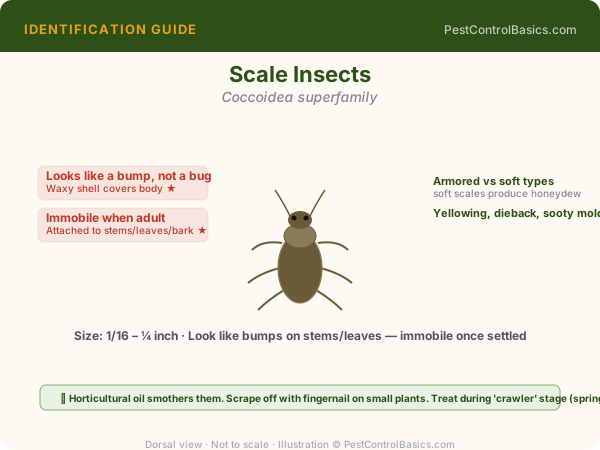
Original illustration by PestControlBasics.com. Use the labeled features above to confirm your identification.
🔍 Identification
Citrus Mealybug (Planococcus citri): Most common; oval; waxy white with short filaments of equal length. Found on stems, leaves, fruit of houseplants, citrus, grapes.
Long-Tailed Mealybug (P. longispinus): Distinctive long tail filaments (as long as the body) at the rear. Live young (no egg masses) — diagnostic. Found on ornamentals.
Root Mealybug (Rhizoecus spp.): Live in soil, feeding on roots. Often diagnosed only when plant won't respond to treatment. Waxy white colonies visible when plant is removed from pot.
🧬 Biology & Behavior
All feed by piercing and sucking plant sap. All produce honeydew supporting sooty mold. The critical difference: root mealybugs are in the soil — foliar sprays don't reach them. Confirmation requires removing the plant from its pot and examining the roots and soil.
⚠️ Damage & Health Risk
Plant decline; honeydew and sooty mold; root damage (root mealybugs); stunted growth; eventual plant death in severe infestations.
🔧 DIY Treatment
Foliar (citrus, long-tailed): isopropyl alcohol + cotton swab for accessible colonies; insecticidal soap spray; systemic imidacloprid. Root mealybugs: soil drench with imidacloprid or spinosad; repotting in fresh sterile soil; quarantine from other plants. Always check roots when plants won't improve despite correct foliar treatment.
👷 When to Call a Pro
For commercial greenhouse operations, biological control with Leptomastix dactylopii parasitoid wasps provides sustainable citrus mealybug management.