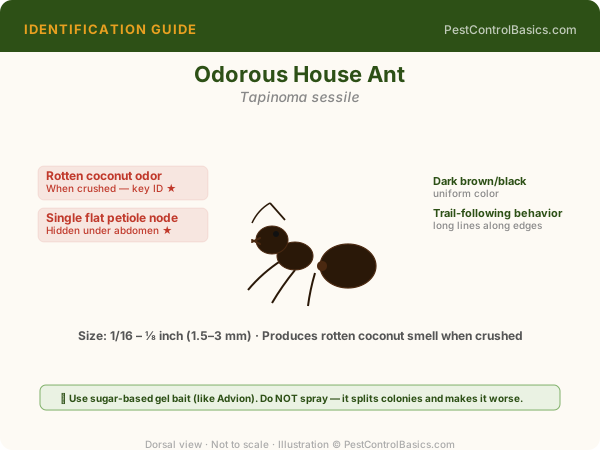
Original illustration by PestControlBasics.com. Use anatomical labels above to confirm your identification.
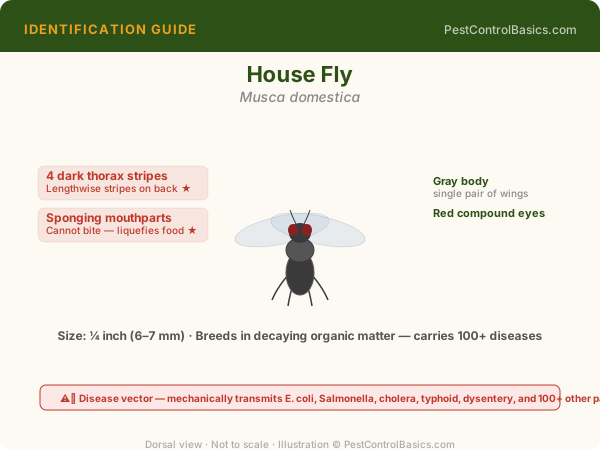
Original illustration by PestControlBasics.com. Use anatomical labels above to confirm your identification.
🔍 Identification
North American millipede: 5-10cm; cylindrical; dark brown-black; 2 legs per body segment (distinguishing from centipedes); slow-moving; curl into a spiral when disturbed. Flat-backed millipede: smaller, wider; found in leaf litter. Both: produce a foul-smelling defensive secretion that can temporarily irritate skin. Non-venomous, do not bite, harmless to humans and pets.
🧬 Biology & Behavior
Millipedes live in soil, leaf litter, and decaying organic matter at extraordinary densities — millions per acre in healthy soil. Heavy rain saturates soil and forces millipedes upward and outward, concentrating them against foundations where any gap leads them indoors. They die within 48 hours indoors without moisture. The event is temporary but can involve hundreds to thousands of individuals entering through foundation gaps.
⚠️ Damage & Health Risk
Nuisance entry in large numbers after rain; defensive secretion causing skin and eye irritation if handled; dead millipedes creating cleanup burden; psychological distress from sheer numbers.
🔧 DIY Treatment
Bifenthrin perimeter spray applied before heavy rain events creates a contact-kill barrier. Remove leaf litter and mulch from foundation contact. Improve drainage so soil doesn't saturate at the foundation. Install door sweeps. Seal gaps at the foundation with caulk and expanding foam.
👷 When to Call a Pro
Rarely warranted — perimeter spray and exclusion is sufficient.