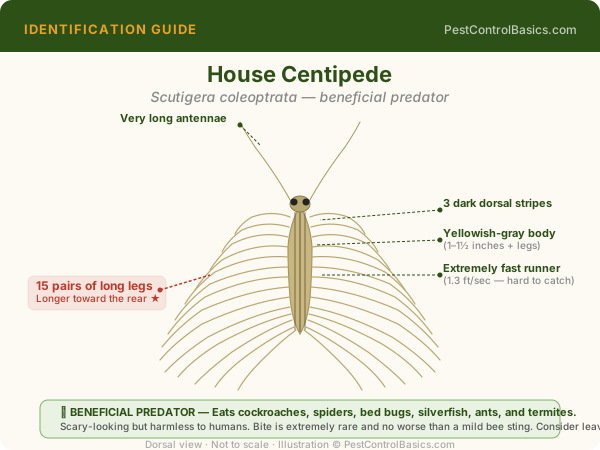
Illustrated identification guide — PestControlBasics.com
🔍 Identification
Centipede: One pair of legs per body segment; flattened body; very fast movement; first pair of 'legs' are actually venomous claws (forcipules); antenna and cerci (rear appendages); predatory. House centipede has 15 pairs of legs.
Millipede: Two pairs of legs per body segment; cylindrical, worm-like body; slow movement; no venomous claws; feeds on decaying plant matter; defensive chemicals but no bite. Rolls into a coil when threatened.
🧬 Biology & Behavior
Centipedes: Predatory — they eat insects, spiders, and small arthropods. House centipede is entirely beneficial indoors (eliminates other pests). Larger centipedes found outdoors occasionally enter and can deliver a painful but rarely dangerous bite if handled.
Millipedes: Detritivores feeding on decaying plant matter. Cannot bite. Invade in fall or after rain. Presence indicates moisture and organic debris near the foundation.
⚠️ Damage & Health Risk
Centipedes: No damage to structures or food. House centipede bites are possible but rare and mild. Large outdoor centipedes (Scolopendra in SW US) can deliver a more significant bite.
Millipedes: No biting, stinging, or structural damage. Purely nuisance. Defensive chemical secretions can cause mild skin irritation if large numbers are handled.
🔧 DIY Treatment
For centipedes: Reducing prey (other insects) is the most effective approach. Apply residual insecticide to reduce their food source. Consider whether the centipedes are actually eliminating other pest problems for you.
For millipedes: Moisture and organic matter reduction. Remove mulch from foundation contact. Dry out crawl spaces. Bifenthrin perimeter treatment. Exclusion under doors.
👷 When to Call a Pro
Rarely warranted. Focus on the underlying conditions that attract them.