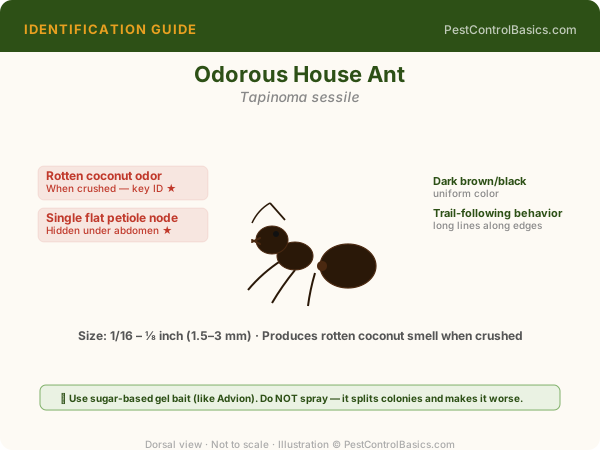
Original illustration by PestControlBasics.com. Use anatomical labels above to confirm your identification.
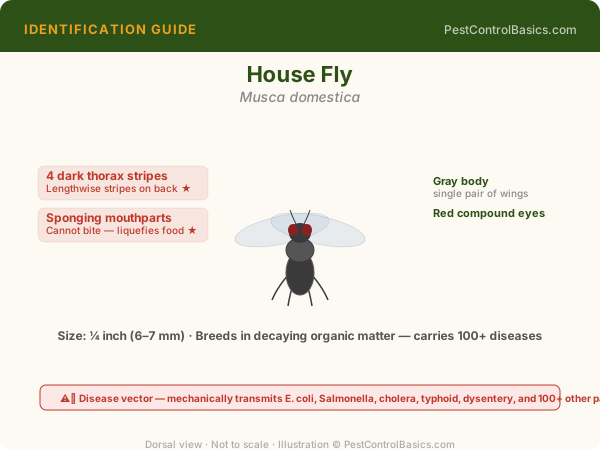
Original illustration by PestControlBasics.com. Use anatomical labels above to confirm your identification.
🔍 Identification
Three species commonly invade homes:
Flat-backed Millipede (Polydesmida): 20-50mm; flattened body with lateral keels; produces defensive cyanide compounds — don't crush near face. Most common.
Greenhouse Millipede (Oxidus gracilis): 15-22mm; slender; introduced; associated with greenhouses and moisture near structures. Light brown.
Rusty Millipede (Trigoniulus corallinus): 15-20mm; bright rust-red; common in the Southeast US and Hawaii.
🧬 Biology & Behavior
All millipedes are detritivores — they eat decaying organic material. All require high moisture. All can be found outdoors in millions, which concentrates them near structure foundations during dry periods or rain. They can't breed indoors — all individuals entering structures die within 24-48 hours without moisture.
⚠️ Damage & Health Risk
Nuisance only; flat-backed millipede chemical secretions can cause skin irritation; no structural damage; no disease.
🔧 DIY Treatment
Address moisture: remove mulch from foundation contact; fix drainage; reduce irrigation against foundation. Apply bifenthrin perimeter spray. Install door sweeps. CimeXa dust in crawl space and basement gaps. Indoor individuals die naturally — vacuum or sweep rather than spray.
👷 When to Call a Pro
Rarely warranted alone. Moisture control is the lasting solution.