Illustrated identification guide — PestControlBasics.com
🔍 Identification
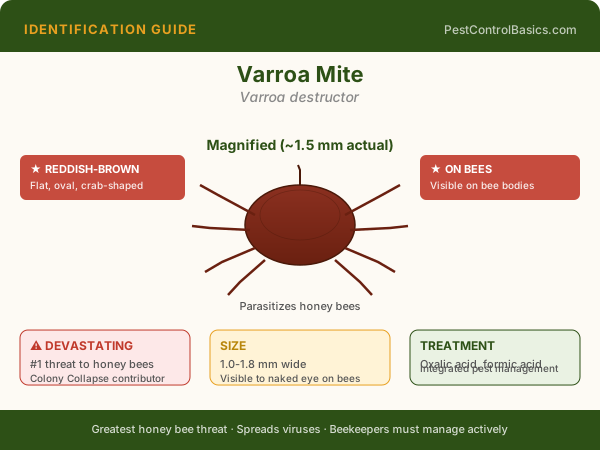
Adult mite: 1-2mm; oval; reddish-brown; visible to naked eye on adult bees (appears as a small dark speck on the bee's abdomen). Reproduces in capped brood cells. Adult females pierce bee cuticle and feed on bee fat bodies (historically described as hemolymph feeding — updated research shows fat body feeding). Found on adult bees and in brood cells throughout the colony.
🧬 Biology & Behavior
Varroa is the number one cause of colony loss globally. A colony without varroa management typically collapses within 2-3 years. Beyond direct feeding damage, varroa vectors deformed wing virus (DWV) and other bee viruses — the virus transmission is now understood to be as damaging as the direct feeding. Colonies with high varroa loads show: deformed wing bees, reduced winter survival, and sudden colony collapse.
⚠️ Damage & Health Risk
Colony collapse if untreated; transmission of deformed wing virus causing wingless bees; reduced colony honey production; brood death; bee immune system suppression.
🔧 DIY Treatment
Beekeeping management required — not structural pest management. Oxalic acid treatment (dribble method or vapor) is the most effective low-chemical option. Thymol (Apilife Var, Apiguard) — organic acid. Amitraz (Apivar strips) — conventional. Mite washing to monitor levels (sugar shake or alcohol wash) should be done monthly during spring and fall.
👷 When to Call a Pro
Commercial beekeeping: integrated varroa management programs combining monitoring, threshold-based treatment timing, and rotation between treatment types to prevent resistance.