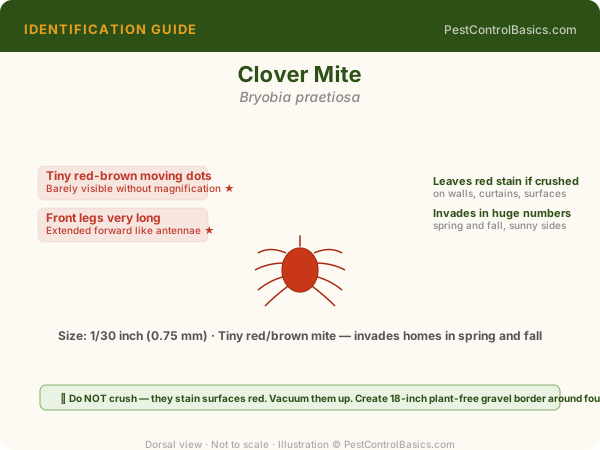
Original illustration by PestControlBasics.com. Use anatomical labels above to confirm your identification.
🔍 Identification
0.75mm; bright red; oval body. Front pair of legs is much longer than other legs — extends forward like antennae (the key field ID character). Visible as slow-moving bright red dots on window sills, walls, and sunny exterior surfaces in spring and fall. Sometimes confused with spider mites, but much rounder and found on building surfaces rather than plants.
🧬 Biology & Behavior
Clover mites are plant-feeding mites that feed on clover, grass, and other vegetation. They don't feed on humans, pets, or household materials. They invade structures in massive numbers in spring (when populations peak) and fall (seeking overwintering sites). They enter through windows, door frames, and any gap in the building envelope. They cannot survive long indoors without plant food.
⚠️ Damage & Health Risk
No biting, no disease, no damage to fabric or structures. The only issue: they leave a red stain on white walls, curtains, and textiles when crushed. Populations of thousands on window sills is disturbing and difficult to address quickly.
🔧 DIY Treatment
Treat the grass/vegetation around the foundation with bifenthrin or lambda-cyhalothrin spray in late March and again in October before invasion peaks. Create a vegetation-free gravel or mulch strip around the foundation — reduces migration. Don't crush mites on white surfaces — use a vacuum or damp cloth.
👷 When to Call a Pro
For large-scale infestations, professional perimeter treatment in March is highly effective and worth the cost if annual invasions are severe.