HomePest LibrarySpider Mites
Garden Pest — Thrives in Heat & Dust
🕷

Spider Mites

Tetranychus urticae — Two-Spotted Spider Mite

Spider mites are barely visible to the naked eye — 0.5mm — but their damage is unmistakable: stippled yellow or bronze leaves with fine webbing on undersides. They thrive in hot, dry, dusty conditions and reproduce explosively. A strong water spray disrupts colonies; neem oil and miticides provide control.

Size0.5mm — barely visible without magnification
SignStippled yellow leaves + fine webbing undersides
Thrives inHot, dry, dusty conditions
Natural enemiesPredatory mites — avoid broad-spectrum pesticides
Best first stepStrong water spray to undersides of leaves
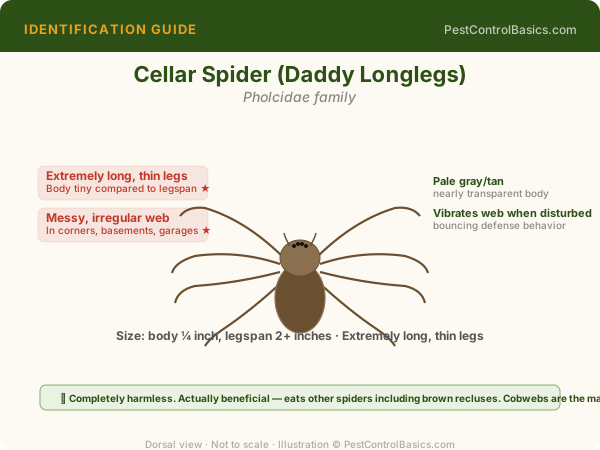
📐 FIELD GUIDE ILLUSTRATION
Cellar Spider (Pholcidae) identification illustration with labeled anatomical features — PestControlBasics.com

Original illustration by PestControlBasics.com. Use anatomical labels above to confirm your identification.
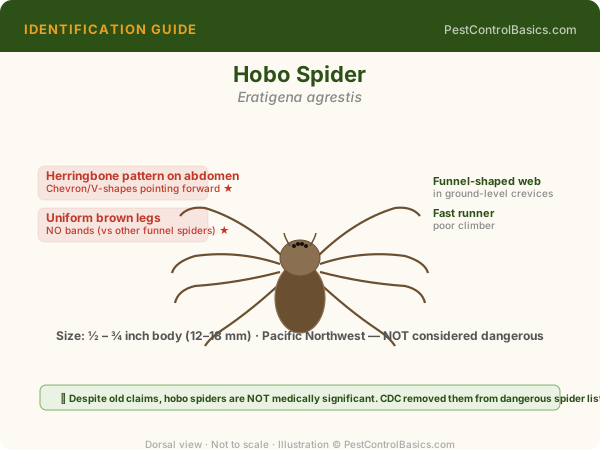
📐 FIELD GUIDE ILLUSTRATION
Hobo Spider (Eudioptilus agrestis) identification illustration with labeled anatomical features — PestControlBasics.com

Original illustration by PestControlBasics.com. Use anatomical labels above to confirm your identification.
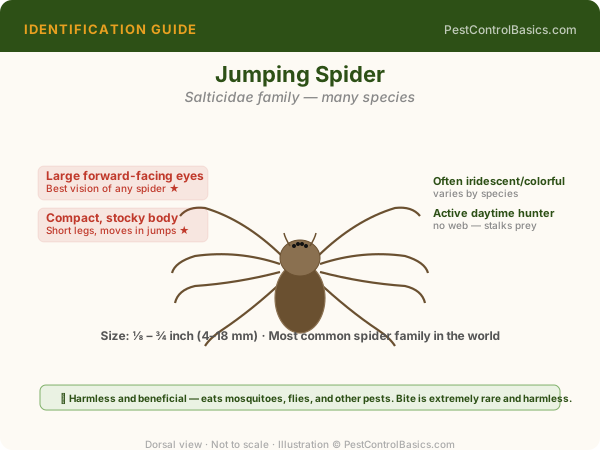
📐 FIELD GUIDE ILLUSTRATION
Jumping Spider (Salticidae) identification illustration with labeled anatomical features — PestControlBasics.com

Original illustration by PestControlBasics.com. Use anatomical labels above to confirm your identification.
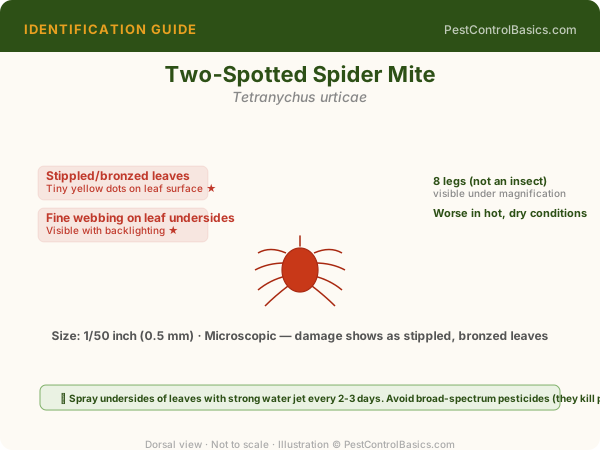
📐 FIELD GUIDE ILLUSTRATION
Spider Mite (Tetranychidae) identification illustration with labeled anatomical features — PestControlBasics.com

Original illustration by PestControlBasics.com. Use anatomical labels above to confirm your identification.
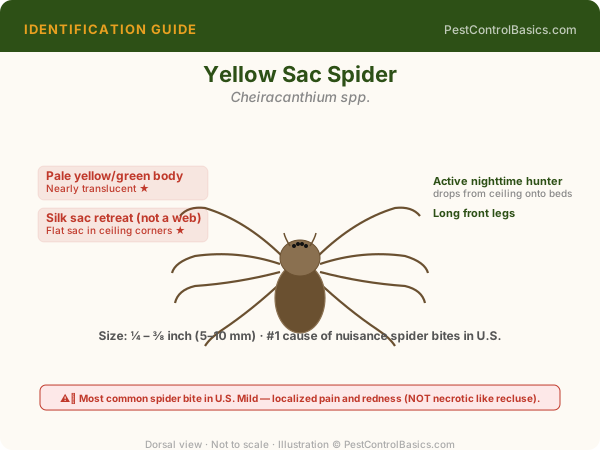
📐 FIELD GUIDE ILLUSTRATION
Yellow Sac Spider (Cheiracanthium spp.) identification illustration with labeled anatomical features — PestControlBasics.com

Original illustration by PestControlBasics.com. Use anatomical labels above to confirm your identification.

🔍 Identification Photo

Use this photo to confirm your identification. Click to enlarge. Correct ID is the essential first step to effective treatment.

Two-spotted spider mite (Tetranychus urticae) — barely visible at 0.5mm; fine webbing on leaf undersides and bronze stip

Two-spotted spider mite (Tetranychus urticae) — barely visible at 0.5mm; fine webbing on leaf undersides and bronze stippling confirm infestation

📷 Wikipedia / Wikimedia Commons / CC BY-SA

⚠️ Photo loaded live from Wikipedia/Wikimedia Commons (CC BY-SA). Appearance varies by region, age, and sex. When uncertain, contact a licensed pest professional.

Identification

Webbing + stippling is the diagnostic combination

Spider mites damage plants in a specific, recognizable pattern. Individual feeding punctures remove chlorophyll from leaf cells, creating tiny yellow or white dots (stippling) on the upper leaf surface. As the infestation intensifies, leaves take on a bronzed, dusty, or gray-silver appearance before yellowing and dropping.

The webbing test: Fine, silk-like webbing on leaf undersides and between leaves confirms spider mites. Run your finger across the underside of a stippled leaf — if you feel silk strands or see tiny specks moving, you have spider mites.

The paper test: Hold a white piece of paper under a suspected leaf and tap it sharply. Tiny specks that fall and begin moving on the white paper are spider mites.

Conditions that favor outbreaks: Spider mites thrive in hot (above 85°F), dry, dusty conditions. Drought stress on plants creates conditions ideal for rapid mite population growth. Dusty leaves (from road dust or soil splash) interfere with natural predator activity. Overuse of broad-spectrum pesticides eliminates predatory mites that naturally keep spider mite populations in check.

Control

Water spray first, then escalate if needed

Strong water spray: First and most important step. A forceful spray to leaf undersides physically removes mites, disrupts webbing, and raises humidity (which spider mites hate). Do this every 2–3 days on all affected plants. Many infestations can be managed with water spray alone if started early.

Increase humidity: Spider mites thrive in dry conditions. Increasing ambient humidity around plants through regular misting, grouping plants together, or adding a pebble tray with water slows mite reproduction significantly.

Neem oil: 2 tablespoons neem oil + 1 tsp dish soap per gallon water. Apply to all leaf surfaces especially undersides. Disrupts mite development and has some ovicidal (egg-killing) activity. Repeat every 5–7 days.

Insecticidal soap: Kills mites on contact. Must coat the mites directly. No residual. Effective but requires thorough application and repeated treatment.

Predatory mites (Phytoseiidae): Commercially available Neoseiulus californicus or Phytoseiulus persimilis are natural predators of spider mites. Effective in greenhouse settings and in organic gardens. Purchase from biocontrol suppliers.

✕ Avoid Pyrethroid Sprays

Pyrethrin and pyrethroid insecticides kill predatory mites much more effectively than they kill spider mites — using them actually worsens spider mite infestations by removing the natural biological control. If you must use an insecticide, use products specifically labeled as miticides (bifenazate, abamectin).

Quick Reference
Size0.5mm — barely visible
AppearanceOval, 8 legs, 2 dark spots each side of body
ColorYellow-green, orange, red — varies
Damage signStippled/bronzed leaves, fine webbing
Preferred conditionsHot, dry, dusty — worst in drought
LifecycleEgg to adult in 5–7 days in heat
Natural enemiesPhytoseiid predatory mites
Best controlWater spray, neem oil, miticide if severe
AI Bug Identifier →Find a Pro →
📚 Sources: CDC Venomous Spiders · EPA Safe Pest Control
Published: Jan 1, 2025 · Updated: Apr 7, 2026
Spider Mites
Spider Mites

Frequently Asked Questions

How do I know if I have Spider Mites?

Signs of Spider Mites include physical sightings, droppings or frass, damage to food or materials, and unusual odors. Inspect hidden areas like wall voids, behind appliances, and in storage spaces. A flashlight inspection after dark is often most revealing.

Are Spider Mites dangerous to humans or pets?

Spider Mites can pose health risks including bites, allergic reactions, food contamination, and disease transmission. Children, elderly, and pets are especially vulnerable. Consult a pest management professional when an infestation is confirmed.

Can I eliminate Spider Mites myself?

Light infestations may be manageable with DIY baits, traps, and targeted treatments. Established infestations typically require professional intervention. Misapplied products often scatter pests and worsen the problem long-term.

How long does Spider Mites treatment take?

Timelines vary by infestation size and method. Baits may take 1–4 weeks to work through a colony. Chemical treatments often require 2–3 applications spaced 2–4 weeks apart. Monitor for 30–60 days after treatment to confirm elimination.

What attracts Spider Mites to my home?

Spider Mites are typically drawn by food sources, standing moisture, warmth, and shelter. Sealing entry points, reducing clutter, fixing leaks, and storing food in airtight containers are the most effective long-term prevention measures.

Related Resources

📚 Full Pest Library🧪 DIY vs. Pro Quiz💰 Cost Guide🌿 IPM Guide🔍 Find a Pro
🧪 Recommended Treatment Products
Bifenthrin Deltamethrin Diatomaceous Earth Peppermint Oil Formulation Guide
Full product guides with mixing rates and safety info. → Browse All 130 Pesticide Guides
🔗 Related Pests
Velvet Mite Rat Mite Grain Mite Varroa Mite
Compare similar pests to confirm your identification. → Use our ID Flowchart
🔮
Reviewed by Derek GiordanoContent on PestControlBasics.com is developed with input from certified pest management professionals and cross-referenced against EPA, CDC, and university extension guidance. Last reviewed: April 2026.

🗺️ US Distribution — Spider Mites

image/svg+xml
Common Occasional Not Present
States Present
49
Occasional
2
Primary Region
Continental US
📊 Source: University extension services, USDA, CDC vector data, and published entomological surveys.