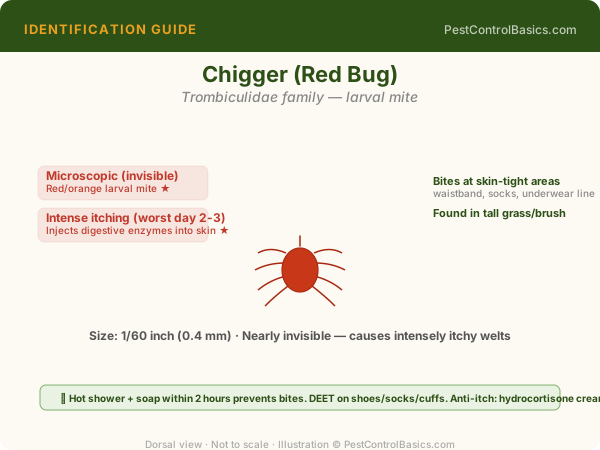
Original illustration by PestControlBasics.com. Use anatomical labels above to confirm your identification.
🔍 Identification
Barely visible — 0.2-0.4mm larvae; bright red/orange in good light. Clusters in vegetation edges: transition zones between grass and woodland, unmowed grassy areas, brush, and along stream banks. Cannot be seen without magnification. Felt only after the bite begins to react hours later.
🧬 Biology & Behavior
Only the larval stage feeds on vertebrates. They don't burrow into skin (common myth) — they attach to the skin surface, inject digestive enzymes that liquefy skin cells, and feed on the resulting fluid. The reaction occurs because human immune systems react intensely to the enzymes. By the time itching begins (3-6 hours), the chigger has often already dropped off.
⚠️ Damage & Health Risk
Intensely itchy red welts — clustered at areas where clothing fits tightly (waistbands, socks, wrists). Itching peaks in 1-2 days and can persist for 1-2 weeks. Secondary infection from scratching is the primary medical concern.
🔧 DIY Treatment
Prevention: Apply DEET or permethrin to clothing before entering suspect areas. Wear long pants tucked into socks. Shower and change clothes promptly after outdoor activity in suspect areas.
Treatment: Chiggers are likely gone by the time itching begins — treatment focuses on itch relief. Hydrocortisone cream, calamine lotion, antihistamines (oral diphenhydramine or cetirizine). Keep nails trimmed to reduce scratching damage. See a doctor if signs of secondary infection develop.
👷 When to Call a Pro
Chigger population treatment: apply sulfur powder (flowers of sulfur) to areas where chiggers are known to be present. Bifenthrin spray to vegetation perimeters reduces populations. Professional lawn treatment in severely infested areas.