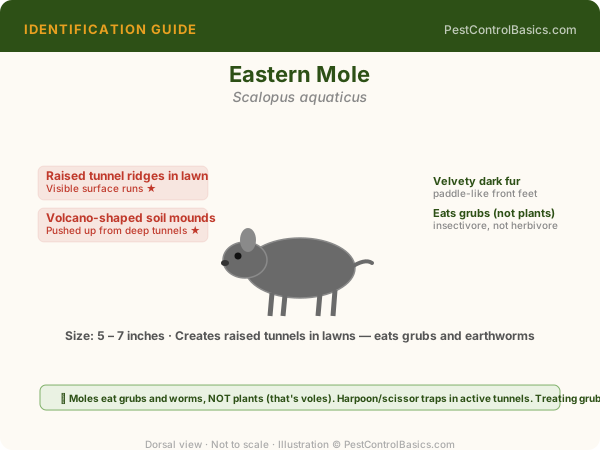
Original illustration by PestControlBasics.com. Use anatomical labels above to confirm your identification.
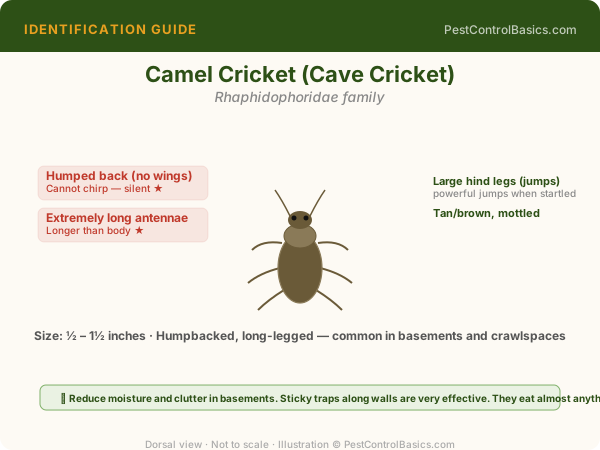
Original illustration by PestControlBasics.com. Use anatomical labels above to confirm your identification.
🔍 Identification
Adults: 30-35mm; brown; velvety; distinctive shovel-like front legs for burrowing. Evidence: spongy turf; ridges in soil from tunneling; irregular dead patches. Flush test confirmation: 2 tbsp dish soap per gallon water poured over 2 sq ft — mole crickets surface within 3 minutes. Two or more per sq ft warrants treatment.
🧬 Biology & Behavior
Three invasive species (tawny, southern, shortwinged) established in Florida and Southeast are far more destructive than native species. June treatment timing targets young nymphs near the soil surface. Adult mole crickets fly to new areas in spring. Biological control: Steinernema scapterisci nematode is host-specific and provides long-term population reduction.
⚠️ Damage & Health Risk
Extensive lawn damage from tunneling; dead patches; spongy unstable turf; particularly destructive to Bermudagrass and bahiagrass.
🔧 DIY Treatment
June soil drench with bifenthrin, imidacloprid, or chlorantraniliprole. Irrigate before treatment to bring nymphs to surface. Steinernema scapterisci nematodes for biological control.
👷 When to Call a Pro
Commercial turf: chlorantraniliprole timing with nematode program for sustained management.