πŸ› Sod Webworm

Crambus spp. Β· Lepidoptera: Crambidae

Sod webworms are caterpillars that feed on grass blades at the surface β€” completely different from white grubs that eat roots. Getting this distinction right determines the effective treatment.

CaterpillarLawn PestLepidopteraCrambidaeTurfSurface Feeder
πŸ›
Risk Level
Lawn Pest
πŸ”¬
PestControlBasics Editorial Team
Reviewed by Derek Giordano Β· Updated 2026
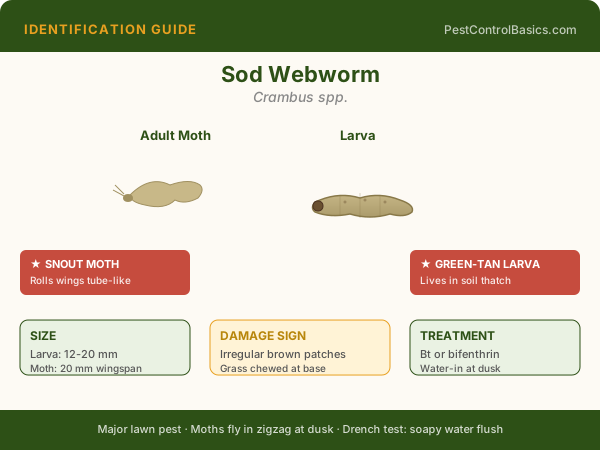
Sod Webworm identification guide illustration

Illustrated identification guide β€” PestControlBasics.com

πŸ” Identification

Adults: small moths (15-20mm wingspan) that fly in a zig-zag pattern over lawns at dusk. Larvae: 15-25mm; green-grey with dark spots; live in silk-lined tubes at the soil surface; feed at night on grass blades. Evidence: irregular brown patches appearing in July-August; birds feeding in area; visible silk tubes at base of grass when parted; larvae found by thinly slicing turf.

🧬 Biology & Behavior

Adults lay eggs on grass blades; larvae hatch and feed on grass blades at the surface through summer. Multiple generations per year in the South. Damage peaks in July-August during hot, dry weather. Cool-season grasses (Kentucky bluegrass, fescue) are most susceptible during summer heat stress.

⚠️ Damage & Health Risk

Irregular brown patches in summer turf; birds (especially starlings, blackbirds) feeding intensively in affected areas; damage typically appears suddenly and expands rapidly during hot, dry periods.

πŸ”§ DIY Treatment

Confirm sod webworm vs. white grubs: sod webworms are on the surface and damage grass blades; white grubs damage roots β€” turf with grub damage rolls up like a carpet when pulled. Treatment: spinosad or Bt spray (most effective organic); bifenthrin or lambda-cyhalothrin for fast knockdown. Apply in late afternoon β€” larvae feed at night.

πŸ‘· When to Call a Pro

For large lawn areas, professional application with boom sprayer provides more uniform coverage than homeowner hose-end sprayers.

❓ FAQ

How do I tell sod webworm damage from white grub damage?
Peel back a damaged patch: sod webworm damage leaves roots intact β€” the grass simply breaks off at the blade. White grub damage shows the roots entirely eaten β€” turf peels off the soil like a carpet. Sod webworms: grass blades eaten. White grubs: roots eaten. Totally different treatment.
When is the best time to treat sod webworms?
Apply in late afternoon to early evening when larvae are beginning to emerge from silk tubes to feed. Morning treatments are less effective because larvae retreat to tubes during the day. Spinosad is most effective when applied to actively feeding larvae.
πŸ“š Sources: EPA Safe Pest Control Β· NPMA Pest Guide
Published: Jan 1, 2025 Β· Updated: Apr 7, 2026

πŸ—ΊοΈ US Distribution β€” Sod Webworm

image/svg+xml
Common Occasional Not Present
States Present
49
Occasional
2
Primary Region
All agricultural regions
πŸ“Š Source: University extension services, USDA, CDC vector data, and published entomological surveys.