🐞 Asian Lady Beetle Biting Behavior

Harmonia axyridis Β· Coleoptera: Coccinellidae

MALB biting behavior confuses homeowners who expect 'ladybugs' to be harmless. Here's why they bite, how to prevent it, and why the bite is medically insignificant.

Asian Lady BeetleMALBBitingFall InvaderAllergenInvasive
🐞
Risk Level
Fall Invader Behavior
πŸ“ FIELD GUIDE ILLUSTRATION
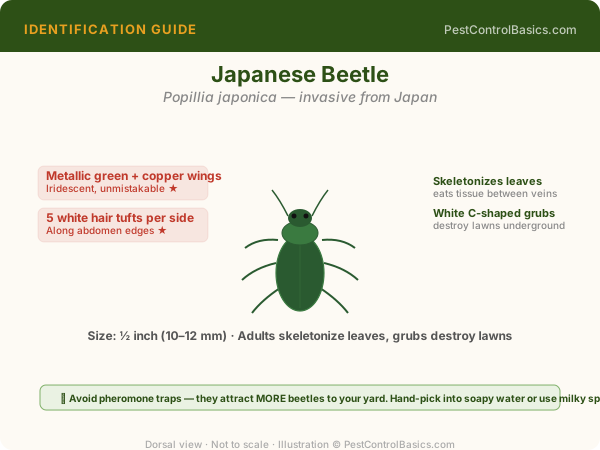
Japanese Beetle (Popillia japonica) identification illustration with labeled anatomical features β€” PestControlBasics.com

Original illustration by PestControlBasics.com. Use anatomical labels above to confirm your identification.
πŸ“ FIELD GUIDE ILLUSTRATION
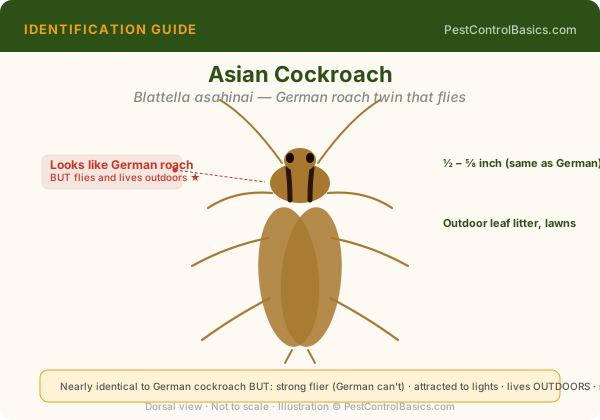
Asian Cockroach (Blattella asahinai) identification illustration with labeled anatomical features β€” PestControlBasics.com

Original illustration by PestControlBasics.com. Use anatomical labels above to confirm your identification.

πŸ”¬
PestControlBasics Editorial Team
Reviewed by Derek Giordano Β· Updated 2026

πŸ” Identification

MALB bite is a mild, brief pinch β€” not a sting. The beetle uses its chewing mouthparts to probe skin for moisture. The bite is not venomous and rarely breaks skin. Bite marks resemble a small red mark that fades within minutes. The bite is more startling than painful. Certain individuals have mild skin reactions at the bite site. Some people experience allergic reactions from prolonged exposure to MALB body proteins β€” sneezing, runny nose, and eye irritation from airborne MALB allergens indoors.

🧬 Biology & Behavior

MALB are most likely to bite when: landing on exposed skin seeking moisture (particularly on hot days); handled or grasped; or when disturbed. They bite far less readily than yellow jackets or even some ants. The bite instinct appears to be moisture-seeking behavior rather than defensive biting.

⚠️ Damage & Health Risk

Mild pinch from biting; possible minor skin irritation at bite site; allergic responses from indoor MALB allergens in sensitive individuals; staining from defensive yellow fluid when alarmed or crushed.

πŸ”§ DIY Treatment

September perimeter spray prevents indoor aggregations that lead to biting encounters. Vacuum indoor individuals (do not crush). Long sleeves and avoiding areas where MALB are aggregating in fall. For sensitive individuals: HEPA air purifier during peak indoor aggregation periods.

πŸ‘· When to Call a Pro

Rarely warranted β€” prevention through fall perimeter spray is the primary management.

❓ FAQ

Can Asian lady beetles cause allergies?
Yes β€” MALB body proteins are allergens. In homes with heavy indoor aggregations, airborne MALB proteins can trigger asthma, rhinitis (runny nose), and conjunctivitis (eye irritation) in sensitive individuals. This is a documented medical concern in areas with high MALB pressure. Reducing indoor entry through September perimeter spray is the most effective preventive measure.
Are Asian lady beetles invasive?
Yes β€” MALB (Harmonia axyridis) are native to Asia and were intentionally introduced for aphid biocontrol beginning in the 1970s-80s. They've since become invasive throughout North America and Europe, displacing native lady beetle species and becoming a significant indoor nuisance. Several native lady beetle species have declined significantly since MALB establishment.

πŸ“š More on This Topic

Related guides and profiles:

πŸ”— πŸͺ² Japanese Beetle β€” Adults & Grub ControlπŸ”— πŸͺ² Cucumber BeetleπŸ”— πŸͺ² Confused Flour BeetleπŸ”— πŸͺ² Beneficial Ground Beetles
🧪 Recommended Treatment Products
Pyrethrin Aerosol Lambda-Cyhalothrin Safety & PPE Guide Bifenthrin Carbaryl (Sevin)
Full product guides with mixing rates and safety info. → Browse All 130 Pesticide Guides
πŸ“š Sources: EPA Cockroach Control Β· CDC Cockroach Allergens
Published: Jan 1, 2025 Β· Updated: Apr 7, 2026

πŸ—ΊοΈ US Distribution β€” Why Asian Lady Beetles Bite

image/svg+xml
Common Occasional Not Present
States Present
49
Occasional
2
Primary Region
All agricultural regions
πŸ“Š Source: University extension services, USDA, CDC vector data, and published entomological surveys.