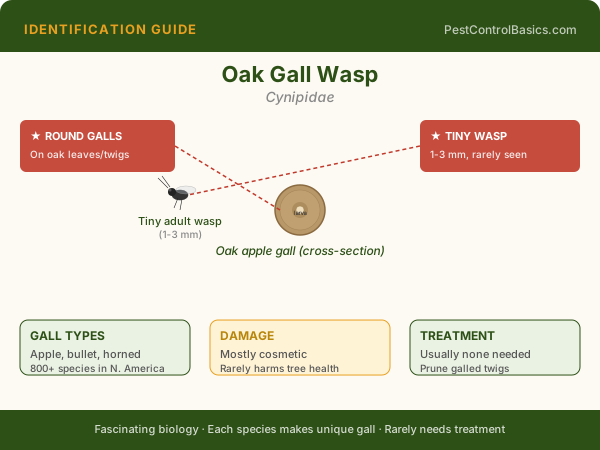
Illustrated identification guide — PestControlBasics.com
🔍 Identification
Oak Apple Gall: Large (2-5cm), round, apple-like; light green or brown; on leaves or stems. Wool Sower Gall: Cottony, white-pink, attached to stems — one of the most distinctive. Marble Gall: Round, hard, 1-2cm on stems; reddish-brown. All are induced by different Cynipidae wasp species — each creates a characteristic gall shape on specific oak species or tissue.
🧬 Biology & Behavior
Female gall wasps inject chemicals into oak tissue that redirect plant growth to form protective galls around developing larvae. The larvae develop inside, pupate, and emerge as adults. Many species have complex alternating generations — one sexual generation alternating with a parthenogenetic generation, often on different plant parts or even different plants.
⚠️ Damage & Health Risk
Virtually none on established oaks. Galls do not significantly harm healthy trees. Heavy galling on young trees or stems may weaken branches. The ecological relationships between gall wasps, oaks, and their parasitoids represent one of the most complex insect-plant interactions in nature.
🔧 DIY Treatment
No treatment needed for established oaks. Prune and dispose of heavily galled twigs if cosmetically unacceptable. For young trees with significant stem galling, removal of galled stems before emergence is possible.
👷 When to Call a Pro
Never warranted for healthy established oaks.