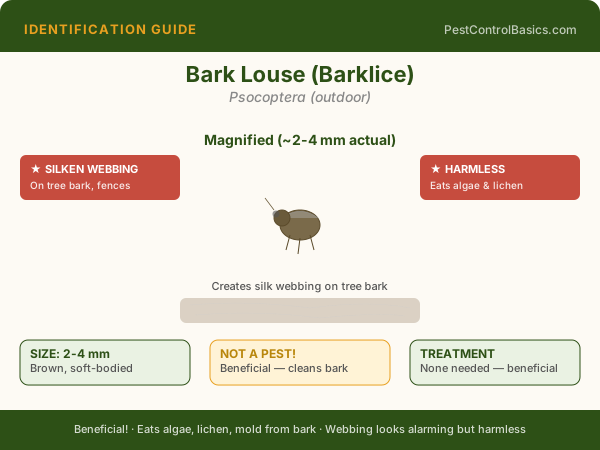
Illustrated identification guide — PestControlBasics.com
🔍 Identification
Tiny (1-2mm) soft-bodied insects; pale tan to dark; gregarious — found in thousands under communal silk webbing on tree trunks and large branches. The silk webbing (sometimes covering several square feet of bark) is the visible feature. Found on many tree species in late summer and fall. Common from Kansas and Texas eastward through the Southeast.
🧬 Biology & Behavior
Bark lice are detritivores — they feed on mold spores, algae, lichen, decaying plant matter, and other organic material on bark surfaces. They're entirely harmless to the tree — in fact, they may benefit tree health by removing surface fungi. The silk is a protective covering for the colony, not a feeding structure.
⚠️ Damage & Health Risk
Zero. Bark lice do not feed on bark tissue, leaves, or tree roots. The silk webbing is unsightly but completely harmless. They're not associated with any disease or damage to trees.
🔧 DIY Treatment
No treatment needed or appropriate. Bark lice populations are temporary and self-limiting. If the appearance is aesthetically unacceptable: a strong stream of water from a garden hose washes off the silk. They'll disperse and typically not rebuild at the same location.
👷 When to Call a Pro
Never warranted — never treat bark lice with insecticide. The internet is full of alarmed homeowners who sprayed healthy trees unnecessarily over this harmless beneficial insect.