Illustrated identification guide — PestControlBasics.com
🔍 Identification
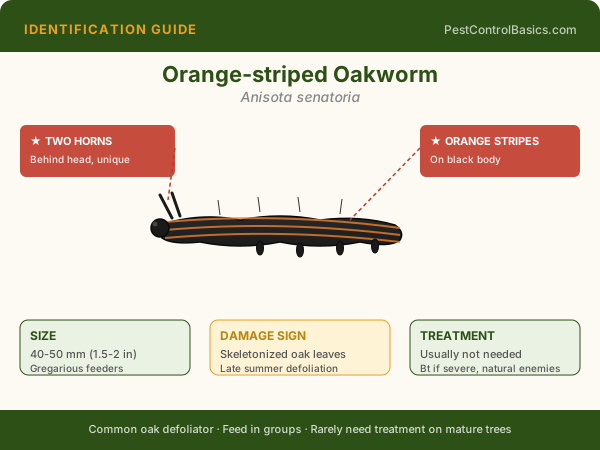
Larvae: up to 50mm at maturity; striking black with orange-yellow stripes; two black horn-like projections behind head; gregarious — found in clusters on oak branches. Adults: medium-sized silk moth (related to luna moth); orange-tan; found at lights in summer. Eggs: laid in masses on oak leaves. Damage: complete defoliation of individual branches and sometimes entire trees in late summer.
🧬 Biology & Behavior
One generation per year. Adults emerge in July-August. Eggs hatch and early larvae skeletonize leaves in clusters. By late August, large caterpillars feeding individually cause rapid and often dramatic defoliation. Pupation in soil in fall. The late-season timing is key: oaks have completed most of the season's photosynthesis by August-September — defoliation is stressful but rarely fatal to established trees.
⚠️ Damage & Health Risk
Dramatic late-summer defoliation; psychological alarm from sudden tree nakedness; nutritional stress from lost late-season photosynthesis; increased susceptibility to other stresses in following seasons.
🔧 DIY Treatment
Hand-pick egg masses in July-August. Bt kurstaki spray when larvae are small (late July-early August) — highly effective on young caterpillars. Spinosad spray for larger larvae. Wait-and-see approach is reasonable for healthy established oaks experiencing their first defoliation — they typically releaf normally the following spring.
👷 When to Call a Pro
Rarely warranted for established oaks in residential settings.