HomePest LibraryPaper Wasp
Moderate Risk — Less Aggressive Than Yellow Jackets
🐝

Paper Wasp

Polistes exclamans, P. fuscatus & others

The wasp that builds umbrella-shaped open-celled nests under your eaves, deck railings, and door frames. Paper wasps are significantly less aggressive than yellow jackets — they will sting if the nest is directly threatened, but don't chase or swarm as readily. Small early-season nests can be safely removed.

Nest typeOpen umbrella — cells visible, no outer covering
AggressionModerate — less than yellow jackets
Early season nestsWalnut-sized in spring — easy to treat
Late season nestsCan reach 60–80 cells — larger risk
ID featureLong, dangling legs visible in flight
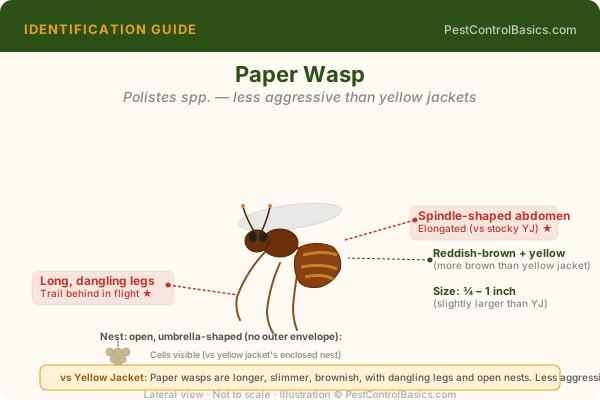
📐 FIELD GUIDE ILLUSTRATION
Paper wasp (Polistes spp.) identification illustration with labeled anatomical features — PestControlBasics.com

Original illustration by PestControlBasics.com. Use anatomical labels above to confirm your identification.

🔍 Identification Photo

Use this photo to confirm your identification. Click to enlarge. Correct ID is the essential first step to effective treatment.

Paper wasp (Polistes sp.) — slender waist; long legs dangle in flight; open-cell nest with no outer covering; less aggre

Paper wasp (Polistes sp.) — slender waist; long legs dangle in flight; open-cell nest with no outer covering; less aggressive than yellow jackets

📷 Wikipedia / Wikimedia Commons / CC BY-SA

⚠️ Photo loaded live from Wikipedia/Wikimedia Commons (CC BY-SA). Appearance varies by region, age, and sex. When uncertain, contact a licensed pest professional.

Identification

Paper wasp vs. yellow jacket

Paper wasps and yellow jackets are both black-and-yellow stinging wasps, but they have distinctly different appearances, nests, and temperaments.

Paper wasp body: Slender and elongated with a very narrow waist. Long legs that dangle noticeably below the body when in flight — a good ID feature in flight. Color varies by species from pale brown to black with yellow markings.

Paper wasp nest: Open umbrella or inverted dome shape with exposed cells — you can see individual hexagonal cells with developing larvae. There is no paper envelope covering the cells. The nest is attached by a thin stalk (petiole) and hangs under a protected surface.

Yellow jacket nest: Enclosed in layers of paper with a single entrance hole. You cannot see the cells from the outside.

Temperament difference: Paper wasps will sting if their nest is directly touched or approached very closely, but they don't aggressively defend a large perimeter the way yellow jackets do. Accidentally bumping a paper wasp nest with your hand is a sting incident; walking past one at a few feet is usually not.

Treatment

Early season removal is the strategic move

The best time to address paper wasp nests is early spring when the founding queen has just started building — in April or May, the nest is often the size of a walnut with just a few cells and one or two wasps. At this stage, any approach works: jet aerosol, soapy water, or even physical removal with protective gloves.

Wait until night: Even for small nests, treating at night ensures all wasps are present and reduces risk. Apply a jet aerosol directly to the nest from 6–10 feet away. Workers will fall immediately. Remove the nest the following day and dispose of it to prevent re-use.

Soapy water for small nests: A strong solution of dish soap in water injected directly into a small nest kills workers quickly and without the chemical exposure of an aerosol. Works well for nests accessible from a close approach at night.

Sting treatment: Paper wasp stings cause immediate sharp pain. Remove any visible stinger (rare — wasps have smooth stingers and rarely leave them). Ice and over-the-counter antihistamines (diphenhydramine) reduce swelling. Oral pain relievers for discomfort. Watch for systemic allergic reaction (hives beyond the sting site, throat tightening, difficulty breathing) — these require epinephrine and emergency care.

Quick Reference
Size3/4–1 inch — slender, wasp-waisted
ColorBrown to dark with yellow markings (species varies)
LegsLong, dangling in flight — key ID
NestOpen umbrella of paper cells — no enclosure
LocationEaves, railings, door frames, plant stems
AggressionModerate — stings if nest is directly touched
SeasonApril (start) through October
TreatmentJet aerosol at night; soap and water works on small nests
AI Bug Identifier →Find a Pro →
📚 Sources: EPA Stinging Insects · CDC Venomous Insects
Published: Jan 1, 2025 · Updated: Apr 7, 2026
Paper Wasp
Paper Wasp

Frequently Asked Questions

How do I know if I have Paper Wasp?

Signs of Paper Wasp include physical sightings, droppings or frass, damage to food or materials, and unusual odors. Inspect hidden areas like wall voids, behind appliances, and in storage spaces. A flashlight inspection after dark is often most revealing.

Are Paper Wasp dangerous to humans or pets?

Paper Wasp can pose health risks including bites, allergic reactions, food contamination, and disease transmission. Children, elderly, and pets are especially vulnerable. Consult a pest management professional when an infestation is confirmed.

Can I eliminate Paper Wasp myself?

Light infestations may be manageable with DIY baits, traps, and targeted treatments. Established infestations typically require professional intervention. Misapplied products often scatter pests and worsen the problem long-term.

How long does Paper Wasp treatment take?

Timelines vary by infestation size and method. Baits may take 1–4 weeks to work through a colony. Chemical treatments often require 2–3 applications spaced 2–4 weeks apart. Monitor for 30–60 days after treatment to confirm elimination.

What attracts Paper Wasp to my home?

Paper Wasp are typically drawn by food sources, standing moisture, warmth, and shelter. Sealing entry points, reducing clutter, fixing leaks, and storing food in airtight containers are the most effective long-term prevention measures.

Related Resources

📚 Full Pest Library🧪 DIY vs. Pro Quiz💰 Cost Guide🌿 IPM Guide🔍 Find a Pro
🧪 Recommended Treatment Products
Pyrethrin Aerosol Lambda-Cyhalothrin Safety & PPE Guide
Full product guides with mixing rates and safety info. → Browse All 130 Pesticide Guides
🔮
Reviewed by Derek GiordanoContent on PestControlBasics.com is developed with input from certified pest management professionals and cross-referenced against EPA, CDC, and university extension guidance. Last reviewed: April 2026.

🗺️ US Distribution — Paper Wasp

image/svg+xml
Common Occasional Not Present
States Present
49
Occasional
2
Primary Region
Continental US
📊 Source: University extension services, USDA, CDC vector data, and published entomological surveys.