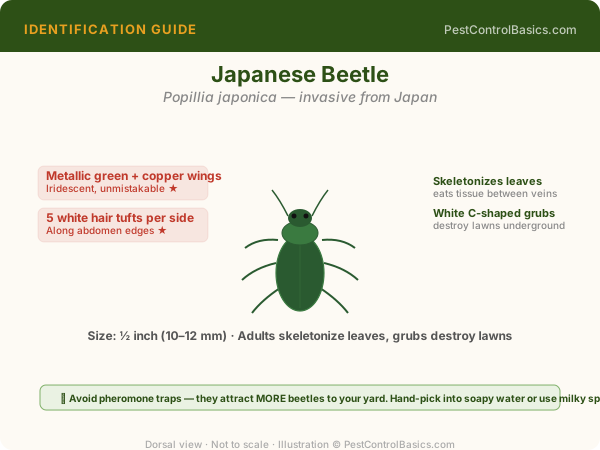
Original illustration by PestControlBasics.com. Use anatomical labels above to confirm your identification.
🔍 Identification
Adults: 3-8mm; cylindrical; brown-black; leave characteristic gallery patterns and boring dust at tree base. Evidence: red-orange boring dust at base of trunk (fresh attack), pitch tubes (resin pushed out by tree trying to expel beetles), red to brown foliage beginning 4-6 weeks after attack, 'gallery' patterns visible under bark when peeled. Attack multiple species: mountain pine beetle (D. ponderosae) in 5-needle pines, southern pine beetle (D. frontalis) in southeastern loblolly, spruce beetle (Dendroctonus rufipennis) in spruce.
🧬 Biology & Behavior
Bark beetles attack stressed trees preferentially. A stressed tree cannot produce enough resin to expel attacking beetles — the beetles establish, release aggregation pheromones, and hundreds of beetles attack simultaneously. Healthy trees with adequate moisture and nutrition can 'pitch out' most attacks. Western bark beetle outbreaks since the 1990s are linked to: drought stress from climate change, overcrowded stands competing for water, and warming temperatures allowing beetle populations to explode.
⚠️ Damage & Health Risk
Complete tree death within 4-8 weeks of successful mass attack; landscape and forest value loss; wildfire risk from standing dead trees; cascading ecosystem impacts.
🔧 DIY Treatment
Prevention: maintain tree health with adequate water and nutrition (in urban settings); reduce competition by thinning dense tree stands. Active outbreak areas: do not move firewood. Remove attacked trees promptly before adults emerge. Preventive carbaryl or bifenthrin spray on high-value landscape pines applied annually in spring provides some protection.
👷 When to Call a Pro
High-value landscape trees: annual spring bark spray with carbaryl (Sevin) or bifenthrin at high concentration prevents beetle establishment. Forest scale: professional thinning programs.