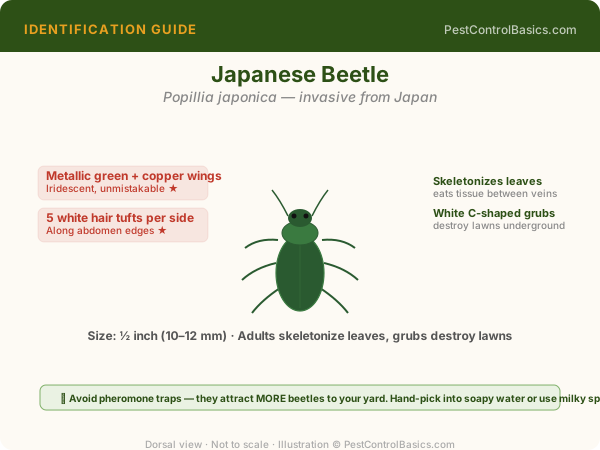
Original illustration by PestControlBasics.com. Use anatomical labels above to confirm your identification.
🔍 Identification
Adults: 2-6mm depending on species; brown-black; cylindrical; found on bark surface during emergence flights. Pitch tubes: white-pink resinous masses on bark surface (pine's defense response to beetle boring — if active and sticky, tree is still fighting); boring dust (frass): fine yellowish-brown powder at trunk base and bark crevices — sign of active boring. Gallery patterns under bark are species-diagnostic.
🧬 Biology & Behavior
Two key species: western pine beetle (Dendroctonus brevicomis) attacks ponderosa pine; mountain pine beetle (D. ponderosae) attacks pines at higher elevations. Stressed trees are attacked first — drought, root damage, disease, overcrowding all increase susceptibility. Once 3+ beetles per square foot of bark have established, the tree's resin defense is overwhelmed — the tree cannot be saved. Trees that 'pitch out' invading beetles (active resin pitch tubes) may survive if pressure is light.
⚠️ Damage & Health Risk
Tree death within weeks to months of successful mass attack; massive landscape and forest losses; fire risk from standing dead timber; cascading ecological impacts from forest mortality.
🔧 DIY Treatment
Preventive carbaryl or permethrin bark spray on high-value trees BEFORE beetles arrive — applies to the bark surface to kill landing beetles. Tree vigor maintenance (irrigation during drought, fertilization) is the primary preventive approach. Remove and chip dead trees promptly — do not leave standing dead within 100 feet of living pines.
👷 When to Call a Pro
Licensed PCO with forestry experience for preventive bark spray programs on high-value trees; forestry consultant for landscape-scale assessment.