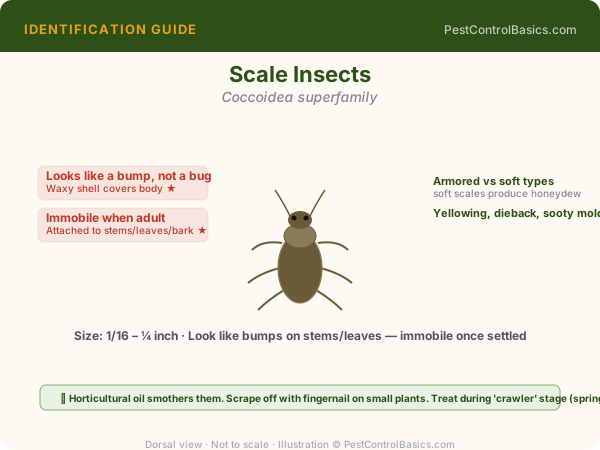
Original illustration by PestControlBasics.com. Use the labeled features above to confirm your identification.
🔍 Identification
San Jose scale: circular grey armor, 1-2mm; found on apples, peaches, and ornamentals; can kill branches. Oyster shell scale: oyster-shaped brown armor, 2-3mm; found on ash, lilac, and ornamentals; causes branch dieback. California red scale: circular red-brown armor; citrus pest. All armored scales: feed beneath the armor with piercing-sucking mouthparts; the armor is NOT part of the insect body; heavy infestations create bark that looks encrusted with gray or brown bumps.
🧬 Biology & Behavior
The armored scale life cycle has a critical treatment window: the 'crawler' stage. Crawlers are mobile, unprotected nymphs that emerge from under the armor for 2-3 weeks in spring. This is the only stage highly susceptible to insecticides. After crawlers settle and form their armor, penetration is extremely difficult. Timing crawlers with pheromone traps or degree-day models is the professional approach.
⚠️ Damage & Health Risk
Branch dieback; bark encrustation; fruit rejection in commercial production; tree death in severe infestations; spray-resistant due to armor protection.
🔧 DIY Treatment
Dormant oil spray (3-4% rate) in late winter kills overwintering scales beneath the armor through suffocation — the most effective treatment. Time insecticide spray to crawler emergence (degree-day or pheromone trap monitoring). Imidacloprid soil drench provides some systemic activity. Horticultural oil in summer targets crawlers.
👷 When to Call a Pro
Certified arborist with degree-day monitoring for crawler timing, plus trunk injection for high-value trees.