πŸ› Armored Scale Insects

Diaspididae family Β· Hemiptera: Diaspididae

Armored scales are protected beneath a hard waxy cover β€” most pesticides cannot penetrate it. The only effective window is the brief crawler stage when scale insects are mobile and unprotected.

Armored ScaleDiaspididaeCrawler StageDormant OilResistantTree Pest
πŸ›
Risk Level
Tree and Shrub Pest
πŸ“ FIELD GUIDE ILLUSTRATION
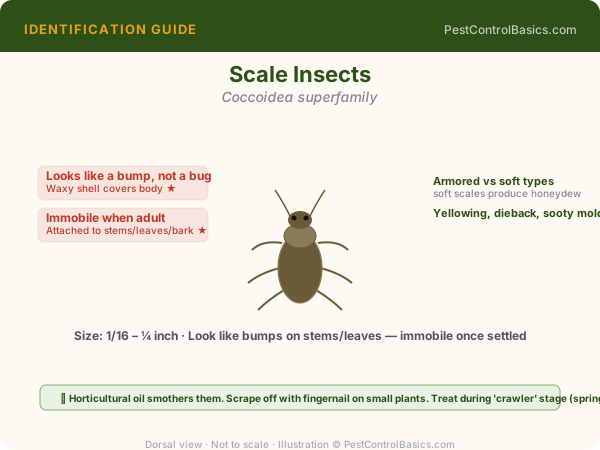
Scale insects (Coccoidea) identification illustration with labeled anatomical features β€” PestControlBasics.com

Original illustration by PestControlBasics.com. Use the labeled features above to confirm your identification.

πŸ”¬
PestControlBasics Editorial Team
Reviewed by Derek Giordano Β· Updated 2026

πŸ” Identification

San Jose scale: circular grey armor, 1-2mm; found on apples, peaches, and ornamentals; can kill branches. Oyster shell scale: oyster-shaped brown armor, 2-3mm; found on ash, lilac, and ornamentals; causes branch dieback. California red scale: circular red-brown armor; citrus pest. All armored scales: feed beneath the armor with piercing-sucking mouthparts; the armor is NOT part of the insect body; heavy infestations create bark that looks encrusted with gray or brown bumps.

🧬 Biology & Behavior

The armored scale life cycle has a critical treatment window: the 'crawler' stage. Crawlers are mobile, unprotected nymphs that emerge from under the armor for 2-3 weeks in spring. This is the only stage highly susceptible to insecticides. After crawlers settle and form their armor, penetration is extremely difficult. Timing crawlers with pheromone traps or degree-day models is the professional approach.

⚠️ Damage & Health Risk

Branch dieback; bark encrustation; fruit rejection in commercial production; tree death in severe infestations; spray-resistant due to armor protection.

πŸ”§ DIY Treatment

Dormant oil spray (3-4% rate) in late winter kills overwintering scales beneath the armor through suffocation β€” the most effective treatment. Time insecticide spray to crawler emergence (degree-day or pheromone trap monitoring). Imidacloprid soil drench provides some systemic activity. Horticultural oil in summer targets crawlers.

πŸ‘· When to Call a Pro

Certified arborist with degree-day monitoring for crawler timing, plus trunk injection for high-value trees.

❓ FAQ

How do I know if my tree has armored scale?
Run your thumbnail along a branch β€” armored scales create a gritty, rough texture and pop off as distinct flat discs. The branch beneath may show yellow spots or discolored tissue where the scales fed. A hand lens reveals the individual scale covers clearly. Heavy infestations make bark appear encrusted with small grey or brown bumps.
Why doesn't spray control my scale insects?
Most sprays cannot penetrate the hard armored cover. The only spray treatment that works through the armor is ultra-high-rate horticultural oil (suffocates by blocking air holes). For reliable chemical control, timing treatment to the crawler stage (when scales are unprotected) is essential. Dormant oil (late winter, before crawlers) kills overwintering adults through a different mechanism.
πŸ“š Sources: EPA Safe Pest Control Β· NPMA Pest Guide
Published: Jan 1, 2025 Β· Updated: Apr 7, 2026

πŸ—ΊοΈ US Distribution β€” Armored Scale

image/svg+xml
Common Occasional Not Present
States Present
49
Occasional
2
Primary Region
All agricultural regions
πŸ“Š Source: University extension services, USDA, CDC vector data, and published entomological surveys.