⚠ Venomous — AZ Risk UV Blacklight Detection Seal Every 1/16 Inch Gap

Scorpions

Centruroides sculpturatus (Bark) · Hadrurus arizonensis (Giant Desert)

The bark scorpion is the only medically significant scorpion in the U.S. It glows bright green under UV blacklight — making nighttime detection and population assessment possible without touching a single one. Your first tool should be a UV flashlight.

Dangerous SpeciesBark Scorpion (AZ, NM, NV, TX)
UV DetectionAll scorpions fluoresce green
Entry GapAs small as 1/16 inch
Peak ActivityNight — warm months
🦑
Bark Scorpion — Quick Reference
Centruroides sculpturatus
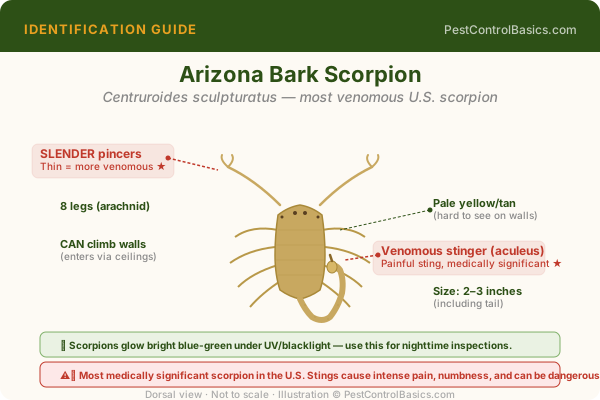
Size2–3 inches — slender
ColorTan/yellowish — no dark stripes
TailSlender — distinguishes from others
Climbs?Yes — walls, ceilings, trees
RangeArizona primarily; NM, NV, TX, CA
ActiveNight — hides during day
VenomNeurotoxic — seek care if stung
UV TestGlows bright green under blacklight
📐 FIELD GUIDE ILLUSTRATION
Arizona bark scorpion (Centruroides sculpturatus) identification illustration with labeled anatomical features — PestControlBasics.com

Original illustration by PestControlBasics.com. Use anatomical labels above to confirm your identification.

🔍 Identification Photo

Use this photo to confirm your identification. Click to enlarge.

Scorpion — venomous stinger at tail tip, large pincers, 4 pairs of legs; ALL scorpions fluoresce bright green under UV l

Scorpion — venomous stinger at tail tip, large pincers, 4 pairs of legs; ALL scorpions fluoresce bright green under UV light at night

📷 Wikipedia / Wikimedia Commons / CC BY-SA

⚠️ Photo loaded live from Wikipedia/Wikimedia Commons (CC BY-SA).

⚠️ Photos loaded from Wikipedia/Wikimedia Commons. Appearance varies by region, age, and sex.

Species Guide

Know your scorpion — most are harmless

Of the 90+ scorpion species in the U.S., only the Bark Scorpion is medically significant. Most scorpion stings cause local pain comparable to a bee sting and resolve within hours. The bark scorpion is the critical exception.

🦑
Bark Scorpion
Centruroides sculpturatus
Only Medically Significant U.S. Species
Small (2–3 inches), tan/yellowish, slender tail and pincers. Climbs walls, ceilings, and trees — unlike most scorpions. Found throughout Arizona, western New Mexico, southern Nevada, and extreme southern Utah. Its neurotoxic venom causes intense pain, numbness, and in severe cases (children, elderly) respiratory distress. Responsible for 90%+ of serious scorpion sting cases in the U.S. Annual deaths: rare with antivenom available, but children require immediate medical attention.
🦑
Giant Desert Hairy Scorpion
Hadrurus arizonensis
Painful but Not Dangerous
Largest scorpion in North America — up to 5.5 inches. Despite its imposing size, its venom is relatively mild — comparable to a bee sting. Found in the Mojave and Sonoran Deserts. Its large size makes it easy to see and avoid. Burrows underground. Not a climber. While painful, stings are not medically dangerous to healthy adults.
🦑
Striped Bark Scorpion
Centruroides vittatus
Moderate — Seek Care if Severe
Most common scorpion in Texas. Dark stripes on back distinguish it from the unstriped Arizona bark scorpion. Venom is less potent than its Arizona relative but still causes significant pain and should be treated with medical attention if symptoms extend beyond the sting site. Common in homes across Texas and Oklahoma.
🦑
Florida Bark Scorpion
Centruroides gracilis
Invasive — Florida Only
Established in South Florida — likely arrived via cargo. Brownish-black. Can climb and prefers humid tropical conditions. Venom is painful but typically not medically dangerous to healthy adults. Has spread from Miami-Dade county northward. Treat similarly to Arizona bark scorpion for exclusion purposes.
The UV Blacklight Secret

Find every scorpion in and around your home tonight

⚡ Industry Insider Technique
All scorpions fluoresce bright green under UV blacklight — even through glass.

Scorpions produce hyaline in their exoskeleton that fluoresces intensely under UV (365nm) light. This makes nighttime scorpion hunting — called "blacklight hunting" — the single most effective assessment tool available to homeowners.

One hour with a good UV flashlight after dark reveals every scorpion on your property: inside closets, behind furniture, under rocks and bark outside, on walls, in the garage. It lets you see exactly where they're entering, where they're harboring, and how serious your infestation actually is.

This technique also works through windows — scan the exterior of your home from inside with a UV light to spot scorpions on the wall outside before opening the door. Use before reaching into woodpiles, under outdoor furniture, or into dark storage areas.

🔦
UV Blacklight — Essential First Tool
Escolite UV Flashlight (365nm) or TaoTronics UV Torch
What to look for: Purchase a 365nm UV flashlight — not the cheap 395nm purple lights sold as "UV" which don't fluoresce scorpions as well. Walk your home exterior after dark (30+ minutes after sunset) scanning walls, rock piles, trees, and woodpiles. Inside: scan closets, bathroom corners, under furniture, and along baseboards. Every bright green glowing object is a scorpion. Use this assessment before deciding on treatment approach and intensity.
★★★★★
Start Here
Exclusion — The Primary Defense

Seal every gap 1/16 inch or larger

Bark scorpions can compress their body to fit through gaps as small as 1/16 inch — the thickness of a credit card. This makes complete exclusion challenging but achievable with attention to detail. Start with the UV assessment to know where they're entering, then systematically seal every gap.

Priority Exclusion Points

Weatherstripping: Replace all door weatherstripping and install door sweeps. Bark scorpions regularly enter under doors. Window frames: Caulk all gaps around window frames. Utility penetrations: Seal every pipe, cable, and conduit entry with foam and steel wool. Roof line: Bark scorpions climb — seal all soffit and fascia gaps, attic vents with fine mesh. Evaporative cooler openings: Very common entry point in Arizona — install tight-fitting covers when not in use.

💡 The Sticky Trap Assessment

Place glue boards along baseboards in every room and in the garage before treating chemically. After 48–72 hours, the distribution of catches tells you exactly which rooms have activity and where scorpions are traveling. This eliminates guesswork from treatment placement and shows whether exclusion gaps have been successfully sealed after repairs.

Chemical Treatment

What works — and what the pros use

Chemical treatment for scorpions focuses on reducing their food supply (other insects) and applying residuals where scorpions travel. Scorpions are partially resistant to contact insecticides — their exoskeleton limits absorption — so desiccant dusts and broad insect control matter as much as direct scorpion treatment.

🧪
Residual Spray — Perimeter & Indoor
Cy-Kick CS (Cyfluthrin Microencapsulated)
Why microencapsulated: Standard pyrethroids absorb into porous surfaces (stucco, concrete) and break down quickly. Microencapsulated formulations coat surfaces with tiny capsules that release slowly — providing dramatically longer residual on the surfaces scorpions walk across. Apply along baseboards, in cracks and crevices, around door frames, and on the exterior foundation. Professional pest companies in Arizona use this almost exclusively for scorpion perimeter treatment.
★★★★★
Professional Choice
🪟
Desiccant Dust — In Voids & Cracks
CimeXa Dust — Applied in Wall Voids & Entry Points
Why desiccant: Scorpions are heavily sclerotized (hard exoskeleton) which limits chemical absorption — but desiccant dusts work physically, not chemically. Apply thin layers in wall voids, attic spaces, under doorway thresholds, and anywhere scorpions travel between exterior and interior. Also kills the insects that scorpions prey on, reducing food availability. Lasts years undisturbed in protected voids.
★★★★Ⓒ
Essential Layer
⚠ Bark Scorpion Sting — When to Seek Emergency Care

Any bark scorpion sting in a child under 6 requires immediate emergency care — do not wait to see if symptoms develop. In adults: seek care if symptoms spread beyond the sting site, if you experience difficulty swallowing, muscle twitching, blurred vision, or breathing changes. Arizona Poison Control: 1-800-222-1222 (available 24/7). Antivenom (Anascorp) is available at most Arizona hospitals and dramatically speeds recovery.

📚 Sources: CDC Venomous Animals · EPA Safe Pest Control
Published: Jan 1, 2025 · Updated: Apr 7, 2026
Scorpions
Scorpions

Frequently Asked Questions

How do I know if I have Scorpions?

Signs of Scorpions include physical sightings, droppings or frass, damage to food or materials, and unusual odors. Inspect hidden areas like wall voids, behind appliances, and in storage spaces. A flashlight inspection after dark is often most revealing.

Are Scorpions dangerous to humans or pets?

Scorpions can pose health risks including bites, allergic reactions, food contamination, and disease transmission. Children, elderly, and pets are especially vulnerable. Consult a pest management professional when an infestation is confirmed.

Can I eliminate Scorpions myself?

Light infestations may be manageable with DIY baits, traps, and targeted treatments. Established infestations typically require professional intervention. Misapplied products often scatter pests and worsen the problem long-term.

How long does Scorpions treatment take?

Timelines vary by infestation size and method. Baits may take 1–4 weeks to work through a colony. Chemical treatments often require 2–3 applications spaced 2–4 weeks apart. Monitor for 30–60 days after treatment to confirm elimination.

What attracts Scorpions to my home?

Scorpions are typically drawn by food sources, standing moisture, warmth, and shelter. Sealing entry points, reducing clutter, fixing leaks, and storing food in airtight containers are the most effective long-term prevention measures.

Related Resources

📚 Full Pest Library🧪 DIY vs. Pro Quiz💰 Cost Guide🌿 IPM Guide🔍 Find a Pro
🧪 Recommended Treatment Products
Cypermethrin Deltamethrin Diatomaceous Earth
Full product guides with mixing rates and safety info. → Browse All 130 Pesticide Guides
🎬
Scorpion-Proofing Your Home
Video guide coming soon — subscribe to be notified when it's live
▶️ Subscribe on YouTube 🔍 Use ID Flowchart Instead
🔮
Reviewed by Derek GiordanoContent on PestControlBasics.com is developed with input from certified pest management professionals and cross-referenced against EPA, CDC, and university extension guidance. Last reviewed: April 2026.

🗺️ US Distribution — Scorpion Control

image/svg+xml
Common Occasional Not Present
States Present
8
Occasional
6
Primary Region
Southwest & Arid West
📊 Source: University extension services, USDA, CDC vector data, and published entomological surveys.