πŸ› Sowbug & Pillbug

Porcellio scaber / Armadillidium vulgare Β· Isopoda

Sowbugs and pillbugs are more closely related to shrimp than to insects β€” and they die within 48 hours inside a dry home. Their presence is a moisture signal, not a pest infestation.

IsopodCrustaceanMoisture IndicatorRollupFoundationHarmless
πŸ›
Risk Level
Moisture Indicator
πŸ“ FIELD GUIDE ILLUSTRATION
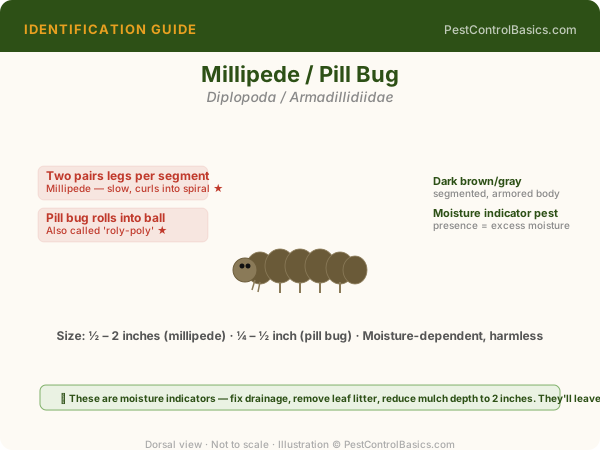
Millipede and pill bug identification illustration with labeled anatomical features β€” PestControlBasics.com

Original illustration by PestControlBasics.com. Use the labeled features above to confirm your identification.

πŸ”¬
PestControlBasics Editorial Team
Reviewed by Derek Giordano Β· Updated 2026

πŸ” Identification

Pillbug: Rolls into a perfect tight ball β€” the only crustacean that does this. Grey; 10-18mm; 7 pairs of legs; smooth. Sowbug: Cannot roll (flattens instead); has two small tail appendages (uropods) at the rear; slightly flatter body. Both are grey, approximately the same size, and found in the same habitats.

🧬 Biology & Behavior

Both are detritivores feeding on decaying plant material. Both require 80%+ relative humidity to survive. Populations can be enormous outdoors β€” hundreds per square foot under mulch near moist foundations. They enter structures through ground-level gaps during very dry or very wet weather. Cannot survive or breed indoors without sustained moisture.

⚠️ Damage & Health Risk

Nuisance only β€” no biting, no disease, no structural damage, no plant damage outdoors beyond minor seedling feeding. Their presence indoors indicates excessive moisture at the foundation.

πŸ”§ DIY Treatment

Fix the moisture. Remove mulch from foundation contact. Improve drainage. Install door sweeps. Apply bifenthrin perimeter spray. Indoor individuals die naturally β€” sweep or vacuum rather than spray.

πŸ‘· When to Call a Pro

Rarely warranted alone β€” moisture engineering is the lasting solution.

❓ FAQ

Why do I get thousands of pillbugs after rain?
Heavy rain saturates soil and forces soil-dwelling pillbugs and sowbugs upward and outward. Millions of these animals live in healthy soil β€” a heavy rain event temporarily displaces them en masse. Improving foundation drainage reduces these post-rain invasions.
Can pillbugs damage my plants?
Pillbugs and sowbugs occasionally damage seedlings and strawberries by feeding on decaying plant matter that's in contact with soil. This is minor and primarily affects already-declining plant tissue. Healthy established plants are not damaged.

πŸ—ΊοΈ Geographic Range & Distribution

FactorDetails
U.S. RangeAll or most U.S. states
Regional DetailDistribution varies β€” consult your local extension service for regional prevalence data.

πŸ“… Treatment Timing Guide

Treating at the right time dramatically improves results. Pest control timed to the life cycle uses less product and achieves better long-term control.

PeriodAction
SpringInspection and perimeter treatment before pest season starts.
SummerActive monitoring and targeted treatments as needed.
FallPreventive treatment before overwintering pests seek entry.

πŸ’° Professional Treatment Costs

Service TypeDIY CostProfessional Cost
Initial inspectionFree (self-inspect)$75–$150 (often credited to treatment)
One-time treatment$30–$100 in materials$150–$500
Annual service contractN/A$400–$900/year
Severe infestationOften ineffective alone$500–$2,500+

Prices vary by region, property size, and infestation severity.

❓ Common Questions About πŸ› Sowbug & Pillbug

How do I confirm I actually have this pest (not something similar)?
The most reliable confirmation is a physical specimen β€” capture one and compare to reference images on this page. For cryptic pests (bed bugs, termites), look for secondary signs: frass, shed skins, mud tubes, or bites with a specific pattern. When uncertain, a professional inspection is faster than months of misidentification.
Can I treat this myself or do I need a professional?
DIY is effective for small, accessible infestations caught early. Professionals are worth the cost when: the infestation is inside wall voids or structural elements, multiple rooms are affected, you have health-risk pests (hantavirus, venomous species), or DIY has already failed twice.
How long until the infestation is completely gone?
Expect 3–8 weeks for most infestations with proper treatment. Insects with dormant life stages (pupae, eggs) extend the timeline because those stages are impervious to most insecticides. Follow-up treatments at 2 and 4 weeks catch each new cohort as they emerge.
What's the most common mistake people make treating this pest?
Treating only the visible pest population while ignoring the harborage site, entry point, or breeding location. Killing adults provides temporary relief but the population rebuilds from hidden egg cases, pupae, or new arrivals through unaddressed entry points.
🧪 Recommended Treatment Products
Bifenthrin Diatomaceous Earth Termiticide Comparison Fipronil (Termidor) Mosquito Control Guide
Full product guides with mixing rates and safety info. → Browse All 130 Pesticide Guides
πŸ“š Sources: EPA Termite Guide Β· NPMA Termite Info
Published: Jan 1, 2025 Β· Updated: Apr 7, 2026

πŸ—ΊοΈ US Distribution β€” Sowbug and Pillbug

image/svg+xml
Common Occasional Not Present
States Present
49
Occasional
2
Primary Region
Continental US
πŸ“Š Source: University extension services, USDA, CDC vector data, and published entomological surveys.