Lyme Disease Vector 36–48 Hour Attachment Window Permethrin = Best Defense

Ticks

Ixodes scapularis · Amblyomma americanum · Dermacentor variabilis

Lyme disease is the fastest-growing vector-borne illness in the U.S. — over 476,000 cases diagnosed annually. The good news: Lyme transmission typically requires 36–48 hours of tick attachment. A daily check catches most ticks before transmission occurs.

Lyme Cases/Year476,000+ diagnosed annually
Transmission Time36–48 hours attached (Lyme)
Peak RiskMay–July and October
Best PreventionPermethrin clothing + daily checks
🫡
Black-Legged Deer Tick
Primary Lyme Disease Vector
Size (unfed)Sesame seed — 1–2mm
ColorReddish-brown body, dark black legs
RangeNortheast, Midwest, Atlantic coast
HabitatLeaf litter, tall grass, wooded edges
Peak SeasonMay–July (nymphs); October (adults)
Lyme RiskHigh — 30% carry Borrelia
Remove Within36 hours — prevents transmission
Do NOT UsePetroleum jelly, heat, or twisting
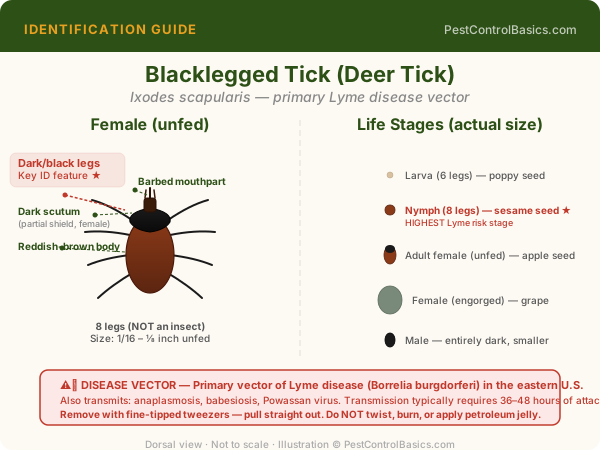
📐 FIELD GUIDE ILLUSTRATION
Blacklegged tick / deer tick (Ixodes scapularis) identification illustration with labeled anatomical features — PestControlBasics.com

Original illustration by PestControlBasics.com. Use anatomical labels above to confirm your identification.

🔍 Identification Photo

Use this photo to confirm your identification. Click to enlarge.

Blacklegged tick (Ixodes scapularis) — MUCH smaller than dog ticks; nymph (poppy-seed size) spreads most Lyme disease; c

Blacklegged tick (Ixodes scapularis) — MUCH smaller than dog ticks; nymph (poppy-seed size) spreads most Lyme disease; check thoroughly after every outing

📷 Wikipedia / Wikimedia Commons / CC BY-SA

⚠️ Photo loaded live from Wikipedia/Wikimedia Commons (CC BY-SA).

⚠️ Photos loaded from Wikipedia/Wikimedia Commons. Appearance varies by region, age, and sex.

Species Guide

Four ticks you need to know — very different disease risks

🫡
Black-Legged (Deer) Tick
Ixodes scapularis
Lyme Disease Vector
The primary Lyme disease vector in the eastern U.S. Sesame-seed sized when unfed — nymphs are even smaller (poppy seed). Black legs, reddish-brown body. 30% of adults and 20% of nymphs in endemic areas carry Borrelia burgdorferi. Northeast and upper Midwest. Peak risk: May–July (nymph season) and October (adult season). Also vectors Anaplasmosis, Babesiosis, and Powassan virus.
Lone Star Tick
Amblyomma americanum
STARI · Alpha-Gal Syndrome
Aggressive human biter — all three life stages bite humans (most ticks prefer other hosts as larvae). Identified by a white dot on the female's back. Vectors STARI (Southern Tick-Associated Rash Illness) and — uniquely — causes Alpha-Gal Syndrome: an acquired allergy to red meat triggered by the tick's saliva. Found throughout the Southeast and expanding north. Also vectors Ehrlichiosis and Heartland virus.
🫡
American Dog Tick
Dermacentor variabilis
Rocky Mountain Spotted Fever
Larger than deer ticks — easier to spot. Brown with whitish/gray markings. Most common tick in the eastern U.S. Primary vector of Rocky Mountain Spotted Fever (RMSF) — which is actually most common in the South and Mid-Atlantic, not the Rocky Mountains. RMSF has a 20–25% fatality rate if untreated. Also transmits Tularemia. Found in grassy, scrubby habitat along paths and trails.
🫡
Rocky Mountain Wood Tick
Dermacentor andersoni
RMSF · Tick Paralysis
Primary tick pest in the Rocky Mountain states — Colorado, Utah, Montana, Wyoming. Vectors Rocky Mountain Spotted Fever, Colorado tick fever, and Tularemia. Also causes tick paralysis — a progressive paralysis caused by a neurotoxin in the tick's saliva that resolves within 24 hours of tick removal. Adults are active in spring when snow is still on the ground at altitude.
🟥
Asian Longhorned Tick
Haemaphysalis longicornis
Invasive — Spreading Fast
Invasive from East Asia — established in the eastern U.S. since 2017. Reproduces parthenogenetically (females don't need males) — populations can explode rapidly. Vectors Theileria orientalis (Ikeda) which infects cattle and sheep, causing severe economic losses. Still being evaluated for human disease transmission. Report sightings to your state agriculture department.
🫡
Western Black-Legged Tick
Ixodes pacificus
Lyme Disease (West Coast)
The western counterpart to the deer tick — primary Lyme vector on the Pacific Coast. Found in California, Oregon, Washington, and Nevada. Lower Lyme transmission rate than its eastern relative (lower percentage of infected ticks) but still clinically significant. Active year-round in mild Pacific Coast climates. Found in chaparral, oak woodland edges, and coastal scrub.
Disease Risk

What ticks actually transmit — and how serious each is

DiseaseTick VectorRegionU.S. Cases/YearSeverity
Lyme DiseaseBlack-legged tickNortheast, Midwest476,000+High — chronic if untreated
Rocky Mountain Spotted FeverAmerican dog tickSoutheast, Mid-Atlantic~6,000Extreme — 20% fatal if untreated
AnaplasmosisBlack-legged tickNortheast, upper Midwest~5,000Moderate — responds to doxycycline
EhrlichiosisLone star tickSoutheast, South-Central~2,000Moderate — responds to doxycycline
Alpha-Gal SyndromeLone star tickSoutheast, expanding~450,000 est.Lifelong red meat allergy
BabesiosisBlack-legged tickNortheast coastal~3,000High — severe in elderly/immunocomp.
Powassan VirusBlack-legged tickNortheast, Great Lakes~25/yearRare but 10% fatal — no treatment
TularemiaDog tick, wood tickCentral U.S.~200High — responds to antibiotics
⚠ The Lyme Bullseye Rash — Critical to Recognize

The classic "bullseye" rash (erythema migrans) appears in 70–80% of Lyme cases — an expanding red ring with central clearing, 2 inches or larger. It appears 3–30 days after a bite. If you see this rash — with or without a known tick bite — seek immediate medical attention. Early Lyme responds well to doxycycline. Late-stage Lyme can cause chronic arthritis, neurological damage, and cardiac complications that are much harder to treat.

Tick Removal — Do It Right

How to remove a tick safely — and what not to do

1
Use fine-tipped tweezers
Grab the tick as close to the skin surface as possible. Do not use your fingers — the pressure can force infected material into the wound.
2
Pull upward steadily
Apply steady, even upward pressure without twisting or jerking. Twisting can cause the mouthparts to break off and remain in the skin.
3
Clean the bite site
Thoroughly clean the bite area with rubbing alcohol, iodine, or soap and water after removal. Wash hands thoroughly.
4
Save the tick
Place in a sealed bag or alcohol-filled jar. Label with the date. Testing services can identify the species and test for pathogens if you develop symptoms.
✕ What NOT to Do

Do not use petroleum jelly, nail polish, or heat (lighter, match) to "force" the tick out. These methods cause the tick to release more saliva — potentially increasing disease transmission risk. Do not twist or jerk — breaks mouthparts off in skin. Do not crush the tick with bare fingers. Do not flush down the drain — this doesn't kill ticks.

Prevention Protocol

The layered defense that actually works

Permethrin-Treated Clothing — Most Effective

Treating outdoor clothing and gear with permethrin is the single most effective personal tick protection measure. Permethrin bonds to fabric fibers and survives 6+ wash cycles. It kills ticks on contact — they don't need to bite through the fabric. Apply to boots, pants, socks, and shirts. Kills ticks within seconds of contact. Safe when dry — never apply to skin.

DEET or Picaridin on Skin

Apply 25–30% DEET or 20% Picaridin to exposed skin areas not covered by permethrin-treated clothing. Repels but does not kill ticks. CDC-recommended. Both effective for 5–8 hours.

Daily Full-Body Tick Checks

Check entire body within 2 hours of outdoor activity. Priority areas: scalp, ears, underarms, groin, behind knees, between toes. Use a mirror or have someone check your back and scalp. Shower within 2 hours of coming indoors — this helps wash off unattached ticks and makes checking easier.

Yard Treatment

Bifenthrin or permethrin yard spray applied along the lawn edge where it meets woodland or tall grass reduces tick populations by 68–100% in studies. Focus treatment on the transition zone — ticks questing (waiting for hosts) primarily in this 9-foot border zone, not in the middle of a maintained lawn. Apply spring and late summer for maximum coverage.

👖
Clothing Treatment — #1 Recommendation
Sawyer Permethrin Clothing & Gear Insect Repellent
Why it's #1: Permethrin kills ticks on contact — not just repels them. A tick that crawls onto treated clothing falls off dead within seconds. Survives 6 wash cycles. Apply to dry clothing outdoors, hang to dry for 2–4 hours before wearing. Treat: pants, socks, shoes, shirts, hats, and any gear (backpacks, tents). Colorless and odorless when dry. The single highest-impact tick prevention action available.
★★★★★
Best Prevention
🌿
Yard Treatment — Perimeter Control
Bifenthrin Yard Spray — Lawn/Woodland Edge
How to apply: Use a hose-end sprayer to treat the 9-foot transition zone between maintained lawn and any wooded area, tall grass, or groundcover. Also treat along fence lines and under decks. Apply in late April (catches nymphs) and again in late August (catches adults before peak fall season). A single targeted application of the lawn-woodland edge is more effective than blanket treatment of the entire yard.
★★★★Ⓒ
Highly Effective
⚠ Full Guide: Lyme Disease Prevention — 476,000 cases/year. Symptoms, the 36-hour window, and full prevention protocol.
📅 See when this pest peaks in your region Use Free Tool →
🔔 Get a free season alert before this pest peaks Use Free Tool →
📚 Sources: CDC Tick Prevention · CDC Lyme Disease
Published: Jan 1, 2025 · Updated: Apr 7, 2026
Ticks
Ticks

Frequently Asked Questions

How do I know if I have Ticks?

Signs of Ticks include physical sightings, droppings or frass, damage to food or materials, and unusual odors. Inspect hidden areas like wall voids, behind appliances, and in storage spaces. A flashlight inspection after dark is often most revealing.

Are Ticks dangerous to humans or pets?

Ticks can pose health risks including bites, allergic reactions, food contamination, and disease transmission. Children, elderly, and pets are especially vulnerable. Consult a pest management professional when an infestation is confirmed.

Can I eliminate Ticks myself?

Light infestations may be manageable with DIY baits, traps, and targeted treatments. Established infestations typically require professional intervention. Misapplied products often scatter pests and worsen the problem long-term.

How long does Ticks treatment take?

Timelines vary by infestation size and method. Baits may take 1–4 weeks to work through a colony. Chemical treatments often require 2–3 applications spaced 2–4 weeks apart. Monitor for 30–60 days after treatment to confirm elimination.

What attracts Ticks to my home?

Ticks are typically drawn by food sources, standing moisture, warmth, and shelter. Sealing entry points, reducing clutter, fixing leaks, and storing food in airtight containers are the most effective long-term prevention measures.

Related Resources

📚 Full Pest Library🧪 DIY vs. Pro Quiz💰 Cost Guide🌿 IPM Guide🔍 Find a Pro
🧪 Recommended Treatment Products
Permethrin Clothing Treatment DEET Repellent Picaridin Repellent Oil of Lemon Eucalyptus Metarhizium (Biological)
Full product guides with mixing rates, safety info, and brand comparisons. → Browse All 121 Pesticide Guides
🔗 Related Pests
Rocky Mountain Spotted Fever Lone Star Tick American Dog Tick
Compare similar pests to confirm your identification. → Use our ID Flowchart
🎬
Proper Tick Removal Technique
Video guide coming soon — subscribe to be notified when it's live
▶️ Subscribe on YouTube 🔍 Use ID Flowchart Instead
🔮
Reviewed by Derek GiordanoContent on PestControlBasics.com is developed with input from certified pest management professionals and cross-referenced against EPA, CDC, and university extension guidance. Last reviewed: April 2026.

🗺️ US Distribution — Tick Control & Lyme Disease Prevention

image/svg+xml
Common Occasional Not Present
States Present
49
Occasional
2
Primary Region
Continental US
📊 Source: University extension services, USDA, CDC vector data, and published entomological surveys.