HomePest LibraryMeadow Vole
Lawn & Garden Pest — Not a Mole
🐰

Meadow Vole

Microtus pennsylvanicus & related species

Short-tailed, stocky, and responsible for those worn surface paths through your lawn grass. Voles eat plant roots, flower bulbs, and girdle tree bark — not earthworms. They are not moles. Surface runways are their signature. Snap traps placed directly in runways catch them without any bait needed.

DamageLawn runways, bulb eating, tree girdling
vs. MoleVoles: surface runways; Moles: raised ridges + mounds
Short tailKey ID — less than half body length
Best controlSnap traps in active runways
Tree protectionHardware cloth cylinder around base
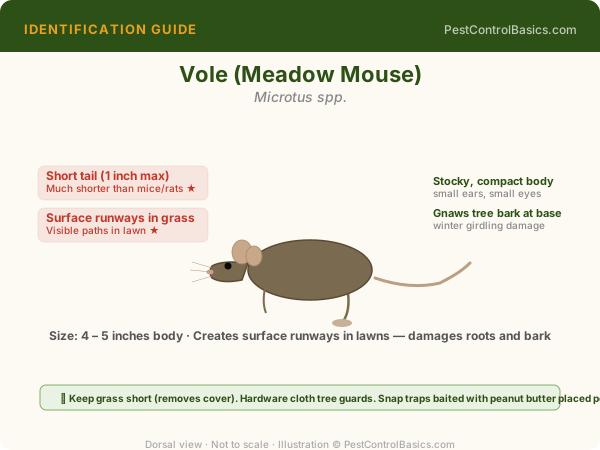
📐 FIELD GUIDE ILLUSTRATION
Vole (Microtus spp.) identification illustration with labeled anatomical features — PestControlBasics.com

Original illustration by PestControlBasics.com. Use anatomical labels above to confirm your identification.

🔍 Identification Photo

Use this photo to confirm your identification. Click to enlarge. Correct ID is the essential first step to effective treatment.

Meadow vole (Microtus pennsylvanicus) — stocky body, very short tail, small eyes; creates 1–2 inch wide surface runways

Meadow vole (Microtus pennsylvanicus) — stocky body, very short tail, small eyes; creates 1–2 inch wide surface runways through grass and garden beds

📷 Wikipedia / Wikimedia Commons / CC BY-SA

⚠️ Photo loaded live from Wikipedia/Wikimedia Commons (CC BY-SA). Appearance varies by region, age, and sex. When uncertain, contact a licensed pest professional.

Vole vs. Mole

The confusion that leads to wrong treatment

These two pests cause different damage and require completely different control approaches. Treating for the wrong one wastes time and money.

Voles (Microtus): Create 2-inch wide surface runways worn through the grass — look for paths where the grass is worn away or matted flat at ground level. Voles eat plants: roots, tubers, bulbs, and tree bark. They're herbivores. If your tulip bulbs disappear and young trees have bark gnawed away at the base — voles.

Moles (Scalopus): Create raised ridge tunnels that push the lawn surface up into ridges, and dome-shaped mounds of loose soil. Moles eat earthworms and grubs — they are completely plant-safe. Moles rarely appear at the surface. Raised ridges + volcano mounds = mole.

Vole girdling: A tree with bark removed in a complete ring around the base (especially over winter under snow) has been girdled by voles. Complete girdling kills the tree by severing the phloem. Hardware cloth cylinders prevent this permanently.

Control

Traps in runways — no bait required

Voles are not neophobic — they will run through their established runways regardless of what's placed in them. This makes snap trap control highly effective without the pre-baiting rigmarole needed for Norway rats.

Trap placement: Place standard mouse snap traps (Victor, Tomcat) directly in active runways with the trigger bar perpendicular to the runway direction. The vole running through will trigger it with its body. No bait is necessary, though peanut butter or apple slice can increase catch rate.

Cover the traps: Place a flat board, shingle, or piece of cardboard over the trap to create a dark tunnel effect. Voles feel safer in covered runways and the covered setup also protects non-target birds and pets.

Tree guards: Install 1/4-inch hardware cloth cylinders 18 inches tall around every tree or shrub base at risk. Bury 3–4 inches deep. Leave a 2-inch gap between the hardware cloth and trunk.

Habitat reduction: Mow lawn short, especially in fall before snow. Remove dense ground cover near gardens. Voles need cover to thrive — eliminating it reduces populations naturally.

Quick Reference
Size3.5–5 inches + short tail
TailShort — key ID vs. mouse
ColorBrown-gray above, gray-silver below
Runways2-inch paths worn through lawn grass
DamageRoots, bulbs, seedlings, tree bark
BreedsRapidly — every 3 weeks in warm months
ActiveDay and night — visible in runways
Best trapVictor snap, no bait needed in active runways
AI Bug Identifier →Find a Pro →
Meadow Vole
Meadow Vole

Frequently Asked Questions

How do I know if I have Meadow Vole?

Signs of Meadow Vole include physical sightings, droppings or frass, damage to food or materials, and unusual odors. Inspect hidden areas like wall voids, behind appliances, and in storage spaces. A flashlight inspection after dark is often most revealing.

Are Meadow Vole dangerous to humans or pets?

Meadow Vole can pose health risks including bites, allergic reactions, food contamination, and disease transmission. Children, elderly, and pets are especially vulnerable. Consult a pest management professional when an infestation is confirmed.

Can I eliminate Meadow Vole myself?

Light infestations may be manageable with DIY baits, traps, and targeted treatments. Established infestations typically require professional intervention. Misapplied products often scatter pests and worsen the problem long-term.

How long does Meadow Vole treatment take?

Timelines vary by infestation size and method. Baits may take 1–4 weeks to work through a colony. Chemical treatments often require 2–3 applications spaced 2–4 weeks apart. Monitor for 30–60 days after treatment to confirm elimination.

What attracts Meadow Vole to my home?

Meadow Vole are typically drawn by food sources, standing moisture, warmth, and shelter. Sealing entry points, reducing clutter, fixing leaks, and storing food in airtight containers are the most effective long-term prevention measures.

🧪 Recommended Treatment Products
Rodenticide Comparison Bromethalin Zinc Phosphide IPM Guide
Full product guides with mixing rates and safety info. → Browse All 130 Pesticide Guides

Related Resources

📚 Full Pest Library🧪 DIY vs. Pro Quiz💰 Cost Guide🌿 IPM Guide🔍 Find a Pro
🔮
Reviewed by Derek GiordanoContent on PestControlBasics.com is developed with input from certified pest management professionals and cross-referenced against EPA, CDC, and university extension guidance. Last reviewed: April 2026.
📚 Sources: EPA Termite Guide · NPMA Termite Info
Published: Jan 1, 2025 · Updated: Apr 7, 2026

🗺️ US Distribution — Meadow Vole

image/svg+xml
Common Occasional Not Present
States Present
49
Occasional
2
Primary Region
Continental US
📊 Source: University extension services, USDA, CDC vector data, and published entomological surveys.