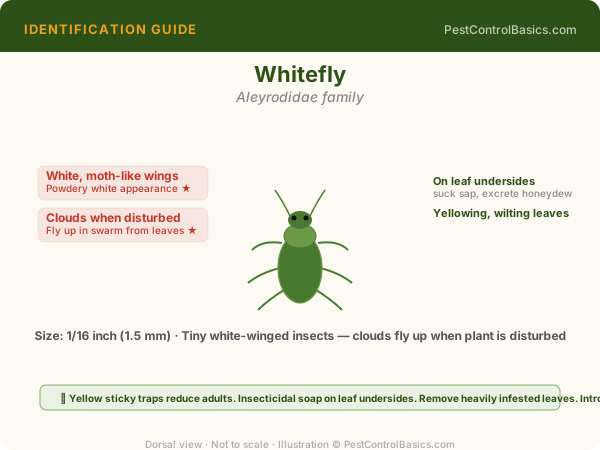
Original illustration by PestControlBasics.com. Use anatomical labels above to confirm your identification.
🔍 Identification
Adult: 1-2mm; white wings; slightly angled (more V-shape) when at rest — vs. greenhouse whitefly's horizontal wings. Nymphs: more oval with pointed end vs. greenhouse whitefly's rounded shape. Identification distinction usually requires microscopy. The key issue is behavior and virus vectoring ability rather than appearance.
🧬 Biology & Behavior
Bemisia biotype B was introduced to the US in the 1980s and became the dominant whitefly in Florida, California, and the Southwest within a decade. It transmits 100+ plant viruses including squash silver leaf, tomato yellow leaf curl virus (TYLCV), tomato chlorosis virus, and cucumber vein yellowing virus. Just 1-2 whiteflies can transmit virus to a plant in seconds of feeding — chemical control cannot prevent virus transmission once whiteflies are present.
⚠️ Damage & Health Risk
Direct sap removal; massive honeydew/sooty mold; virus transmission (often more economically significant than direct damage); resistance to all major insecticide classes after repeated exposure.
🔧 DIY Treatment
Prevention focus: use virus-resistant varieties (TYLCV-resistant tomatoes). Reflective mulch reduces whitefly landing rate. Yellow sticky traps for monitoring. Spirotetramat (Kontos) for nymph control — rotate with different classes. Predatory Encarsia/Eretmocerus wasps for biological control. Avoid planting near heavily infested areas.
👷 When to Call a Pro
Commercial vegetable and ornamental operations need an IPM specialist to manage Bemisia — resistance makes standard spray programs ineffective without professional resistance management.