🔧 HOW-TO

How to Protect Your Garden From Japanese Beetles

Japanese beetles are a two-stage problem: grubs in your lawn and adults on your plants. Here's the evidence-based approach for managing both without wasting money on ineffective products.

⏱️ Full season 💪 Moderate
📐 FIELD GUIDE ILLUSTRATION
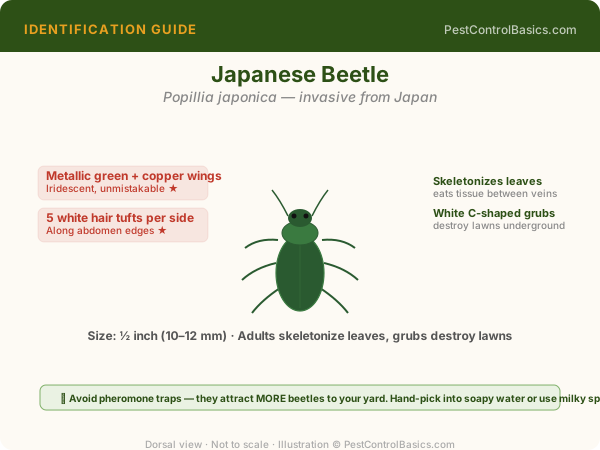
Japanese Beetle (Popillia japonica) identification illustration with labeled anatomical features — PestControlBasics.com

Original illustration by PestControlBasics.com. Use anatomical labels above to confirm your identification.

🧰 What You'll Need

Pheromone monitoring traps (NOT for control)Chlorantraniliprole (grubs)Pyrethroid sprayNeem oil

📋 Steps

1
Monitor adults — don't trap for control
If you want to know when beetles arrive, catch a few on sticky cards or observe your most-preferred plants (roses, linden). Commercial pheromone traps attract more beetles than they catch — don't use them for control, only for monitoring.
2
Hand-pick adults in the morning
Beetles are sluggish in cool morning temperatures. Shake infested plants over a bucket of soapy water early in the morning — this is remarkably effective for moderate infestations on accessible plants.
3
Treat grubs in late June to mid-July
Apply chlorantraniliprole (Scotts GrubEx, Acelepryn) to the lawn in late June-July when grubs are young and near the surface. Water in immediately after application. This is the most important and most time-sensitive step.
4
Apply neem oil as a feeding deterrent on plants
Neem oil applied weekly to preferred plants (roses, grapes) makes the foliage less palatable and interrupts beetle feeding behavior. Not a knockdown treatment — a deterrent.
5
Use pyrethroid spray only for severe infestations
Bifenthrin or permethrin spray kills adult beetles on contact but has short residual. Use when beetle pressure is severe and hand-picking is insufficient. Avoid spraying open flowers to minimize bee contact.

💡 Pro Tips

  • Beetles disperse from your property throughout the day — morning populations are highest because they haven't left yet
  • Grub control this year reduces adult pressure 2 years from now (grubs take 2 years to become adults in many species)
  • Milky spore (Paenibacillus popilliae) provides long-term biological grub control but takes 2-3 years to establish in soil

💰 Cost to Fix This Problem

ApproachTypical CostBest For
DIY materials only$25–$75Mild or early-stage infestations
Professional service (one-time)$150–$400Active infestations or when DIY has already failed
Ongoing service contract$400–$800/yrPrevention and long-term peace of mind

Costs vary by region, property size, and severity. Get at least two quotes before hiring.

✅ How to Know It's Working

Pest control success is measured in weeks, not days. Here's what to look for:

💡 Monitoring tip: Place sticky traps in corners and along walls before you start treatment. Counting catches weekly gives you objective data on whether the population is declining.

👷 When to Call a Professional

DIY is appropriate for small, contained infestations caught early. Call a licensed professional when:

⚠️ Rule of thumb: If you've spent more on DIY materials than a professional visit would cost, it's time to call.

❓ Frequently Asked Questions

When should I treat for Japanese beetles?
Adult season runs late June through August. Apply milky spore or beneficial nematodes to lawn areas in late August-September to kill grubs before winter. For adult control, hand-pick in early morning or apply neem oil.
Do Japanese beetle traps work?
Bag traps attract 5-10 times more beetles than they capture, often increasing plant damage. University research consistently recommends against using traps near gardens. If used, place them at least 50 feet from garden areas.
Will treating my lawn for grubs stop adult beetles?
It reduces next-generation beetles from your property, but adults fly up to 5 miles. Neighborhood-level grub management over several years is needed. In the meantime, hand-picking and neem oil protect individual plants.
What plants do Japanese beetles prefer?
Roses, grape vines, linden trees, birch, crabapple, and raspberry bushes. Less-preferred plants include boxwood, dogwood, holly, magnolia, and most evergreens.

📚 More on This Topic

Related guides and profiles:

🔗 🪲 Japanese Beetle — Adults & Grub Control🔗 🪲 Cucumber Beetle🔗 🪲 Confused Flour Beetle🔗 🪲 Beneficial Ground Beetles
📚 Sources: USDA Japanese Beetle · Purdue Extension
Published: Jan 1, 2025 · Updated: Apr 7, 2026