🔬 LIFE CYCLE

Spider Mite (Two-Spotted) Life Cycle

Tetranychus urticae · Trombidiformes

Spider mite populations can double in 3 days at 86°F — understanding this explosive life cycle explains why resistance management is the central challenge.

📐 FIELD GUIDE ILLUSTRATION
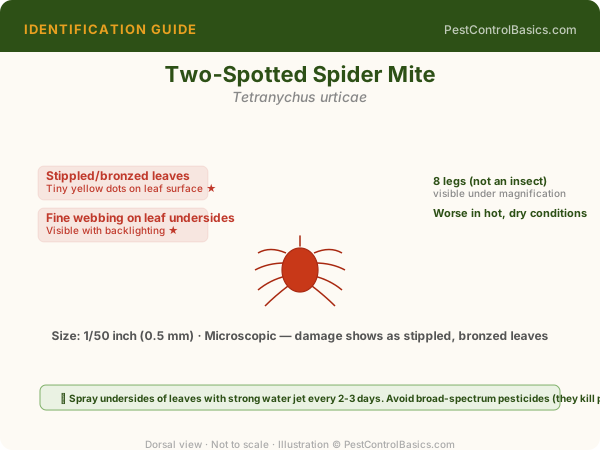
Spider Mite (Tetranychidae) identification illustration with labeled anatomical features — PestControlBasics.com

Original illustration by PestControlBasics.com. Use anatomical labels above to confirm your identification.

🔄 Life Stages

🥚Egg
🦠Larva
🕷️Nymph
🕷️Adult
🥚
Egg
Laid Directly on Leaf Webbing
Spherical, translucent eggs are laid on leaf underside webbing. Hatch time: 3 days at 86°F; 8 days at 60°F. Eggs survive some insecticide exposures.
🦠
Larva
6-Legged, Feeds Immediately
Newly hatched larvae have 6 legs (adult mites have 8). Begin feeding immediately. Larvae are the most susceptible stage to miticide treatment.
🕷️
Nymph
Protonymph → Deutonymph
Two nymphal stages, each with a brief quiescent (resting) period. Both stages have 8 legs and are more difficult to kill than larvae.
🕷️
Adult
Female Lays 100+ Eggs Over Lifetime
Female adults live 2-4 weeks and can lay 100+ eggs. In 5-7 days at 86°F, a single female becomes hundreds of mites. Mated females can produce both male and female offspring; unmated females produce only males (parthenogenesis).

🔬 Key Biology Facts

Population explosion: At 86°F, one mite becomes 1,000 in 3 weeks. At 60°F: months. Hot, dry conditions = catastrophic population growth.
💊Resistance evolution: Resistance to any miticide class can develop in 5-7 generations (2-3 weeks in summer). Always rotate chemical classes.
🌿Plant stress amplifier: Stressed plants produce higher concentrations of the amino acids mites need — drought-stressed plants host 3-5x more mites than well-watered plants.

📅 Seasonal Timing

Year-round in greenhouses and on houseplants. Outdoor peak: July-September during hot, dry periods. Overwinter as mated females in bark crevices and debris.

⏰ Treatment Timing

Target larvae with first application (most susceptible stage). ROTATE miticide classes every application: bifenazate → abamectin → spiromesifen → etoxazole. Never repeat the same class. Biological control: Phytoseiulus persimilis predatory mites for greenhouses.

✅ Target the most vulnerable life stage for maximum effectiveness.

🎯 Life Cycle Stage × Treatment Effectiveness

Understanding life cycle stages allows you to target the most vulnerable period and plan follow-up treatments to catch individuals that survived as eggs or pupae.

StageDurationTreatment Approach
Egg/PupaVariableOften resistant to insecticides. Target adults and larvae while preventing egg-laying.
Larva/NymphVariableOften the most susceptible stage to IGRs and targeted treatments.
AdultVariablePrimary treatment target. Elimination of adults stops reproduction.

⏰ Why Timing and Follow-Up Matter

Most treatment failures happen because of two mistakes: treating only once, and treating only the visible population. Life cycles mean there are always individuals in a pesticide-resistant stage (eggs, pupae, or protected cases) that will emerge after your first treatment.

💡 Key principle: You're not treating today's population — you're breaking the reproductive cycle.

❓ Life Cycle FAQ

How does knowing the life cycle help me treat this pest?
Life cycle knowledge tells you which stages are present and which are vulnerable. Treating when only adults are present misses eggs that will hatch in days. Timing treatments to coincide with the vulnerable stages — and planning follow-ups for resistant stages — dramatically improves outcomes.
Why do pests come back even after a thorough treatment?
Eggs, pupae, and protected life stages (like cockroach egg cases) are resistant to most insecticides. They hatch or emerge after treatment and rebuild the population. The solution is scheduled follow-up treatments timed to catch each new cohort as it becomes vulnerable.
How long does a complete life cycle take?
Cycle duration varies by species and temperature — warmer temperatures accelerate all stages. At typical indoor temperatures (70°F), most common household pest cycles complete in 4–12 weeks. This is why 6-week treatment protocols are the standard minimum for most infestations.

📚 More on This Topic

Related guides and profiles:

🔗 SpiderControl🔗 🕷️ Common House Spiders Guide🔗 Spider Mites🔗 🕷️ Hobo Spider
📚 Sources: CDC Venomous Spiders · EPA Safe Pest Control
Published: Jan 1, 2025 · Updated: Apr 7, 2026