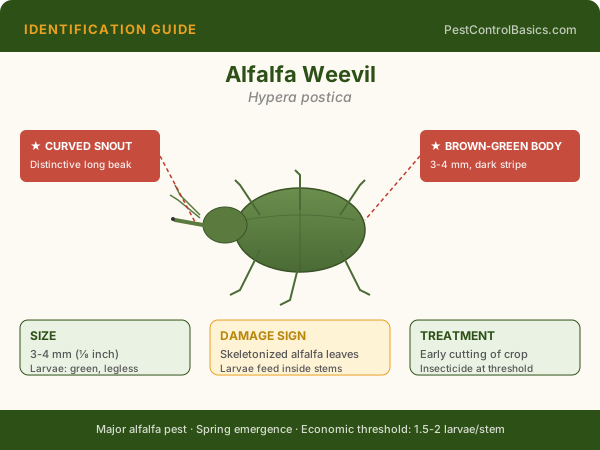
Illustrated identification guide — PestControlBasics.com
🔍 Identification
Adults: 4-5mm; grayish-brown with dark dorsal stripe; long curved snout; overwinter in alfalfa fields or field margins. Larvae: legless-looking; green with white dorsal stripe and black head; found feeding in buds and on leaves. Damage: skeletonized leaves; bud destruction; white-tipped stems in heavily infested fields — the 'frostbitten' appearance is diagnostic.
🧬 Biology & Behavior
Eggs are laid in alfalfa stems in fall and spring. Larvae hatch in spring (timing varies by region — guided by degree-day accumulations above 48°F). Larvae are most damaging in early instars when they feed inside buds. When 30-50% of plants show tip feeding damage, spray threshold has been exceeded. Early cutting (before typical first-cutting date) provides mechanical control in many situations.
⚠️ Damage & Health Risk
30-50% yield losses in severe infestations; reduced first-cutting protein content; weakened plants less able to regrow after cutting; significant economic impact on hay production.
🔧 DIY Treatment
Degree-day monitoring to predict larval emergence timing. Chlorpyrifos, malathion, or pyrethroids at threshold (30% of plants with tip feeding, 3+ larvae per stem average). Early cutting as alternative — cutting removes larvae mechanically and exposes survivors to sun and predators. Parasitoid wasp (Bathyplectes curculionis) provides natural biological control.
👷 When to Call a Pro
Licensed applicator programs guided by university extension degree-day models and field scouting threshold protocols.