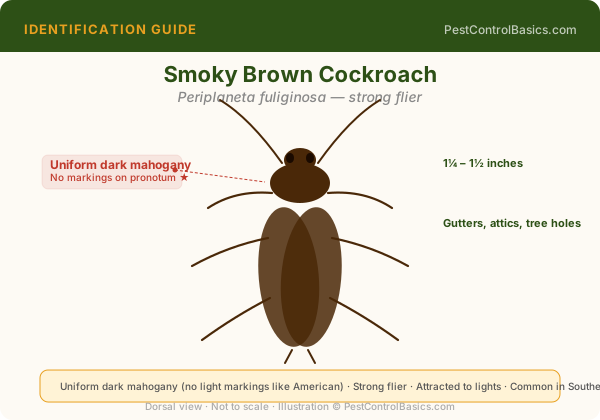
Original illustration by PestControlBasics.com. Use anatomical labels above to confirm your identification.
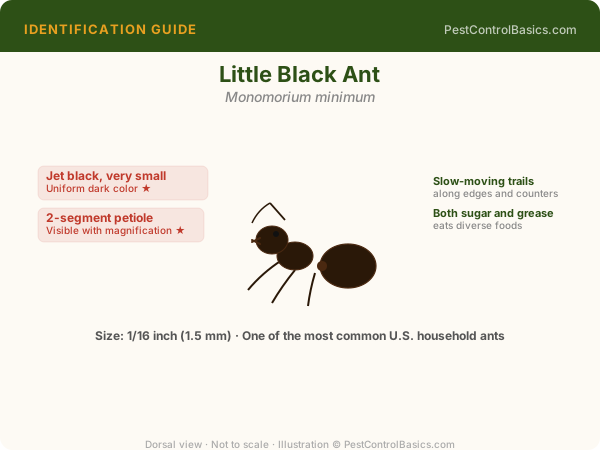
Original illustration by PestControlBasics.com. Use anatomical labels above to confirm your identification.
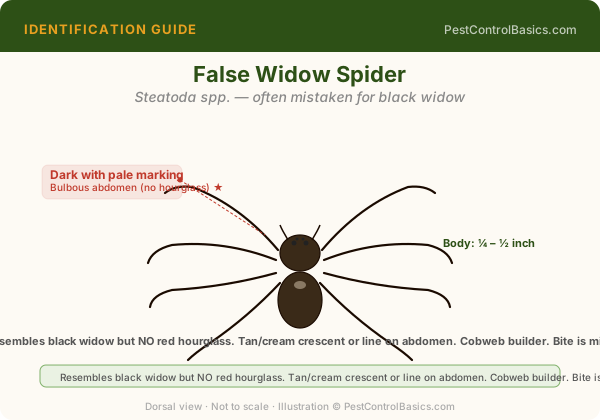
Original illustration by PestControlBasics.com. Use anatomical labels above to confirm your identification.
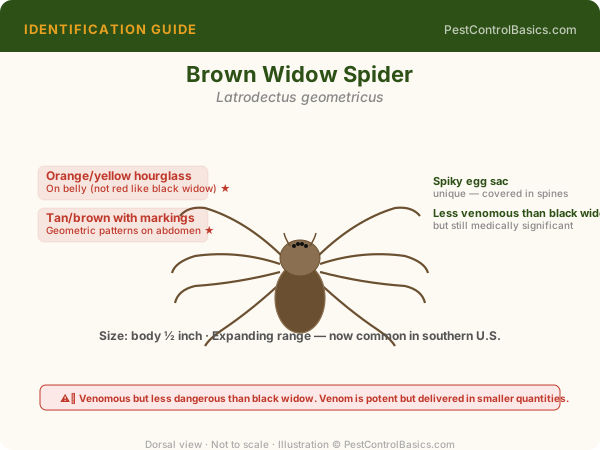
Original illustration by PestControlBasics.com. Use anatomical labels above to confirm your identification.
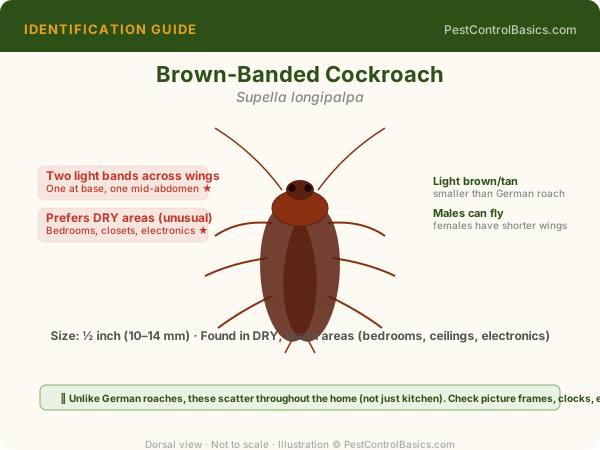
Original illustration by PestControlBasics.com. Use anatomical labels above to confirm your identification.
🔍 Identification
Black Widow:
- Shiny jet-black body, round abdomen
- Red hourglass marking on the VENTRAL (underside) abdomen — you have to flip it over to see it
- Body 8-10mm; total length with legs 25-35mm
- Builds messy, irregular cobwebs in sheltered dark spots
- Found in all 48 continental states; most common in South and West
Brown Recluse:
- Tan to dark brown, uniform color (no spots or markings on abdomen)
- Violin-shaped marking on DORSAL (top) cephalothorax — but this is hard to see
- 6 eyes in 3 pairs of 2 (most spiders have 8) — requires magnification
- Body 6-11mm; legs slightly longer than body
- Range: primarily south-central US (TX, OK, KS, AR, MO, LA, MS, AL)
🧬 Biology & Behavior
Black Widow: Builds webs in woodpiles, under decks, in garage corners, mailboxes, and sheds. Docile — bites only when pressed against skin. Females are much more venomous than males.
Brown Recluse: Hides in undisturbed areas — cardboard boxes, stored clothing, under furniture. Active at night. Bites occur when a person inadvertently presses against the spider in clothing, bedding, or shoes.
⚠️ Damage & Health Risk
Black Widow bite symptoms: Initially minimal pain, followed by severe muscle cramping, abdominal pain, sweating, and nausea within 1-8 hours. Rarely fatal in healthy adults with modern medical care, but very painful. Antivenom available.
Brown Recluse bite symptoms: Often painless initially. 4-8 hours later: burning sensation. Necrotic wound develops over 24-72 hours in severe cases, with a characteristic 'bulls-eye' appearance. Most bites are minor; severe necrosis occurs in a minority of cases.
🔧 DIY Treatment
Both species respond to the same control approach:
- Eliminate clutter — both favor undisturbed harborage
- Wear gloves when handling stored items, firewood, or reaching into dark spaces
- Shake out shoes, clothing, and bedding stored in potentially infested areas
- Apply CimeXa or Temprid SC to baseboards, corners, and harborage areas
- Place glue boards in corners to monitor and catch spiders
- Store firewood at least 20 feet from the house
👷 When to Call a Pro
If you're finding multiple venomous spiders indoors, call a pest control professional for a comprehensive inspection and treatment. Both species can be numerous inside structures while remaining largely hidden.